
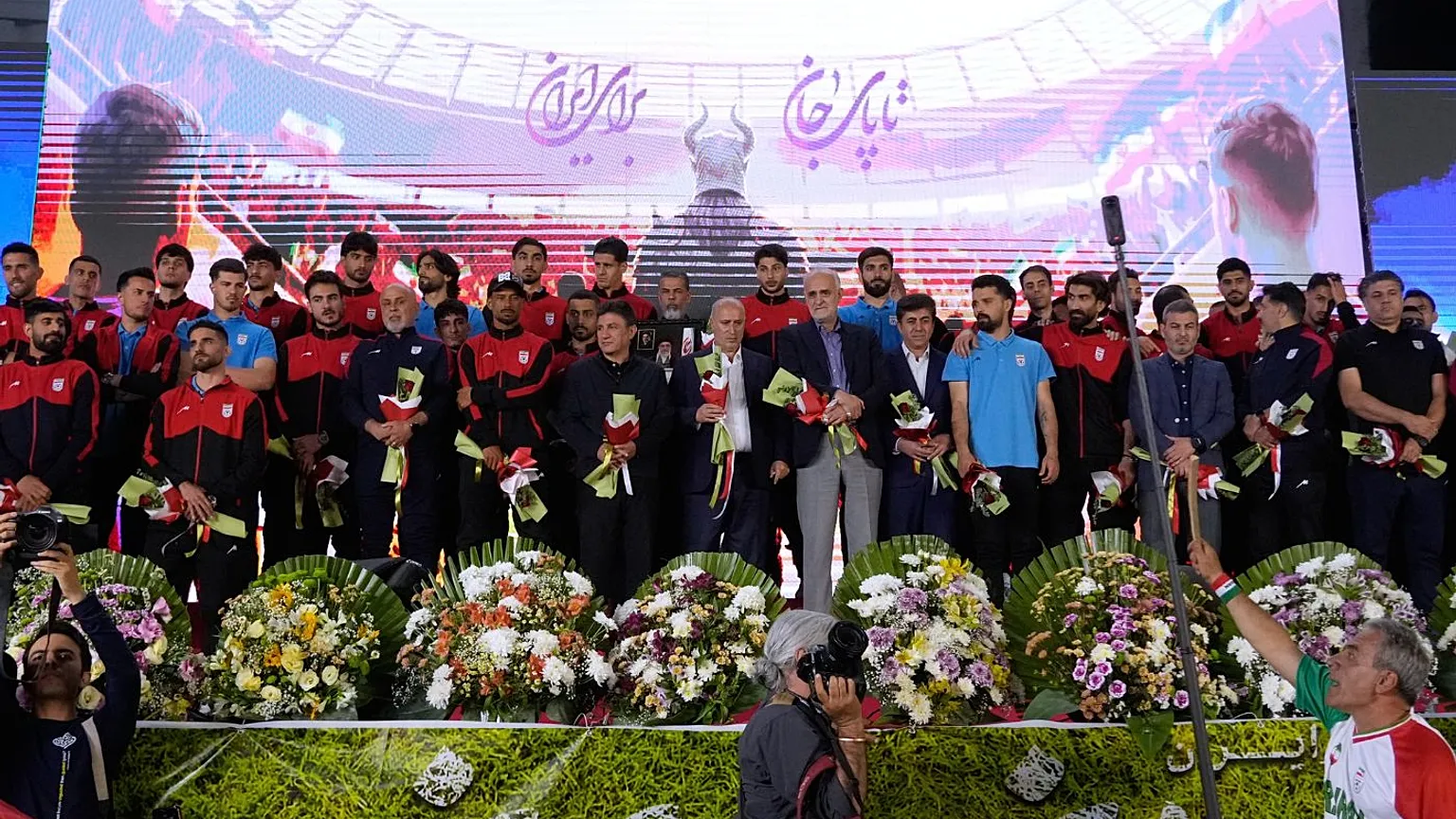

Tehran calls Washington an “incompetent host” as geopolitical tensions spill onto the football pitch — forcing Iran to base its squad in Mexico and raising fresh questions about FIFA’s authority over its own tournament.
IDEA Television News Desk

Iran has formally accused the United States of failing its obligations as a FIFA World Cup host nation, after several officials attached to Iran’s national football team were reportedly denied entry visas ahead of the 2026 tournament — a dispute that has now drawn in FIFA, Mexico, and the White House.
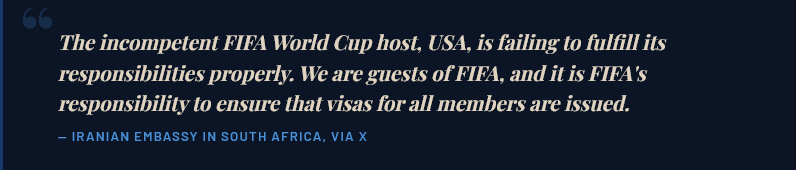
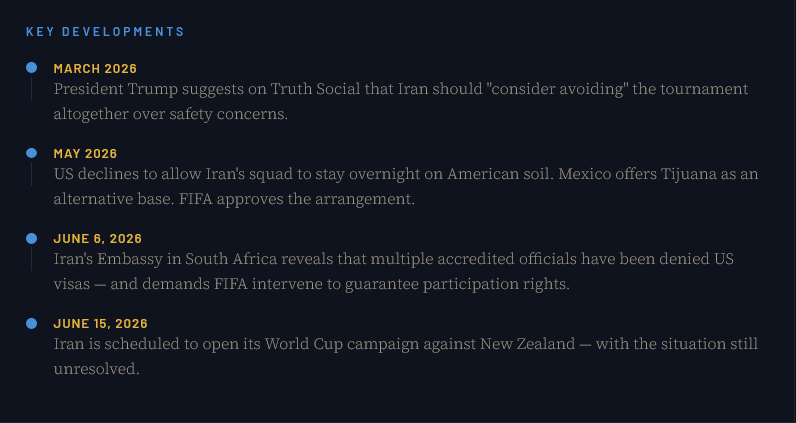
In a statement posted on X, the Iranian Embassy in South Africa said the US was failing to fulfil its responsibilities as host, and called on FIFA to step in and guarantee access for all accredited members of competing nations.
Iran Playing From Mexican Soil
The visa row is not the first flashpoint surrounding Iran’s participation. Weeks earlier, it emerged that the United States had declined to allow the Iranian squad to remain overnight on American soil between matches — a logistical arrangement that would normally be standard for any competing team.
Mexican President Claudia Sheinbaum confirmed that Mexico stepped in to resolve the standoff, offering Iran a base in the border city of Tijuana for the duration of the group stage — with matches in Los Angeles and Seattle still on the schedule.

FIFA subsequently approved the Tijuana arrangement, replacing Iran’s original base camp assignment in Tucson, Arizona. The team will commute across the US-Mexico border for its fixtures.
How It Unravelled — A Timeline
The Bigger Picture

The escalating dispute has raised serious questions about FIFA’s ability to enforce equal participation rights when its host nation is also locked in deep geopolitical conflict with a competing team. The organisation has not yet issued a formal response to Iran’s latest visa complaint.

The controversy is now widely seen as a test of FIFA’s neutrality and its capacity to stand behind every member nation it invites to compete — regardless of the host country’s foreign policy interests. With the tournament’s opening matches just days away, the clock is ticking for a resolution.