
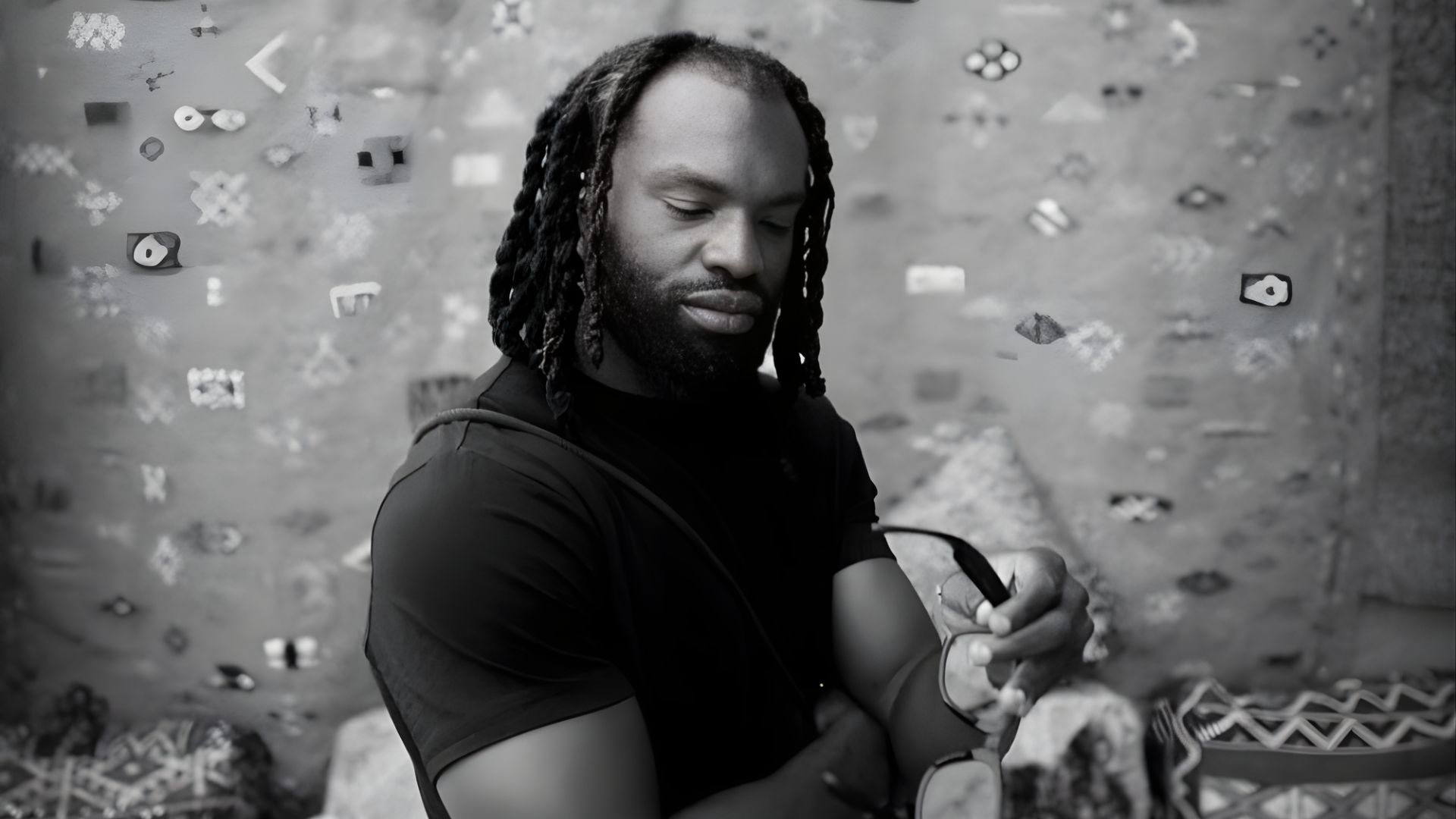
The music video director behind Beyoncé and Burna Boy turns his lens on Nigeria’s bloodiest chapter — sitting across from his own grandfather, a former army commando, to ask questions a generation has never dared pose.
June 1, 2026 · 5 min read
By Tom Solomon Iboro

When Meji Alabi agreed to direct a BBC documentary about Nigeria’s civil war, he did not fully grasp what he was walking into. What began as a commission became a family reckoning — and one of the most personal films of his career.
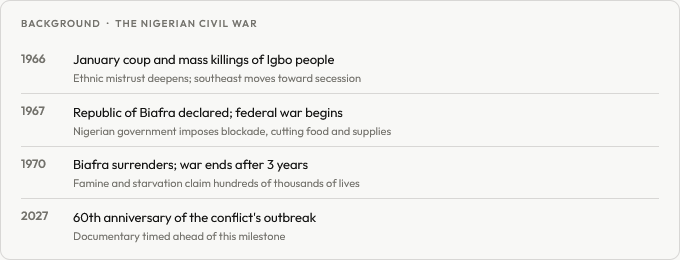
Surviving Biafra: Voices from the Nigerian Civil War, produced by BBC Africa Eye and released today on BBC iPlayer and YouTube, is a 75-minute documentary built around previously unseen frontline footage, eyewitness testimony, and — at its emotional core — a filmed interview between Alabi and his grandfather, Godwin Alabi-Isama, a former commando who fought on the federal side of the conflict.
“Like so many Nigerians, my grandfather’s life was forever shaped by the Biafran War. With each passing year, fewer survivors remain — but the memories of what they witnessed have never left them.”
— Meji Alabi
A race against memory
Most survivors of the war are now in their seventies and eighties. That urgency runs through every frame of the film. Alabi, 37, was born in London to Nigerian parents and raised partly in Texas, and by his own admission grew up knowing little about the war — who fought it, or why. The project was co-developed with his uncle, Leke Alabi-Isama, co-founder of Lagos production company PriorGold Pictures, who had long carried the family’s war stories.
The film includes accounts from soldiers and civilians on both sides of the conflict, and features interviews with an aid worker and former BBC correspondent Martin Bell, who voice criticism about the international response to the crisis. The BBC editorial team ensured the interview with Godwin Alabi-Isama addressed war crime allegations made against his unit, 3 Marine Commando.

Hard conversations
Among the documentary’s most striking moments is when Leke showed his father archival footage of severely malnourished children — and heard, for the first time in 43 years, his father’s voice tremble. The film does not shy from difficult disclosures: Godwin Alabi-Isama also revealed that, unknowingly at the time, he ate human flesh when his unit was fed by villagers in occupied Biafran territory.
Nigeria’s government responded to the forthcoming film by expressing hope it would serve as a reminder of how far the country had come in nearly six decades — while the documentary simultaneously examines the separatist tensions that still simmer in parts of Nigeria’s eastern region today.