

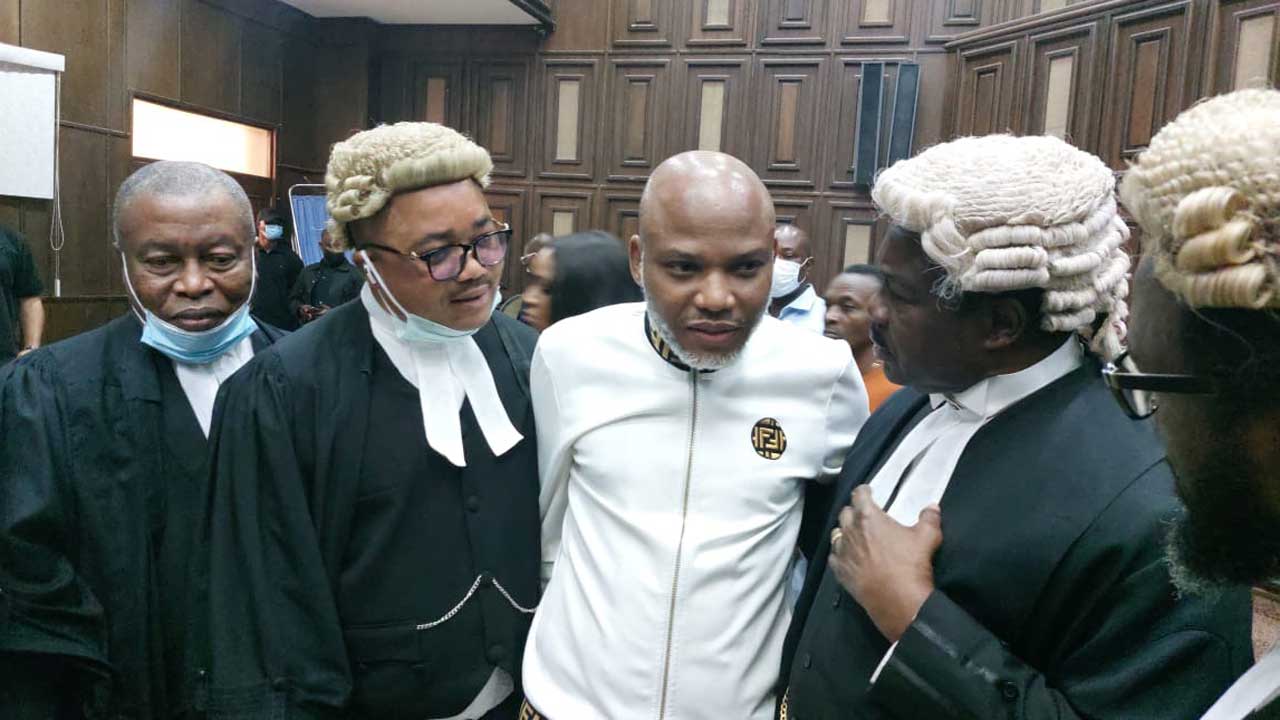
H.Res. 1321, introduced by Republican Congressman John James, calls on Nigeria to ensure fair legal proceedings for the IPOB leader — who is serving a life sentence in Sokoto. Here is what the resolution actually says and what it cannot do.
IDEA Television News Desk

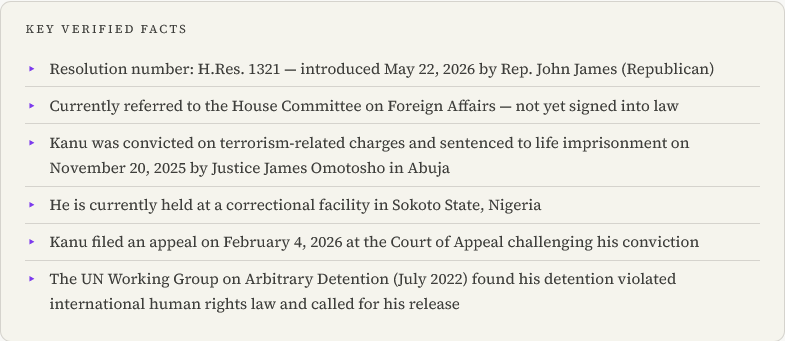
The United States House of Representatives has introduced a resolution calling on Nigeria to ensure that all legal proceedings involving Nnamdi Kanu — leader of the Indigenous People of Biafra (IPOB) — are conducted in accordance with Nigeria’s constitutional obligations and international human rights law. The resolution, numbered H.Res. 1321, was introduced on May 22, 2026 by Republican Congressman John James and has been referred to the House Committee on Foreign Affairs.
Kanu has been held in Nigerian custody since his controversial transfer from Kenya in June 2021 — a rendition that courts in Kenya have since scrutinised. He was convicted on terrorism-related charges and sentenced to life imprisonment in November 2025, and is currently serving that sentence at a correctional facility in Sokoto State. He filed an appeal in February 2026 seeking to have the conviction overturned.
The five demands in H.Res. 1321
1. Nigeria must ensure all legal proceedings involving Kanu fully comply with its constitutional obligations and international human rights commitments
2. Nigeria is urged to carefully consider the findings of the UN Working Group on Arbitrary Detention and take appropriate steps consistent with those findings
3. Nigeria must ensure Kanu has consistent access to legal counsel, necessary medical care, and humane conditions of detention
4. The US Secretary of State is encouraged to engage the Nigerian government directly over due process, detention conditions, and fundamental rights
5. The resolution reaffirms the US commitment to protecting human rights, freedom of expression, and the rule of law globally
It is important to note what this resolution is and is not. It is a non-binding House resolution — meaning it carries moral and diplomatic weight but does not compel Nigeria to act, does not impose sanctions, and has no force of law. It currently has no listed cosponsors and sits at 25% legislative progression on the US federal tracker LegiScan. Its practical significance lies in the signal it sends: that Kanu’s case has reached the floor of the US Congress and that an American lawmaker sees it as a matter of international human rights concern serious enough to formalise in legislation.
The resolution explicitly cites concerns about the circumstances of Kanu’s 2021 arrest in Nairobi, the legality of his rendition to Nigeria, questions about access to counsel, conditions of detention, and the lack of adequate medical care. These concerns mirror those raised by human rights organisations over the past four years — and are now formally on the record of the United States Congress.