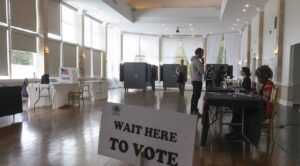

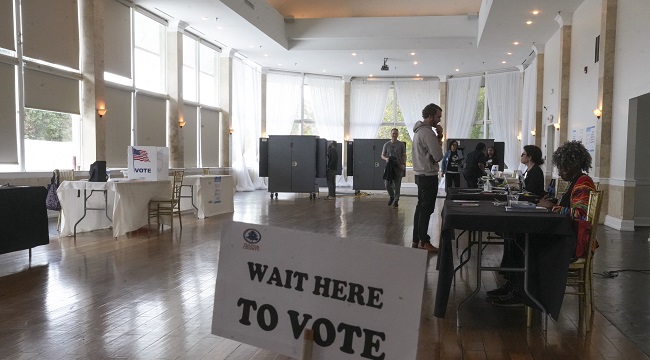
As Americans cast their ballots in the US midterm elections, voters across the country expressed a mix of optimism, frustration and concern over the direction of the nation, with issues ranging from the economy and immigration to foreign policy and political leadership dominating conversations.
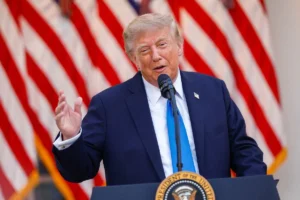
Midterm elections are traditionally viewed as a referendum on the sitting president, and this year’s contest has been particularly significant amid deep political divisions under President Donald Trump.
With opinion polls suggesting that Democrats were on course to secure a majority in the House of Representatives and possibly the Senate, many left-leaning voters expressed optimism about the prospect of a political shift.
In Brooklyn, New York, Emma Mondadori, a 39-year-old philanthropy worker, told AFP that she had been looking forward to the opportunity to influence the country’s political direction again.
“Two years ago was a really devastating outcome for me,” she said, referring to Trump’s election.
“I’ve been really looking forward to this day where we get to have a say again in the future of our country… I’m cautiously hopeful, optimistic.”
Cost of living dominates voters’ concerns
The rising cost of living emerged as a major concern among voters, with higher fuel prices and food inflation putting pressure on household budgets.
Gasoline prices were reportedly up by a third compared with the previous year, while diesel prices had nearly doubled, adding to concerns about the affordability of everyday necessities.
Donta Comer, a 38-year-old project manager in Atlanta, Georgia, told AFP that economic pressures were among the issues influencing his vote.
“It’s about the cost of living, gas prices, those kind of things. It needs to change for the everyday person, and I’m an everyday person,” he said.
Another voter, Tom, a 27-year-old businessman who declined to give his surname, shared similar concerns, particularly over the financial challenges facing younger Americans.
“Everyone, at least in my generation, is a little frustrated with the affordability crisis and gas prices and what’s going on abroad,” said Tom, who described himself as non-partisan.
Trump’s leadership faces public verdict
The elections also provided an opportunity for Americans to express their approval or disapproval of Trump’s leadership, with voters sharply divided over his presidency.
Yan Cardineau, a 59-year-old independent voter in Austin, Texas, told AFP that he had voted for Democrats because he wanted a return to what he described as decency, integrity and honesty in public office.
“I’m independent but I voted Democrat, I just wanted to go back into the culture of decency, integrity, honesty, and the rest follows,” he said.
“If we lose that, it doesn’t matter how much money you make.”
However, not all voters shared his position. Estrella Roque, a 69-year-old Cuban-origin voter in Miami, said she had voted Republican because she believed the party could address the country’s challenges.
“What I like about the Republicans is that they can fix the country,” she said in Spanish, adding that Trump had not been given enough time to demonstrate his capabilities.
“Donald Trump hasn’t been given time to show who he really is.”
Immigration policies divide voters
Immigration also featured prominently in the election debate, with Trump highlighting his administration’s efforts to reduce illegal immigration and prevent crossings along the US-Mexico border.
While his tough approach has appealed to many of his supporters, the enforcement methods used by Immigration and Customs Enforcement agents have attracted criticism from other sections of the electorate.
Diana Alvarez, a 38-year-old Cuban-born attorney in Doral, Florida, said she was concerned about immigration, climate change and school violence.
“It’s tough for any presidency, but this one in particular has been a little violent and aggressive (with migrants) and I don’t think that was necessary,” she told AFP.
Iran war raises questions over Trump’s foreign policy
Trump’s decision to launch military action against Iran alongside Israel on February 28 also emerged as a point of concern among some voters.
Wes Pyron, a 37-year-old employee of an environmental health non-profit organisation in Washington, said the military action contradicted Trump’s campaign promise to avoid new wars.
“It’s discouraging. Again, promises made, promises not kept. ‘No new wars’ was the mantra,” he said.
“I don’t understand what we’re doing there, objectives aren’t clear, priorities aren’t clear.”
Republicans warn against socialism
The prospect of a Democratic victory was also accompanied by warnings from Trump and Republican candidates, who portrayed their opponents as socialists seeking higher taxes and greater government control of the economy.
Daryl Ruley, an 84-year-old voter in Austin, Texas, expressed concern about what he described as growing support for socialism among younger Americans.
“A lot of today’s younger people think socialism is the way to go,” he told AFP. “They don’t understand history if they believe that’s the case.”
In Miami, Maru Restrepo, a 70-year-old voter of Colombian origin, also criticised the Democratic Party, describing it as “very Socialist, Communist, and Muslim.”
Michigan Senate race draws national attention
Michigan was among the states attracting significant attention, particularly in the closely watched Senate contest involving Democratic candidate Abdul El-Sayed.
The Muslim former medical administrator made universal healthcare and ending US support for Israel central to his campaign.
His candidacy attracted criticism from Trump, who called him a jihadist, while accusations linking him to Islamist groups, including the Muslim Brotherhood and Hamas, also featured in the political debate.
However, some voters said they supported his campaign because of its focus on healthcare access.
Makeyla Borndes, a 51-year-old former teacher who was forced to retire after falling down a staircase, said she wanted the candidate to succeed because many Americans needed better access to healthcare.
“We just got to get it done because we all need help. I need help,” she said.
Borndes, who wore several El-Sayed campaign pins on her green apron and neon-pink socks, said the healthcare issue was particularly important to her.
The range of views expressed by voters highlighted the competing concerns shaping the midterm elections, from economic pressures and immigration enforcement to foreign policy, political leadership and access to healthcare.