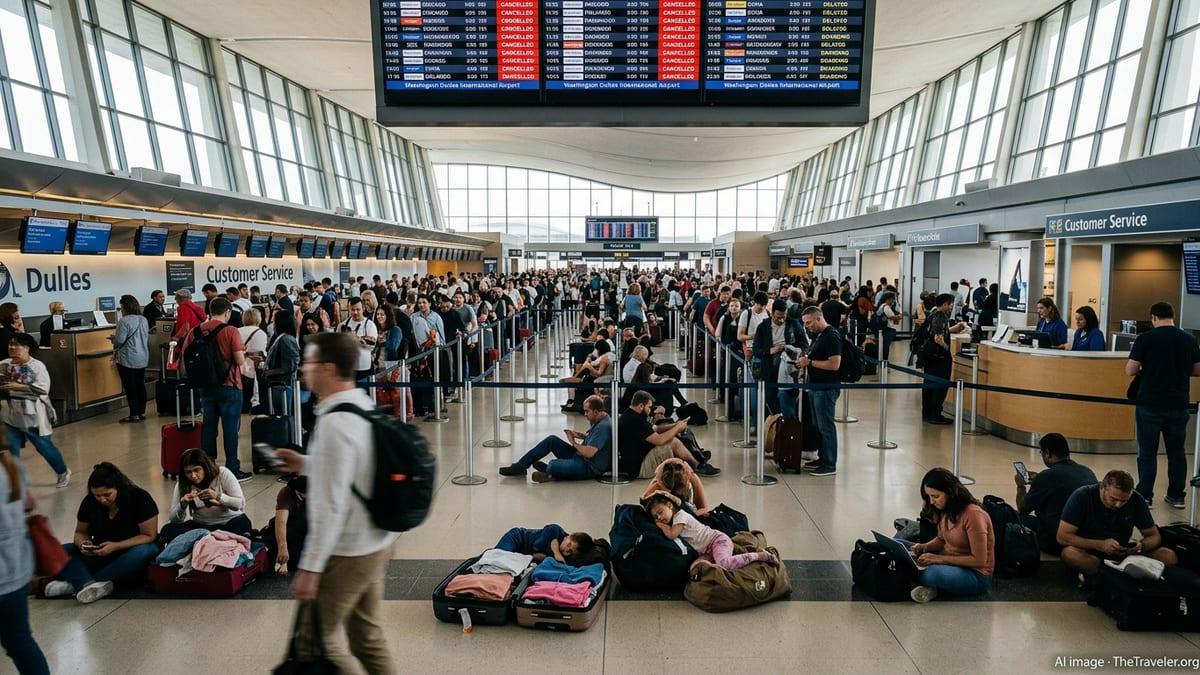
Air travel across the United States is gradually recovering after the Federal Aviation Administration (FAA) lifted a nationwide ground stop that brought departing flights to a standstill for more than four hours, leaving thousands of passengers stranded and disrupting airline operations.
The shutdown was imposed on Friday, November 13, following a communications failure affecting the country’s air traffic control system. The disruption forced aviation authorities to suspend departures nationwide as a safety precaution.
US Transportation Secretary Sean Duffy announced that American airspace had reopened at approximately 8:15 p.m. Eastern Time, but warned that restoring normal operations would take time.
According to FlightRadar24 figures cited by Reuters, more than 6,600 flights were cancelled and approximately 8,600 delayed during the disruption. The effects continued into Saturday, with thousands more passengers facing cancellations and delays.
Officials attributed the problem to overloaded switches and routers within an ageing air traffic control system, which produced inconsistent information. Authorities said preliminary investigations had found no evidence of a cyberattack, although investigations were continuing.
Major airlines, including American Airlines, Delta and United, began gradually resuming services. However, aircraft and crew members were left out of position, creating a ripple effect that could affect schedules for several days.
WHY IT MATTERS TO AFRICA
The disruption also affected international travellers, including passengers connecting between the United States and African destinations. Reuters reported the case of an Ethiopian Airlines passenger travelling to Lomé, Togo, who was stranded by the disruption.
For Nigeria and other African countries, the incident highlights the importance of modernising aviation infrastructure, strengthening air traffic control communications and developing reliable backup systems.
It also demonstrates how a technical failure in one country’s aviation network can disrupt international connections, affect passengers and create financial losses for airlines across continents.
The incident has renewed calls for investment in resilient aviation technology as global air travel becomes increasingly dependent on interconnected digital systems.