

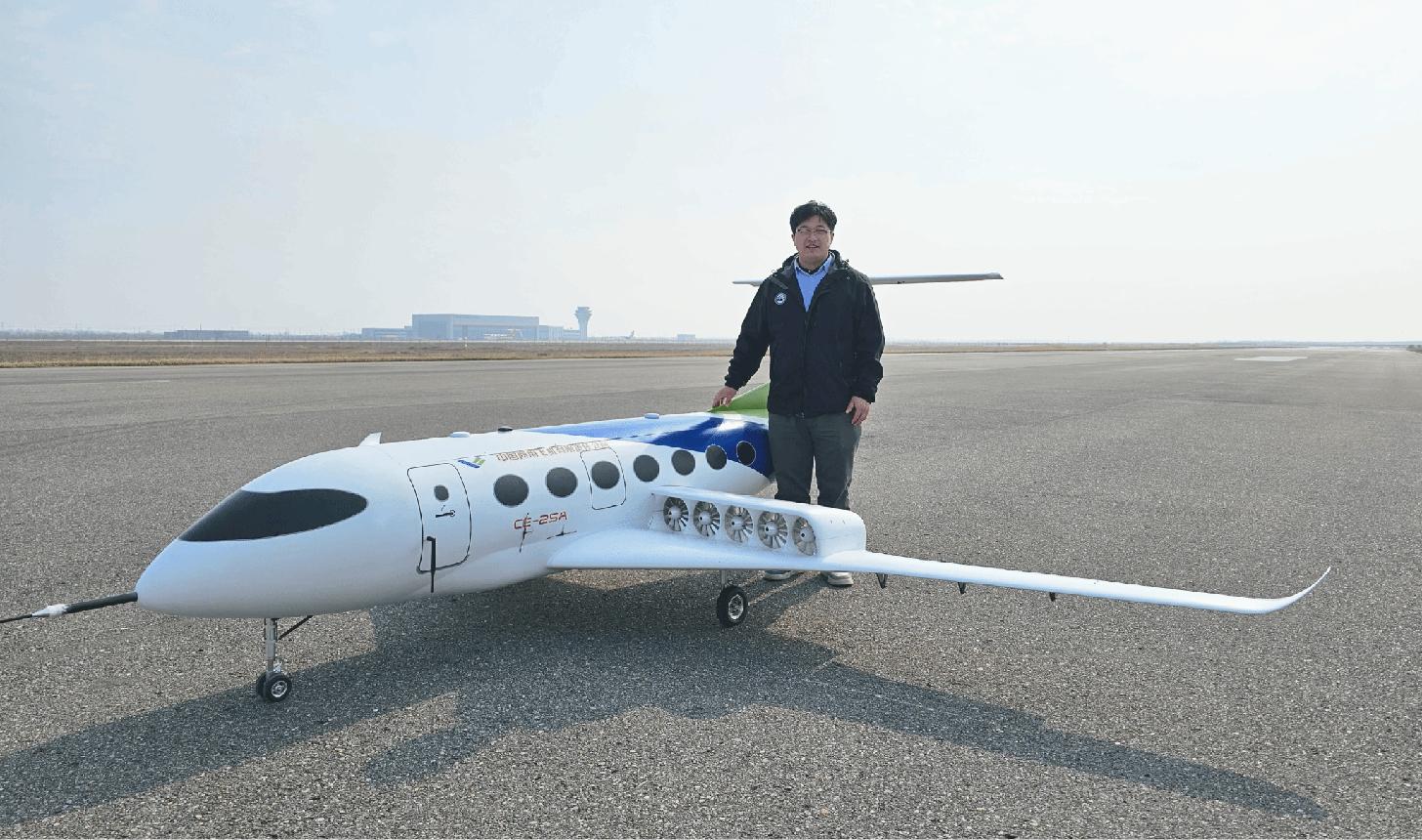
China has taken another significant step in aviation innovation after its first domestically developed 10-tonne-class electric commercial aircraft, the CE-25A, successfully completed its maiden crewed test flight in Binzhou, Shandong Province.
The aircraft, developed by the Commercial Aircraft Corporation of China (COMAC), took to the skies on Saturday, November 14, with two pilots and a flight-test engineer on board. The flight lasted approximately 16 minutes, covering a distance of 60.4 kilometres, with all performance indicators reportedly meeting expectations.
Designed primarily for short-distance commercial travel, the CE-25A can accommodate up to 19 passengers, cruise at speeds of 300 kilometres per hour and has an estimated range of 400 kilometres.The aircraft uses an electric propulsion system featuring multiple ducted fans positioned along its wings, highlighting China’s growing investment in alternative aviation technologies. Its development could eventually provide more energy-efficient options for regional passenger transportation.
For Africa, the development offers an important lesson in technological ambition and homegrown innovation.With many African communities separated by long distances, limited transport infrastructure and challenging road networks, electric aircraft technology could eventually offer new possibilities for regional connectivity, particularly between smaller cities and underserved communities.
Countries such as Nigeria, South Africa, Kenya and Rwanda have opportunities to strengthen their aviation industries through investments in aerospace research, engineering education, battery technology and partnerships between universities and private manufacturers.
Rather than remaining consumers of imported aviation technology, African countries could use developments such as the CE-25A as inspiration to build local capacity, develop indigenous aircraft technologies and create solutions suited to the continent’s transportation needs.However, commercial adoption in Africa would depend on overcoming challenges involving battery infrastructure, aircraft certification, operating costs and the availability of reliable electricity.
China’s latest achievement is therefore more than an aviation milestone; it is another reminder that technological advancement begins with investment in research, innovation and the determination to develop solutions locally.The question for Africa is no longer whether the continent can participate in the future of aviation, but how quickly it can begin building the technology to shape that future.