
Morocco’s King Mohammed VI has unveiled an ambitious $400 million defence industry development plan aimed at reducing the country’s dependence on imported military equipment, strengthening domestic manufacturing and creating approximately 50,000 direct and indirect jobs by 2035.
The initiative, backed by a 4-billion-dirham (approximately $401 million) contribution from Morocco’s Hassan II Fund for Economic and Social Development, forms part of a broader strategy to establish Morocco as a major defence manufacturing and export hub in Africa.
Morocco targets 40% local military production
Under the new roadmap, Morocco aims to manufacture approximately 40 per cent of the military and security equipment required by its armed forces and security agencies locally by 2035.
The country also wants exports to account for more than 65 per cent of revenue generated by its defence industry, signalling ambitions that extend beyond domestic supply towards international markets.
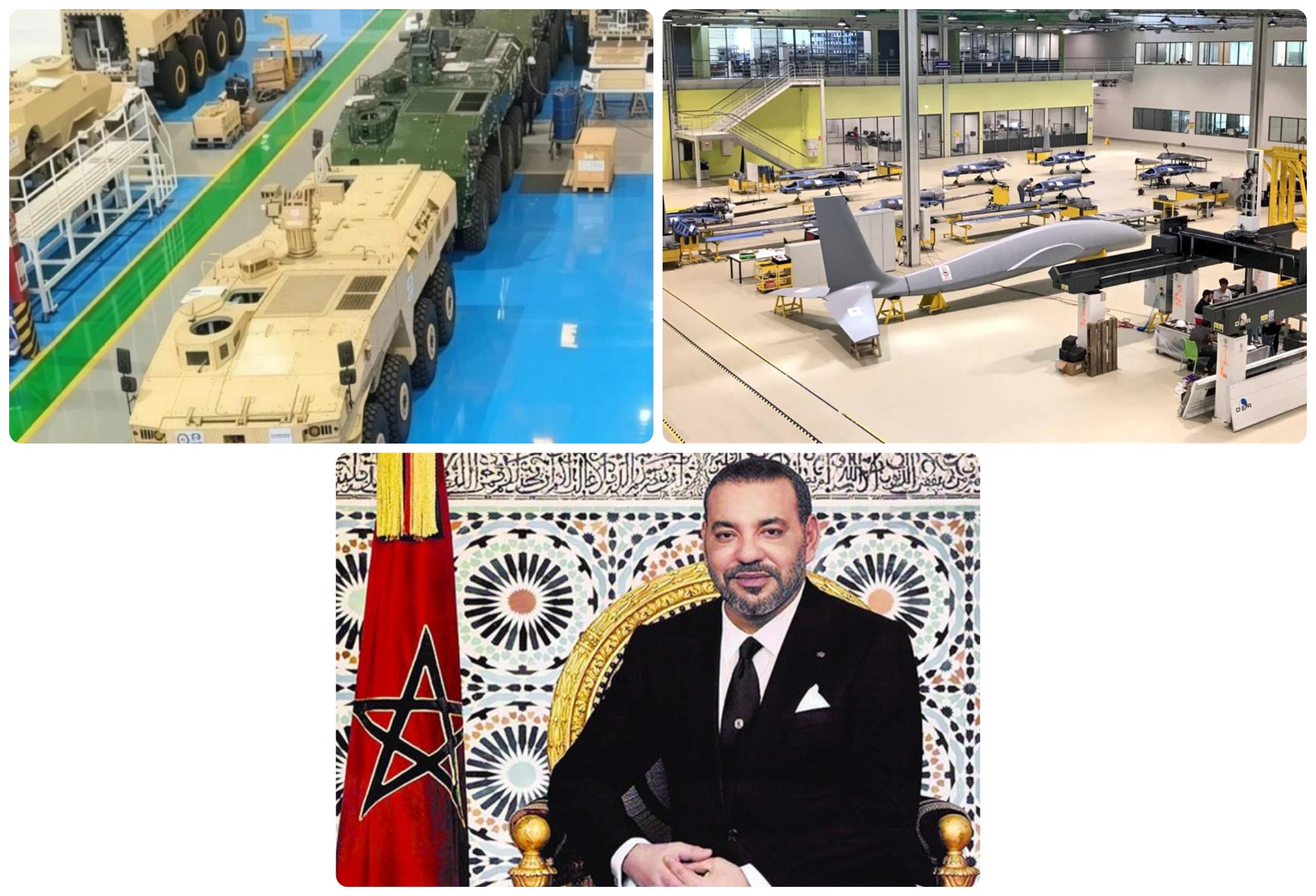
The plan prioritises the production of drones, autonomous systems, land and naval equipment, defence electronics, cybersecurity technologies and artificial intelligence.
New industrial zones to drive investment
Morocco plans to establish two additional defence industrial zones near Marrakech and Casablanca, complementing existing industrial sites in Nouaceur and Sidi Yahya.
The government also intends to establish an investment holding company to provide equity financing, alongside grants and other incentives to attract domestic and foreign investors.
A specialised training academy is planned to develop the technical workforce required to support the expanding industry, while partnerships with international companies are expected to provide access to advanced technologies and global supply chains.
Why Morocco wants to reduce arms imports
Morocco is seeking greater control over its defence supply chain at a time of increasing regional security competition and substantial military spending.
The country has already taken steps towards developing domestic production capabilities. One example is the assembly of WhAP 8×8 armoured vehicles through a partnership involving India’s Tata Advanced Systems, while Moroccan company MMI manufactures turrets and remotely operated weapon systems.
According to the Stockholm International Peace Research Institute (SIPRI), Morocco and neighbouring Algeria are among Africa’s largest military spenders, reflecting the strategic importance of defence capabilities in North Africa.
The new investment plan is therefore also viewed against the backdrop of longstanding tensions between the two countries, particularly over Western Sahara.
What the plan could mean for Africa
Morocco’s strategy could have implications beyond its borders, particularly if the country succeeds in developing competitive manufacturing capabilities and exporting military equipment to other African markets.
For African countries that rely heavily on imported defence equipment, the emergence of additional manufacturing capacity on the continent could create opportunities for technology partnerships, technical training, maintenance services and regional supply chains.
It could also encourage other African economies, including Nigeria, South Africa and Egypt, to strengthen domestic defence production and invest more heavily in engineering, research and advanced manufacturing.
However, the 50,000-job target and export ambitions remain projections for 2035, not jobs already created or export earnings already achieved.
Morocco’s $400 million commitment represents a significant industrial ambition: moving from dependence on imported military equipment towards becoming a producer, technology partner and potential supplier in the global defence market.