
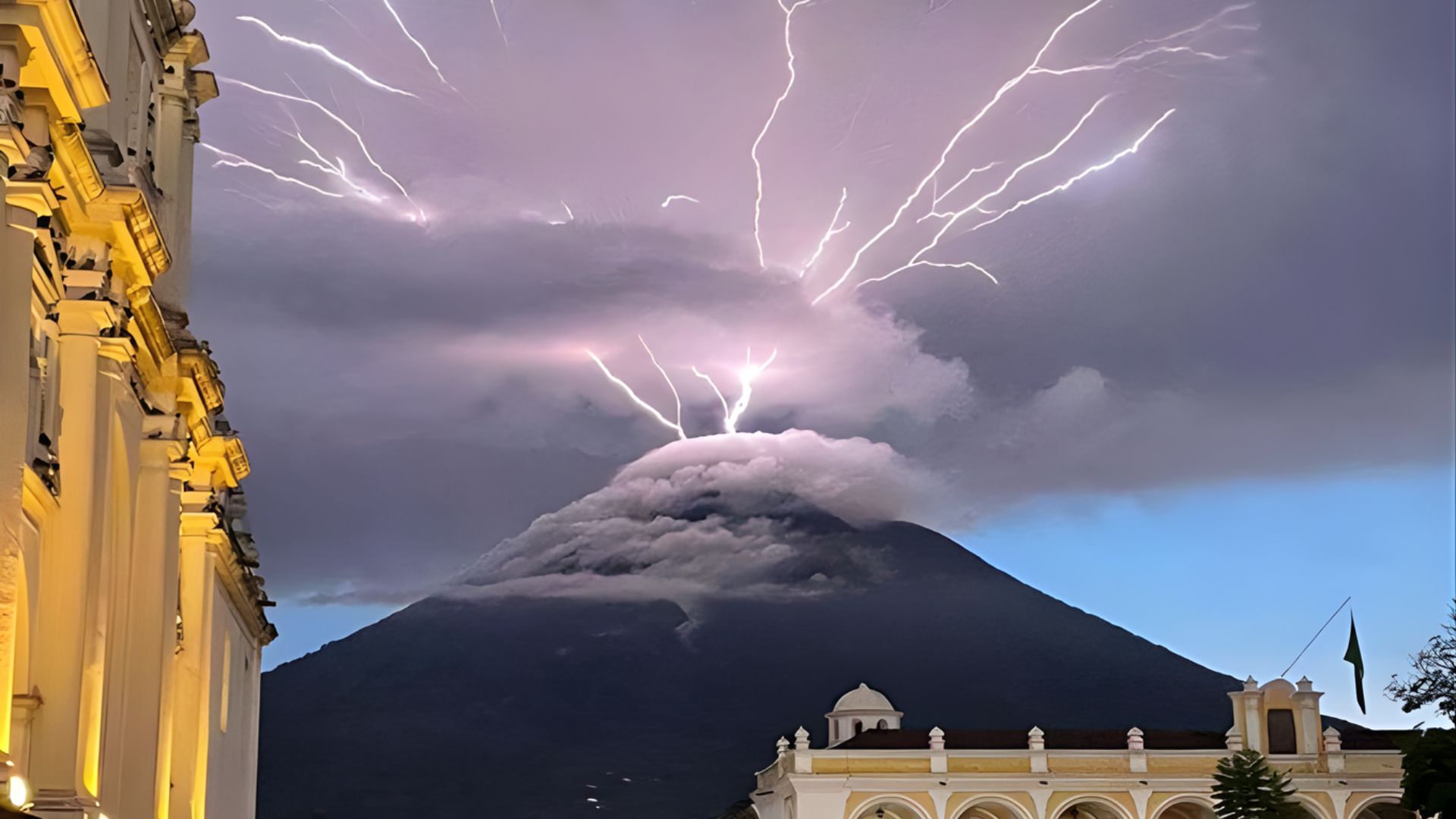
Volcanic eruptions are among nature’s most dramatic and powerful phenomena, spewing vast clouds of ash high into the atmosphere. These ash clouds are not only a hazard to aviation and human health but also exhibit fascinating electrical properties. Scientists have long observed that particles within volcanic ash clouds become electrically charged, with some acquiring positive charges and others negative. However, the precise mechanisms behind this charge separation remained elusive—until now.
The Phenomenon of Electrification in Volcanic Ash Clouds
When volcanic ash particles collide and rub against each other during an eruption, they can transfer electrical charges. This process, known as triboelectric charging, is similar to the static electricity you might experience when rubbing a balloon on your hair. In volcanic ash clouds, this charging can lead to the buildup of large-scale electric fields, sometimes culminating in spectacular volcanic lightning.
Understanding how individual particles acquire different charges is crucial for predicting volcanic lightning and assessing the behavior of ash clouds, which can impact weather, climate, and aviation safety.
New Research Sheds Light on Charge Determination
Recent research by physicists has finally elucidated the factors that determine whether a volcanic ash particle becomes positively or negatively charged during collisions. The study combined laboratory experiments with theoretical modeling to simulate the interactions between ash particles under conditions mimicking volcanic eruptions.
Key Findings:
- Particle Composition and Mineralogy:
The chemical makeup of the ash particles plays a significant role. Particles containing certain minerals tend to lose electrons and become positively charged, while others gain electrons and become negatively charged. This difference in electron affinity between minerals drives charge separation. - Particle Size and Surface Properties:
Smaller particles are more likely to acquire negative charges, whereas larger particles tend to become positively charged. Surface roughness and texture also influence how electrons transfer during collisions. - Environmental Conditions:
Temperature, humidity, and the presence of gases in the eruption plume affect the charging process. For example, higher humidity can facilitate charge dissipation, reducing the overall electrification. - Collision Dynamics:
The speed and angle at which particles collide influence the amount and polarity of charge transferred. More energetic collisions tend to produce stronger charging effects.
Implications of the Findings
This breakthrough in understanding volcanic ash electrification has several important implications:
- Improved Volcanic Lightning Prediction:
By knowing how charges develop on ash particles, scientists can better model the electrical environment of volcanic plumes, enhancing forecasts of volcanic lightning events. - Enhanced Aviation Safety:
Volcanic ash clouds pose severe risks to aircraft engines and electronics. Understanding their electrical properties can aid in developing better detection and avoidance strategies. - Climate and Atmospheric Science:
Electrified ash particles can influence cloud formation and atmospheric chemistry. This research helps clarify the role of volcanic eruptions in broader climate processes. - Fundamental Physics of Triboelectric Charging:
Beyond volcanology, the study contributes to the general understanding of how materials acquire static electricity, with potential applications in industries ranging from electronics manufacturing to powder handling.
The discovery of how volcanic ash particles acquire different electrical charges marks a significant advance in both volcanology and physics. By unraveling the complex interplay of particle composition, size, environmental factors, and collision dynamics, scientists now have a clearer picture of the electrification process in volcanic ash clouds. This knowledge not only deepens our understanding of natural phenomena like volcanic lightning but also has practical benefits for safety and environmental monitoring.
As research continues, these insights may lead to improved predictive models and innovative technologies to mitigate the hazards posed by volcanic eruptions, making our interaction with these powerful natural events safer and more informed.