Shanxi Province, China — May 22–23, 2026 | By Idea Television World Desk

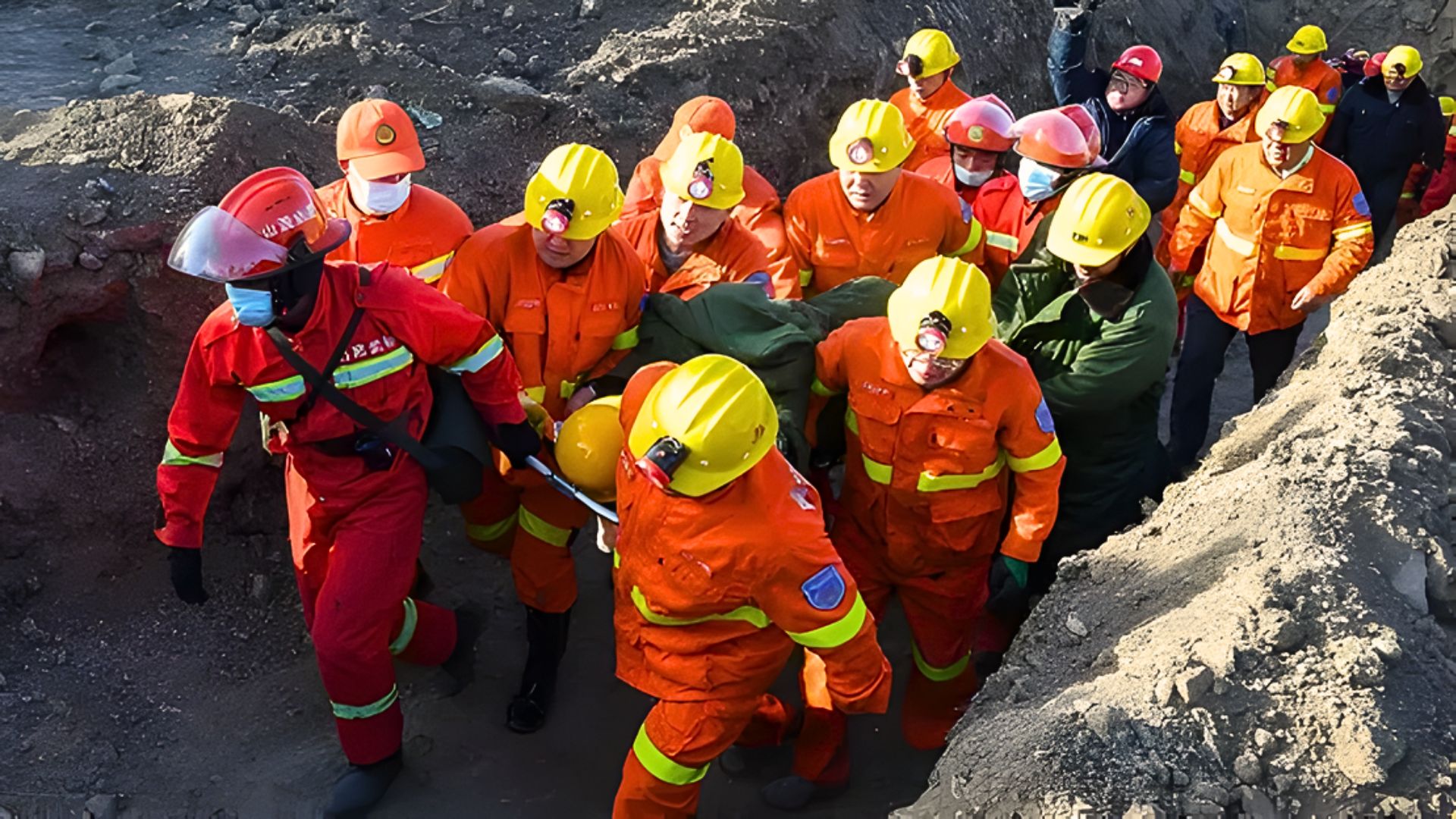
A catastrophic gas explosion has struck a coal mine in China’s northern province of Shanxi, killing at least 82 people and leaving nine others still missing as rescue operations press on around the clock. The blast — one of the deadliest mining accidents in China in years — has once again placed a spotlight on the dangerous conditions endured by hundreds of thousands of workers in the country’s vast coal industry.
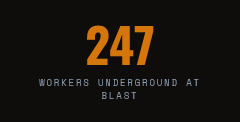
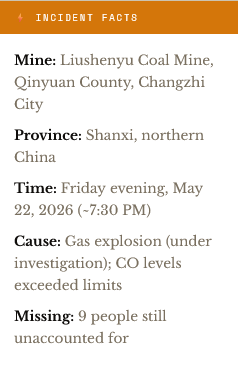
The explosion occurred late on Friday evening at the Liushenyu coal mine in Qinyuan county, Changzhi city — a major coal-producing hub in Shanxi, the province that serves as the backbone of China’s coal output. State news agency Xinhua reported that 247 workers were on duty underground at the time of the blast. The scale of the initial disaster was not immediately apparent — early reports indicated only eight people had been killed and 38 were trapped, but the death toll climbed sharply through the night and into Saturday.
By Saturday morning, Xinhua confirmed the death toll had reached at least 82, with nine people still unaccounted for. Rescue work was described as pressing on urgently, with emergency teams working to clear debris and restore safe conditions underground. Carbon monoxide levels inside the mine were reported to have “exceeded limits” at the time of the explosion — a significant hazard for rescue workers entering the tunnels.

Xi Jinping Orders Accountability
Chinese President Xi Jinping responded swiftly, calling on authorities to spare no effort in treating the injured and conducting search and rescue operations. He also ordered a thorough investigation into the cause of the explosion and demanded strict accountability in accordance with the law — a standard response to major industrial accidents in China, though one that in recent years has rarely translated into substantive reform of safety standards.
“Spare no effort in treating the injured and conducting search and rescue operations — hold those responsible strictly accountable in accordance with the law.”
— President Xi Jinping, via Xinhua News Agency, May 23, 2026
The cause of the explosion was still under investigation at the time of reporting. Gas explosions in coal mines are typically triggered by the ignition of methane — a naturally occurring byproduct of coal deposits — and are a persistent hazard in mines across Shanxi and other coal-producing provinces.
Shanxi: China’s Coal Heartland
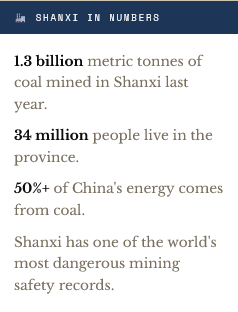
Shanxi province is the beating heart of China’s coal industry — a province larger than Greece, home to around 34 million people, whose miners dug approximately 1.3 billion metric tonnes of coal last year alone. Coal powers more than half of China’s total energy consumption, and despite years of pledges to transition to cleaner energy, the country’s dependence on the fossil fuel has remained stubbornly high — particularly as electricity demand from data centres and manufacturing has surged.
Shanxi’s mining sector has a notoriously poor safety record. In recent years, the province has been blighted by thousands of accidents, from small-scale collapses to large gas explosions. Safety regulations have been repeatedly tightened following major disasters, but enforcement remains inconsistent, and the pressure to maintain output often overrides caution.
Families Wait; China Watches
As rescue teams worked through the rubble and tunnels of the Liushenyu mine on Saturday, the families of workers trapped underground gathered near the site in a vigil of agonising uncertainty. Nine people remained unaccounted for as of the latest update, and the full scope of the tragedy was still coming into focus.
For China, the explosion is a stark reminder that decades of industrialisation have come at an enormous human cost — and that the race to modernise and power the world’s second-largest economy continues to be paid for, in part, by the lives of the workers at the very bottom of the supply chain.