A late-night strike on Mashghara in eastern Lebanon pulled a dozen people from the rubble, as Prime Minister Netanyahu orders heavier blows on Hezbollah and Washington peace talks loom just three days away.
IDEA Television News Desk
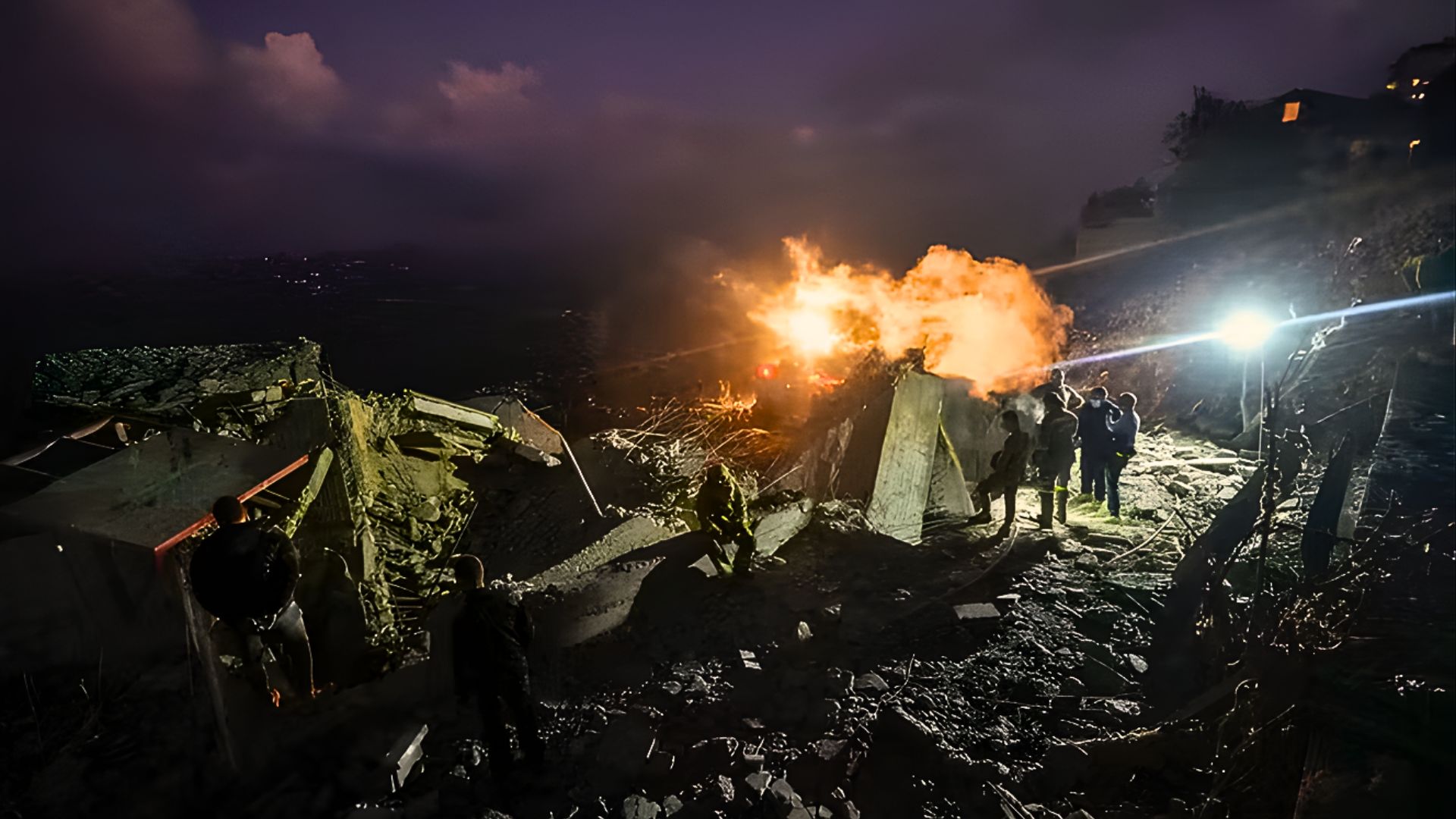
An Israeli airstrike struck the village of Mashghara in Lebanon’s Bekaa Valley late on Monday night, killing at least 12 people and leaving rescue workers combing through rubble into the early hours of Tuesday. Lebanon’s state-run National News Agency confirmed the death toll, as the Israeli military — without addressing the Mashghara strike directly — confirmed it was conducting operations against Hezbollah infrastructure across eastern Lebanon that same evening. The attack is the latest and among the deadliest in an intensifying campaign that shows no sign of slowing down.

The Mashghara strike was part of a wider wave of overnight bombardments that swept across swaths of southern and eastern Lebanon. Rescue teams worked through the darkness to extract bodies and search for survivors trapped beneath collapsed structures. The scale and intensity of the raids reflected a deliberate shift in Israeli military strategy — one that Israeli Prime Minister Benjamin Netanyahu made explicit in a video message posted to social media just hours before the strikes commenced.
“What this requires of us now is to increase the blows, to increase the intensity. We will smite them hip and thigh.”
— Israeli Prime Minister Benjamin Netanyahu, posted on social media, Monday
Netanyahu confirmed he had personally authorised a step-up in strikes against Hezbollah across Lebanon — language that signalled not a tactical adjustment but a strategic escalation. In parallel, an Israeli security official confirmed on condition of anonymity that the military had called up an additional battalion and deployed it to Lebanon, further bolstering ground forces already operating in the country’s south.
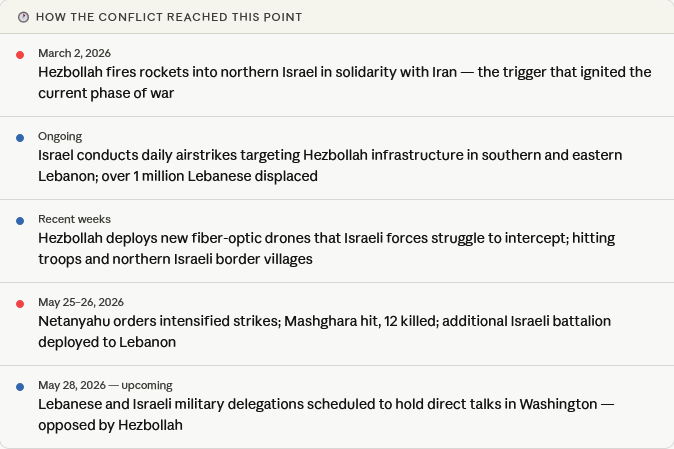
The escalation comes at a particularly fraught diplomatic moment. Lebanese and Israeli military delegations are scheduled to meet in Washington in just three days for direct talks — a channel the Lebanese government hopes can lead to a ceasefire agreement. Hezbollah, however, has made clear it opposes those talks and has set its own conditions for any halt in hostilities: a full stop to Israeli daily airstrikes and the complete withdrawal of Israeli troops from Lebanese territory. Israel has shown no indication of accepting either demand.
On the battlefield, Hezbollah has continued pressing its own offensive, targeting Israeli troops stationed in southern Lebanon as well as communities along Israel’s northern border. The group has publicly boasted in recent weeks about deploying a new generation of fiber-optic guided drones — weapons that Israeli air defences have so far struggled to counter reliably, striking both military personnel and civilian areas near the border. Israel responded by updating public safety guidance across its northern regions, advising residents not to gather in large groups outdoors.
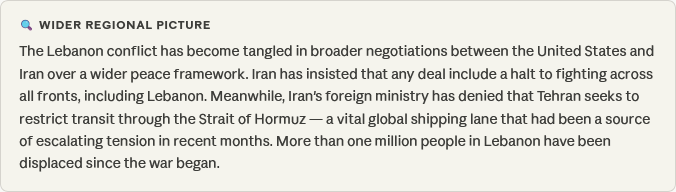
The human cost of the conflict continues to mount. Lebanon’s Health Ministry says at least 3,185 people have been killed in Israeli strikes since the fighting began, with more than 9,600 others wounded. More than one million Lebanese have been displaced — a displacement crisis that has strained the country’s already fragile infrastructure and public services to breaking point. With talks three days away and the guns still firing, there is little sign that either side is ready to stand down.