
Millions of Ethiopians cast ballots today in parliamentary elections that are widely forecast to return the ruling Prosperity Party to power — but opposition voices warn of shrinking democratic space.
June 1, 2026 Addis Ababa Politics & Democracy 4 min read

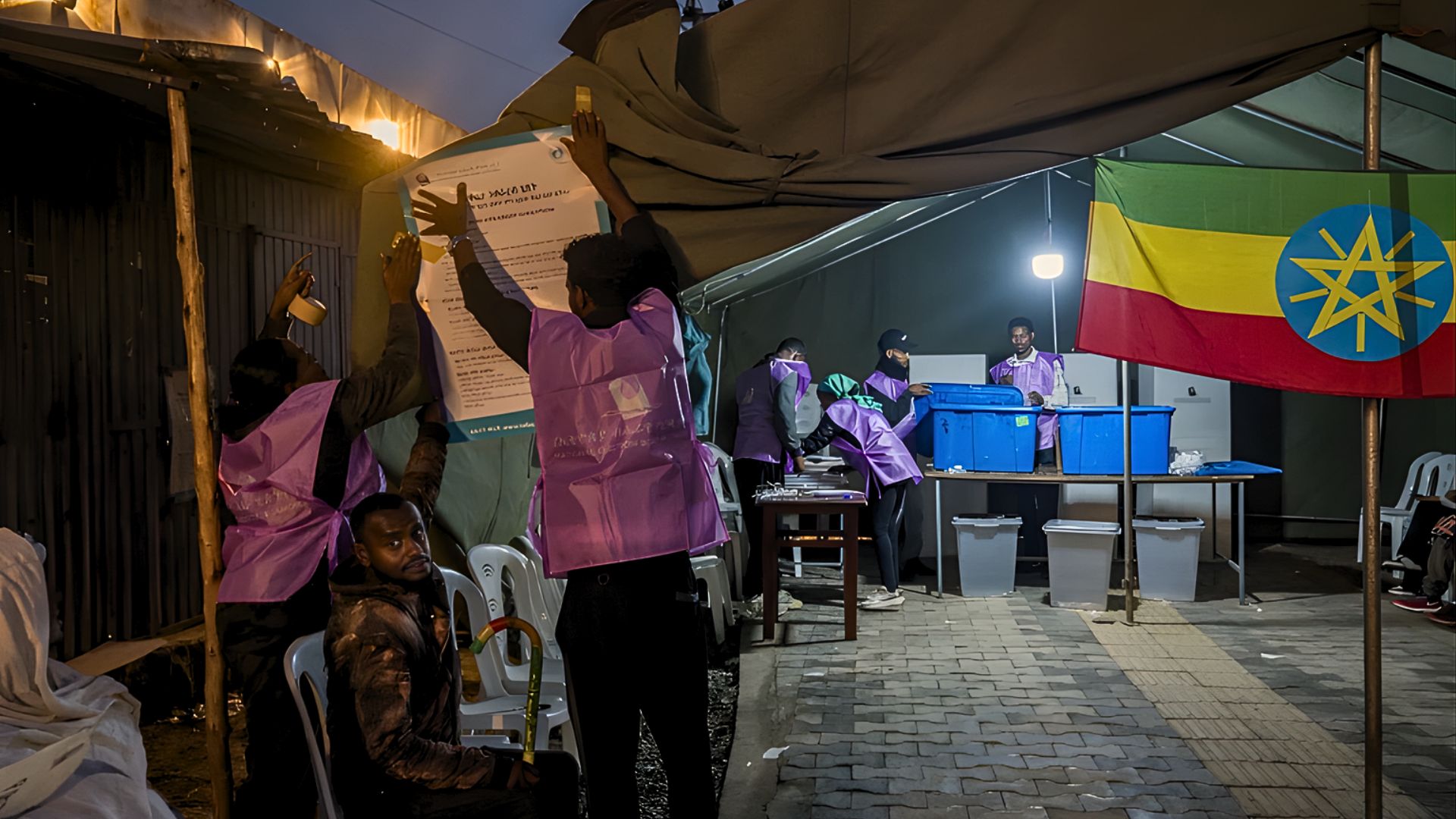
Polling stations across Ethiopia opened their doors on Monday morning for a general election in which roughly 50 million registered voters are choosing members of the federal House of Representatives — and, indirectly, the country’s next prime minister.
Long queues formed before the 6 a.m. opening time in Addis Ababa, Africa’s diplomatic capital and home to the headquarters of the African Union. A notable military and security presence was visible throughout the city, as international observers called for voting to remain calm and orderly.
Prime Minister Abiy Ahmed’s Prosperity Party currently holds more than 500 seats in the House — and analysts expect that dominance to continue.
How the system works
Under Ethiopia’s political structure, voters elect parliamentary representatives rather than the prime minister directly. The House of Representatives subsequently selects the head of government — meaning a Prosperity Party majority almost certainly guarantees Abiy Ahmed retains office for another term. The government declared election day a national holiday to encourage turnout.
Opposition concerns
Not everyone is satisfied with the conditions of the contest. Opposition parties, including the Ethiopian Citizens for Social Justice (EZEMA), have publicly complained about what they describe as a narrowing political environment, alleging they were hampered in their ability to campaign freely and persuade voters. EZEMA’s spokesperson also pointed to the country’s ethnically-divided political landscape as a driver of instability and tension in communities.
Human rights organisations have separately raised concerns about reports of abuse targeting government critics and journalists, adding a shadow to proceedings that the government contests.
Security gaps leave parts of the country unrepresented
The election will not be held in the Tigray region, which election authorities cited as facing unfavourable conditions — a legacy of the devastating 2020–2022 war that claimed hundreds of thousands of lives and continues to shape Ethiopia’s political landscape. Several constituencies in the Amhara region will also not vote due to ongoing insecurity, meaning a significant portion of the population will sit this election out entirely.
Opposition concerns
Not everyone is satisfied with the conditions of the contest. Opposition parties, including the Ethiopian Citizens for Social Justice (EZEMA), have publicly complained about what they describe as a narrowing political environment, alleging they were hampered in their ability to campaign freely and persuade voters. EZEMA’s spokesperson also pointed to the country’s ethnically-divided political landscape as a driver of instability and tension in communities.
Human rights organisations have separately raised concerns about reports of abuse targeting government critics and journalists, adding a shadow to proceedings that the government contests.
Security gaps leave parts of the country unrepresented
The election will not be held in the Tigray region, which election authorities cited as facing unfavourable conditions — a legacy of the devastating 2020–2022 war that claimed hundreds of thousands of lives and continues to shape Ethiopia’s political landscape. Several constituencies in the Amhara region will also not vote due to ongoing insecurity, meaning a significant portion of the population will sit this election out entirely.