CREDIT: faraafrica.org
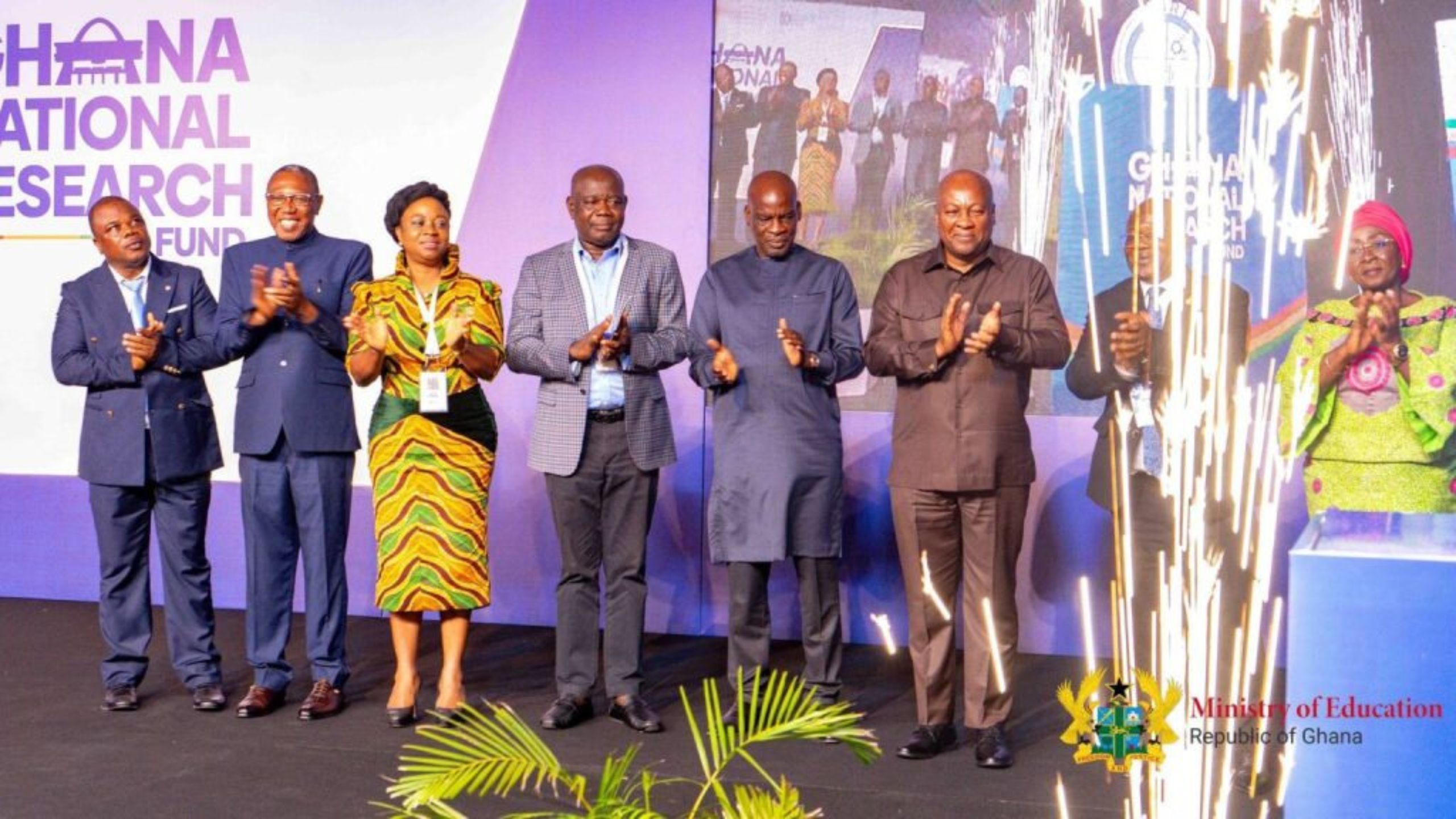
Ghana has taken a bold and potentially transformative step towards building a knowledge-driven economy, with the official launch of the Ghana National Research Fund at the Labadi Beach Hotel in Accra.
I had the privilege of representing the Executive Director of the Forum for Agricultural Research in Africa, Dr Aggrey Agumya, at this landmark national event. Dr Agumya leads FARA as Executive Director and Head of Mission, advancing the organisation’s continental mandate for agricultural research and innovation.
The launch, themed “Resetting Ghana: Financing Research for National Transformation,” was attended by the President of the Republic of Ghana, H.E. John Dramani Mahama; the Minister for Education, Hon. Haruna Iddrisu; the Deputy Minister for Education, Dr Clement Apaak; the Minister for Tourism, Culture and Creative Arts, Hon. Abla Dzifa Gomashie; and other high-level dignitaries.
Also present were representatives of the British High Commission, UNESCO, the World Bank, Parliament, Vice-Chancellors and senior members of universities and other research institutions, development partners, and other stakeholders in Ghana’s research and innovation ecosystem. The breadth of participation demonstrated that research financing is no longer the sole concern of universities and laboratories. It is increasingly recognised as a national development imperative.
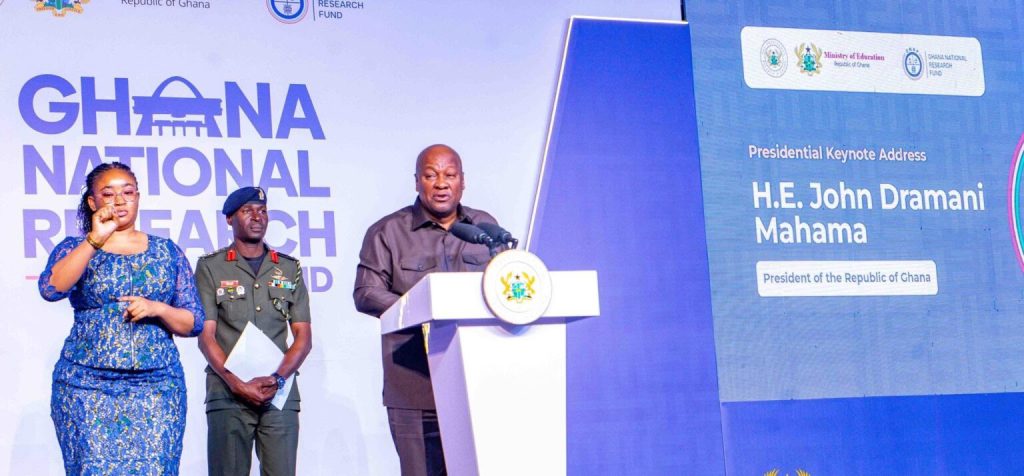
A defining moment of the launch was President Mahama’s announcement of an immediate GH¢100 million catalytic allocation to support the Fund’s operationalisation in 2026. The President further pledged his direct support for the Fund’s broader resource mobilisation agenda.
The allocation is expected to support competitive research grants, doctoral and postdoctoral programmes, digital grant-management infrastructure, and innovation initiatives aligned with Ghana’s national development priorities. The President also directed the Ministry of Education, GETFund, and the GNRF Governing Board to ensure the transparent, accountable, and results-oriented use of the resources.
This commitment is both significant and timely. For decades, research funding in Ghana has been fragmented, unpredictable and heavily reliant on external funding. Such dependence can distort research priorities, disrupt long-term programmes and weaken the ability of national institutions to investigate problems requiring sustained attention.
The Ghana National Research Fund, established under the Ghana National Research Fund Act, 2020 (Act 1056), provides a statutory framework for mobilising, managing and allocating sustainable funding for research, innovation, technology development and research infrastructure across the sciences, humanities and other fields of national endeavour.
The Fund’s governing documents appropriately characterise research financing as national infrastructure rather than a discretionary expenditure. They identify five national research missions for 2026–2030: food-systems transformation; climate and environmental sustainability; health innovation and biosecurity; digital and industrial transformation; and governance, policy and social systems.
These priorities recognise that research must ultimately improve productivity, livelihoods, public services, resilience and national competitiveness.
The Chair of the Governing Board, Professor Eric Yirenkyi Danquah, highlighted the Fund’s institutional progress to date, including the development of its five-year strategic framework for 2026–2030 and the acquisition of office premises in East Legon, Accra.
The strategy sets out a vision for building a world-class research and innovation fund capable of powering Ghana’s transformation. Its priorities include research talent development, transparent, competitive funding, innovation and industry partnerships, evidence-informed policymaking, sustainable financing, and institutional strengthening.
These are strong foundations. However, the Fund’s long-term success will be judged not only by how much money it mobilises, but also by the quality, accessibility and practical utility of the knowledge generated through its investments.