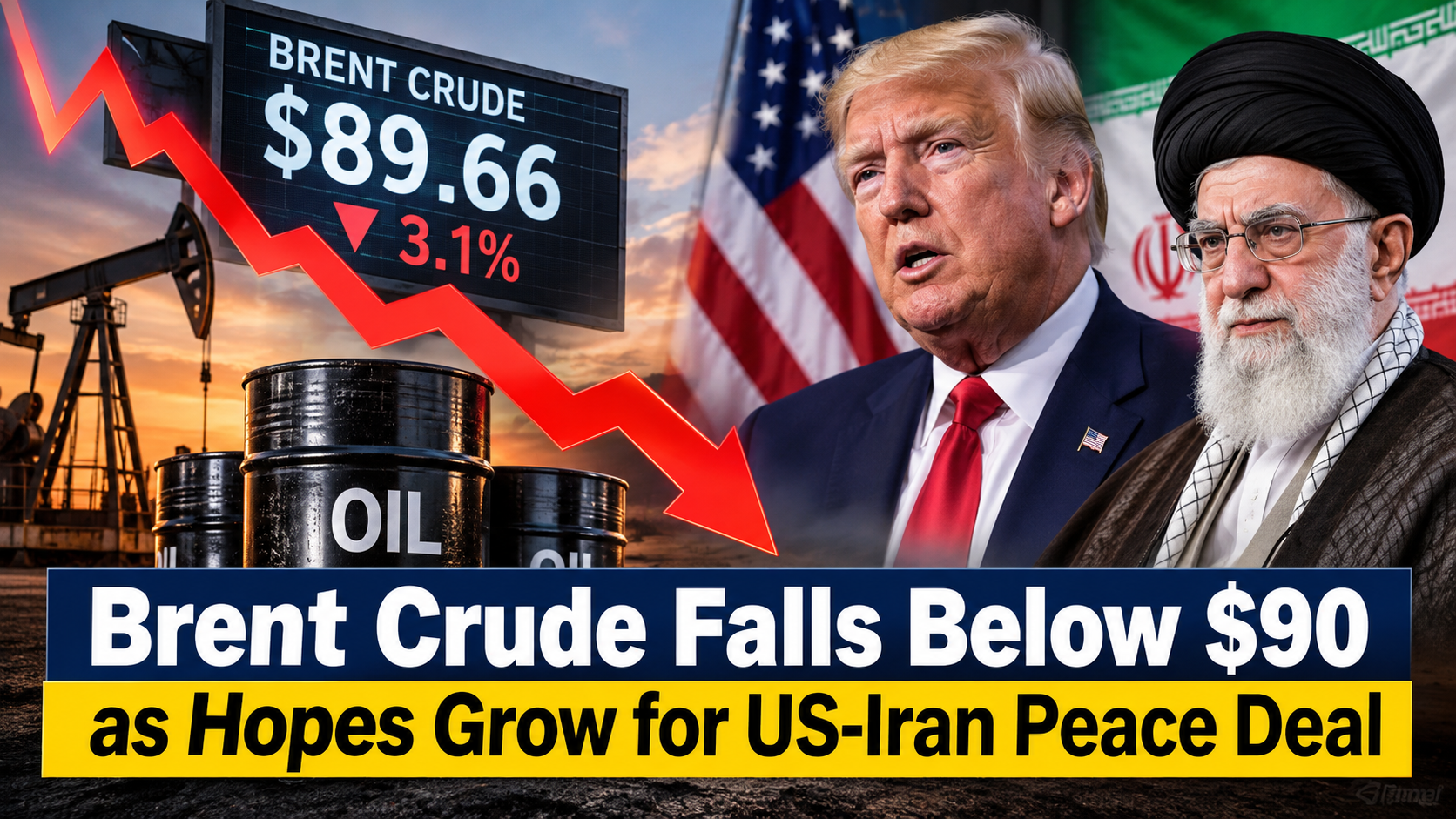
Global oil prices fell below $90 per barrel on Tuesday for the first time since August, as comments by United States President Donald Trump raised expectations of a possible end to the ongoing conflict with Iran.
Brent crude, the international oil benchmark, dropped by approximately 3.1 per cent to $89.66 per barrel, while US West Texas Intermediate (WTI) crude declined by 2.3 per cent to $84.86, according to market reports.
The decline followed Trump’s comments on Monday that diplomatic efforts were gaining momentum towards ending the conflict. He described Iran as being “militarily, effectively over” and indicated that further US military strikes were unlikely, although he did not completely rule out additional attacks.
Trump made the remarks after meeting Qatar’s Prime Minister, Sheikh Mohammed bin Abdulrahman Al-Thani, at the White House. Qatar has played a key intermediary role in efforts to secure an agreement between Washington and Tehran.
The prospect of reduced military tensions has eased concerns about prolonged disruptions to global oil supplies, particularly through the Strait of Hormuz, one of the world’s most important routes for transporting crude oil and liquefied natural gas.
The waterway has been severely affected by the conflict, which began in late February following US-Israeli military strikes against Iran. Disruptions to shipping through the strait contributed to a sharp rise in international oil prices, with Brent crude reaching a six-month high of about $118 per barrel in late October.
However, the prospect of a diplomatic breakthrough remains uncertain.
Iranian Foreign Minister Abbas Araghchi said Tehran was prepared to pursue a diplomatic solution but insisted that Washington must address its demands, including an end to the conflict, the lifting of oil sanctions and the unfreezing of Iranian assets.
Iran has also called for the reopening of the Strait of Hormuz and an end to the US naval blockade of its ports.
Meanwhile, Iran’s security chief, Mohsen Rezaei, dismissed reports of ongoing negotiations, accusing Washington of spreading false information about talks between the two countries.
Despite the diplomatic signals, attacks on commercial vessels around the Strait of Hormuz and continuing security concerns have kept uncertainty high in the oil market.
Market analysts say oil prices could remain volatile as traders assess the likelihood of a peace agreement, the security of shipping routes and the possibility of further military escalation.
The decline in crude prices could offer some relief to countries and consumers facing elevated energy costs. However, a sustained reduction will depend largely on whether diplomatic efforts produce a lasting agreement and restore confidence in the safe movement of energy supplies through the Middle East.