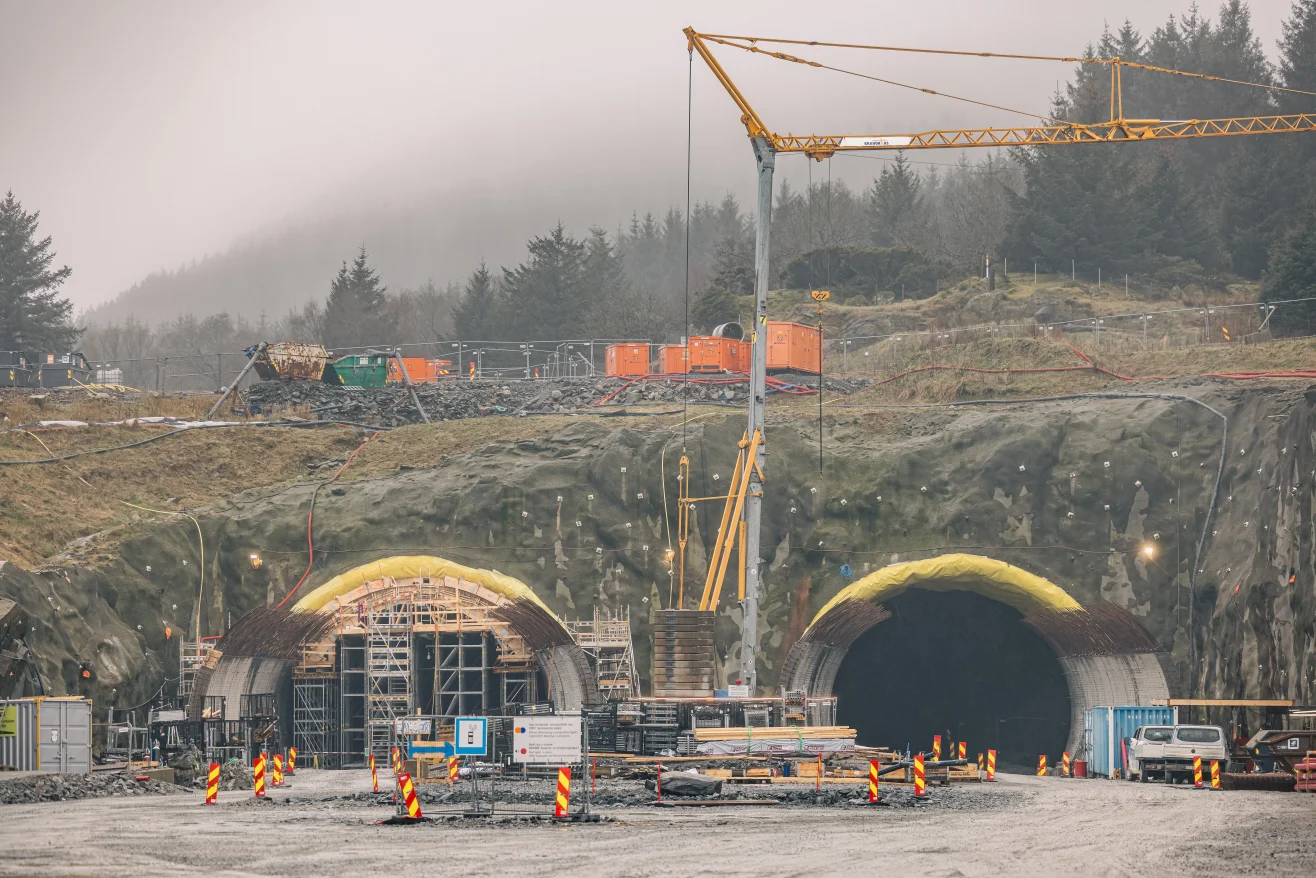
Norway is undertaking one of the world’s most ambitious engineering projects with the construction of a massive undersea road tunnel expected to become the longest and deepest of its kind when completed.
Known as the Rogfast Tunnel, the 27-kilometre infrastructure project will run beneath the Boknafjord along Norway’s western coast, reaching approximately 390 metres below sea level.
The project is designed to improve transportation between major Norwegian cities, particularly Stavanger and Bergen, while reducing dependence on ferry services that currently connect communities along the country’s rugged coastline.
A major breakthrough in transportation
The Rogfast Tunnel will consist of two separate underground tubes, each carrying two lanes of traffic. One of its most remarkable features is an underground road junction beneath the island of Kvitsøy, where motorists will be able to exit the main tunnel through connecting ramps and roundabouts.
The unusual junction is being constructed deep beneath the seabed, making it one of the project’s most technically demanding features.
Engineers are drilling and blasting through solid rock rather than laying prefabricated tunnel sections on the seabed. The construction method is intended to provide a durable structure capable of withstanding the immense pressure and challenging geological conditions beneath the sea.
Reducing travel time and dependence on ferries
When completed, Rogfast is expected to reduce the journey between Stavanger and Bergen by approximately 40 minutes.
The tunnel will also form an important part of Norway’s ambitious plan to develop a ferry-free coastal highway along the E39 route, connecting communities and commercial centres across the country’s western coastline.
The improved road network is expected to benefit commuters, tourists, businesses and industries, particularly seafood producers that depend on reliable transportation to deliver products to domestic and international markets.
Norwegian authorities also anticipate that the project will strengthen economic connections between communities that have traditionally relied on ferry crossings.
Engineering challenges and safety measures
Despite its ambitious design, construction has presented significant engineering challenges, particularly the need to control water leakage and maintain safe working conditions at extreme depths.
The project incorporates ventilation systems, emergency escape connections between the two tunnel tubes, monitoring cameras and other safety infrastructure designed to protect motorists.
The Norwegian Public Roads Administration is overseeing the project, with several construction companies working on different sections of the tunnel.
When will the tunnel be completed?
Construction began in 2018, although the project experienced delays and restructuring following concerns over rising costs.
The Norwegian authorities currently project that the Rogfast Tunnel will open in 2033.
Once completed, the 27-kilometre structure is expected to establish a new world record as the longest and deepest undersea road tunnel, marking a major achievement in modern transportation engineering.