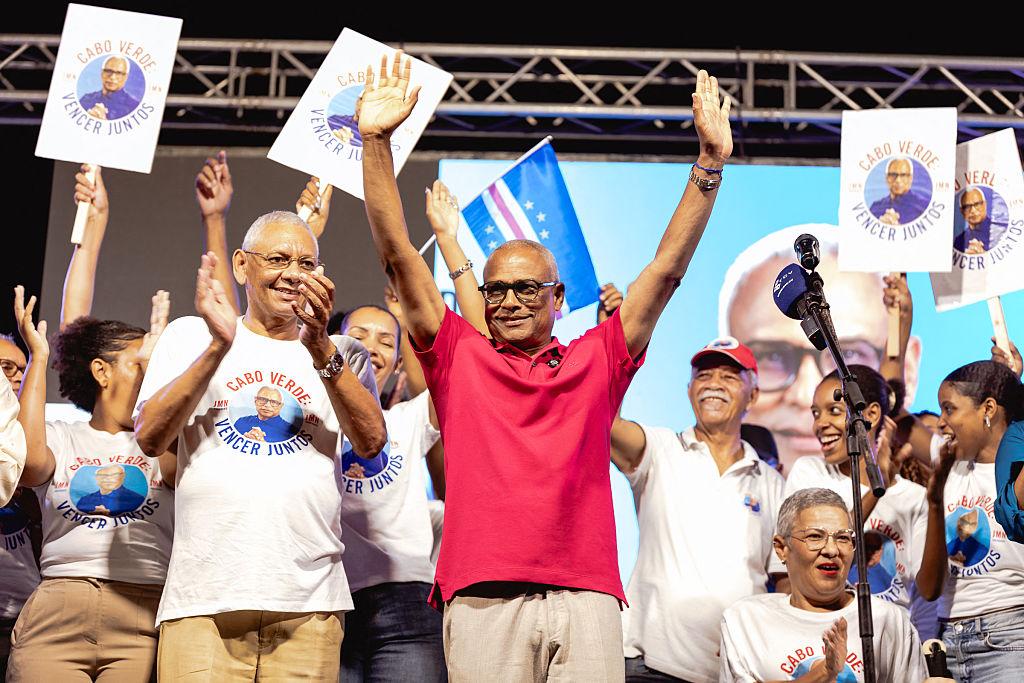
Cape Verde’s President José Maria Neves has secured a second five-year term after provisional election results showed him winning approximately 64 per cent of the vote.
His main challenger, former Justice Minister Joana Rosa, received about 31 per cent and conceded defeat, making her the first woman to contest the country’s presidential election.
Neves celebrated the result as a victory for the country and pledged to represent all citizens, regardless of their political affiliations.
The election took place against the background of economic challenges, including unemployment and rising living costs, which have contributed to migration from the island nation.
Voter turnout was reported at approximately 31.7 per cent, a development that has raised questions about political participation and the growing impact of emigration on the country’s electorate.
Cape Verde is widely regarded as one of West Africa’s more stable democracies and has maintained a record of peaceful political transitions.
Under its political system, the prime minister exercises most executive powers, while the president performs a largely ceremonial role, although the office carries important constitutional responsibilities.
Cape Verde’s development priorities offer opportunities in renewable energy, marine science, digital government and climate adaptation.
As an island country, it faces particular exposure to climate change, rising sea levels and pressure on freshwater resources.
Investment in ocean research, solar and wind energy, water management and digital services could help strengthen economic resilience while creating opportunities for scientific cooperation across West Africa.