
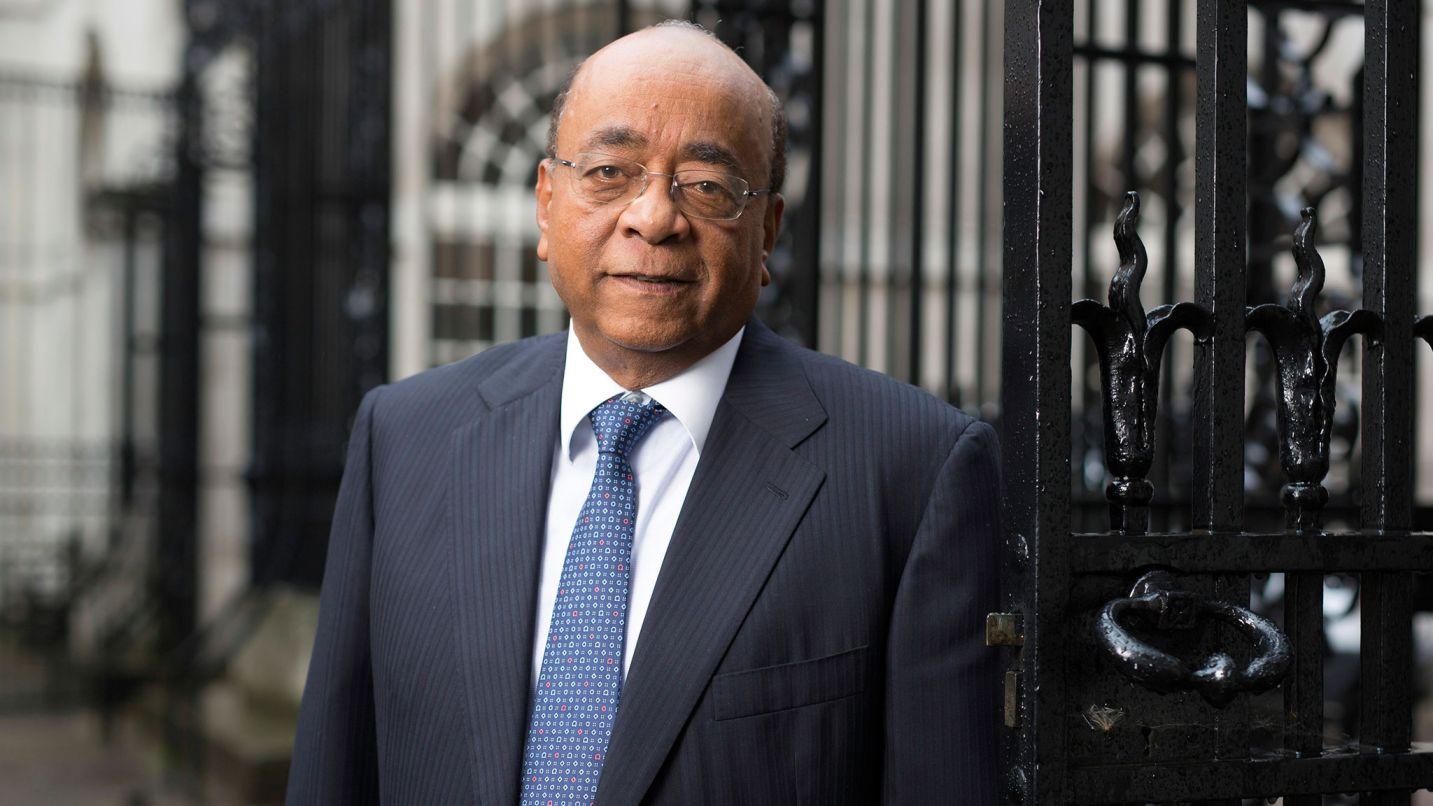
British-Sudanese billionaire and philanthropist Mo Ibrahim has urged African governments to strengthen domestic financing, improve revenue collection and tackle financial leakages, warning that the continent cannot continue relying heavily on foreign donors to fund its development.
Speaking in an interview with Reuters on Wednesday, November 18, Ibrahim said declining international development assistance should serve as an opportunity for African countries to take greater control of their economies and development priorities.
“Africa needs to own its own future and its own economy,” he said, stressing that governments have the primary responsibility for providing essential services, including healthcare and education.
His comments come amid a sharp reduction in international development assistance. According to Reuters, global official development assistance from wealthy donor nations fell by 23.1 per cent in 2025, representing the largest annual decline on record.
Ibrahim argued that Africa has significant financial resources that could support its development if governments address capital flight, illicit financial flows and tax avoidance by multinational corporations.
According to figures cited in a 2025 report by his foundation, Africa loses an estimated $90 billion annually through capital flight, an amount exceeding what the continent receives in official development assistance. Almost half of the estimated losses are associated with extractive industries.
He called on governments to strengthen tax collection, reconsider tax holidays and other incentives that deprive public finances of revenue, and ensure multinational companies pay taxes where they generate profits.
The philanthropist also recommended directing more African pension funds and sovereign wealth funds towards productive investments within the continent, particularly infrastructure and businesses capable of generating jobs and economic growth.
Nigeria faces governance concerns
Ibrahim also expressed concern about Nigeria’s governance performance, saying the 2026 Ibrahim Index of African Governance showed deterioration across all four of its major categories in the country.
The index examines governance across Africa, including security, the rule of law, economic opportunities, human development and respect for civil rights.
While the continent recorded modest overall governance progress over the past decade, Ibrahim warned that worsening insecurity, weak institutions and declining respect for civil liberties threaten sustainable development.
He also highlighted challenges facing countries across a conflict-affected region stretching from the Atlantic coast through the Sahel to the Horn of Africa.
Africa’s financial independence at stake
Ibrahim’s message places renewed attention on domestic resource mobilisation as African countries confront declining foreign assistance, mounting debt obligations and growing demand for public services.
For Nigeria and other African economies, improving tax administration, reducing corruption, retaining more value from natural resources and encouraging local investment could provide additional financing for development.
However, stronger domestic financing will also require transparency, accountable institutions and public confidence in how governments manage national resources.
The challenge, therefore, is not simply to raise more money, but to ensure that Africa’s wealth translates into better living conditions for its people.
Source: Reuters