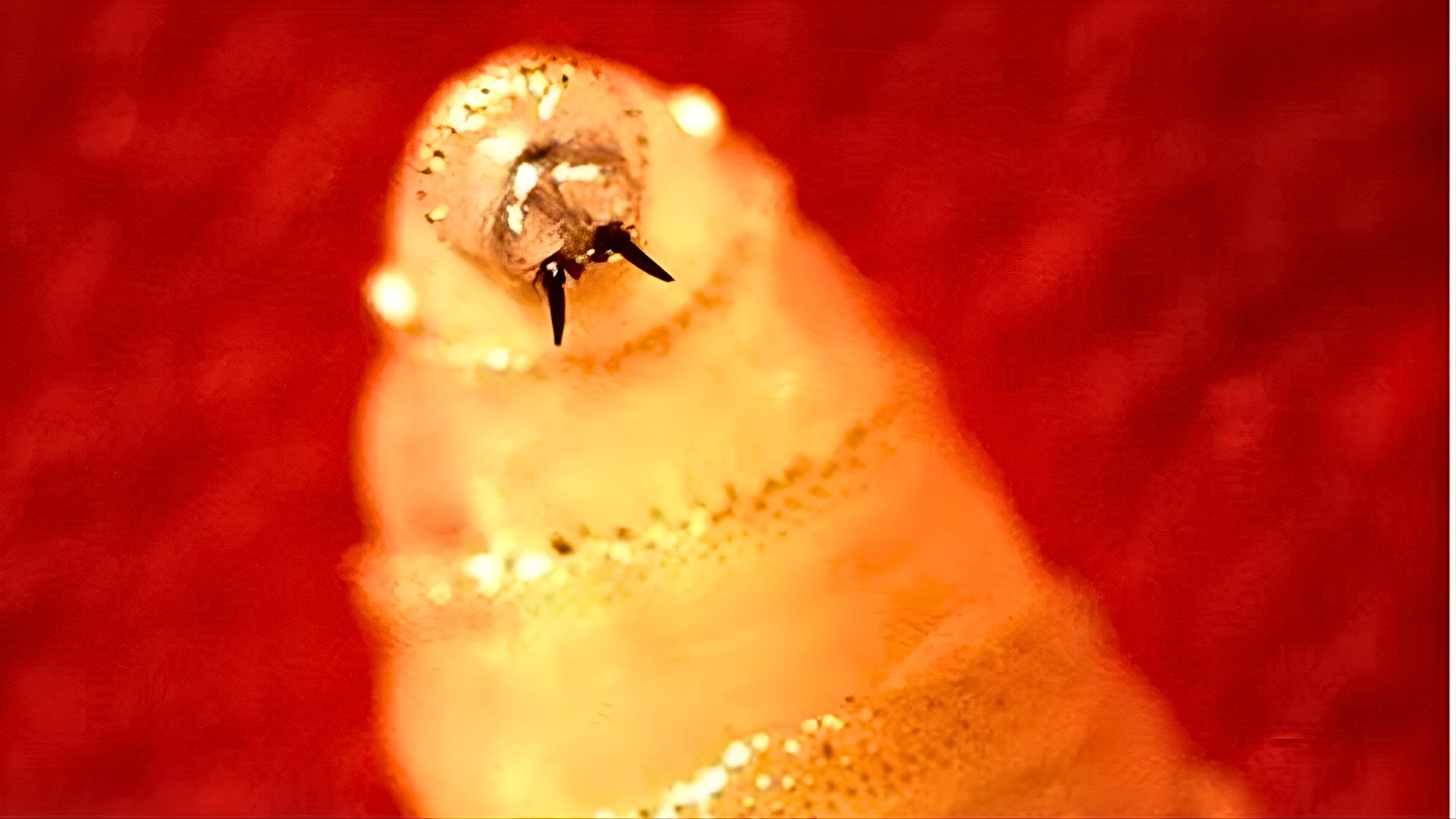
A three-week-old calf in La Pryor, South Texas has tested positive for the New World screwworm — a parasitic fly eradicated from the US in the 1960s — triggering a 12-mile quarantine zone and a race to deploy sterile flies before the pest spreads.
By IDEA Television News Desk
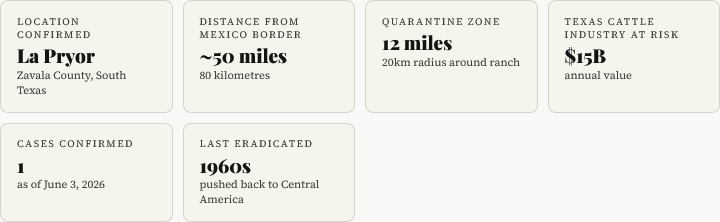
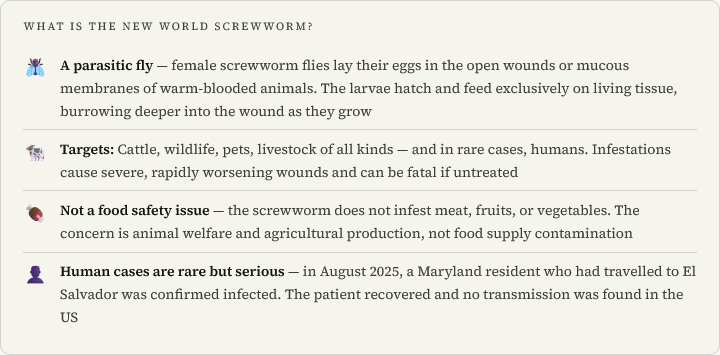
The United States has confirmed its first case of the New World screwworm in US livestock in decades — a parasitic fly whose flesh-eating larvae can kill cattle, pets, wildlife, and in rare cases humans. The USDA’s National Veterinary Services Laboratories in Ames, Iowa, confirmed the detection on Wednesday in a three-week-old calf in La Pryor, Zavala County — roughly 50 miles from the US-Mexico border in South Texas. Agriculture Secretary Brooke Rollins confirmed the case in a press briefing Wednesday evening, describing it as the only confirmed US case currently being tracked.
The detection ends a decades-long absence of the screwworm from American soil. State and federal authorities had been bracing for its arrival for months, after the pest — contained in Panama since the 1960s — began spreading through Central America and then northward through Mexico, with cases recorded in Panama, Costa Rica, Nicaragua, and Honduras. The US suspended livestock imports from Mexico in November 2024 over screwworm concerns, a decision that caused significant diplomatic friction with Mexico City before imports were partially resumed in 2025.
“If we all work together and follow the animal treatment protocols and movement restriction guidance, there is no reason to believe this incursion will result in establishment of the pest in our country.”
— US Agriculture Secretary Brooke Rollins, press briefing, June 3, 2026
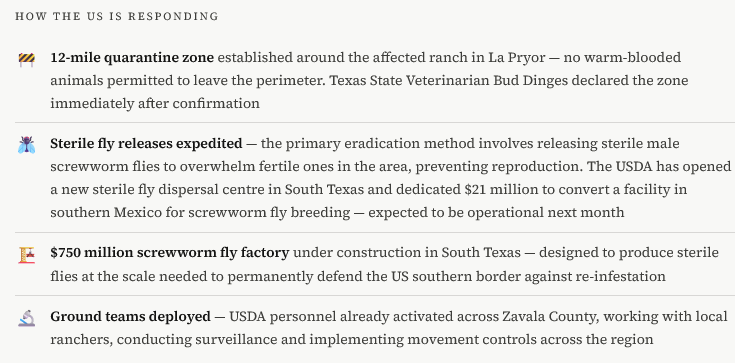
The economic stakes are significant. Texas has the largest cattle industry in the United States, valued at approximately $15 billion annually. A screwworm infestation that becomes established could cost the US economy billions of dollars — it already devastated the livestock sector across the American South before a decades-long eradication campaign using sterile fly releases finally eliminated the pest from the continental US in the 1960s. Authorities are urging all ranchers and pet owners near affected areas to check animals carefully for signs of infection — particularly unusual maggots or rapidly worsening open wounds — and to keep wounds clean and covered.