
Anti-immigration protests flared across Northern Ireland on Tuesday night after a violent stabbing in north Belfast sent shockwaves through communities — and far beyond — igniting street disorder, political condemnation, and a fierce debate about social media’s role in stoking unrest.
IDEA Television World Desk
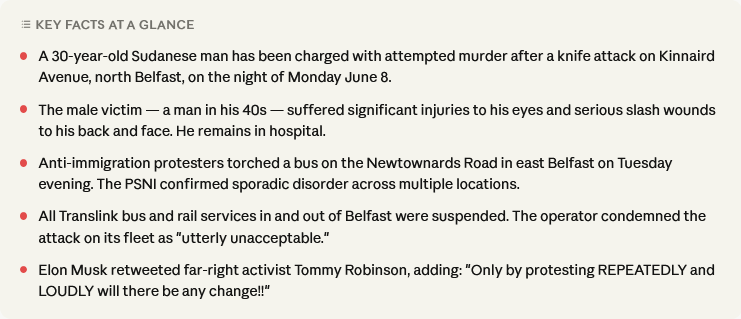
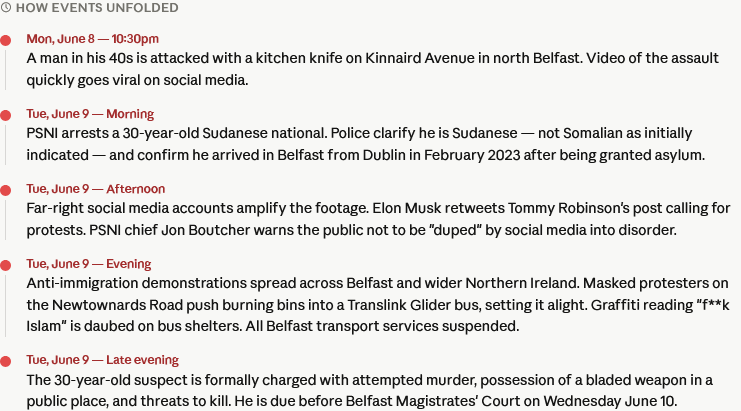
The night of June 8 began like many others in north Belfast — until a video began spreading on social media showing a man pinning a bloodied victim to the ground on a residential street. The footage, which reached millions of viewers within hours, showed bystanders and police officers intervening to stop the attacker, who wielded a kitchen knife. The victim was left with severe injuries to his eyes and deep slash wounds across his back and face.
“We understand there are strong community concerns after last night’s shocking attack. I am appealing to everyone to remain calm.”
— PSNI Assistant Chief Constable Ryan Henderson
By Tuesday morning, police had charged a 30-year-old Sudanese man with attempted murder. Investigators say the suspect had no prior contact with police, does not appear on PSNI crime databases, and there is currently no evidence of any links to terrorism. He travelled from Sudan to Paris, then flew to Dublin, and arrived in Belfast by bus in February 2023 after being granted leave to remain. He is due in court on Wednesday.
But the speed of the judicial process was overtaken by the speed of social media. Within minutes of the suspect being identified, accounts linked to far-right networks were sharing compiled videos and personal details, pushing calls for street protests under the banner of anti-immigration anger. Elon Musk, owner of X and the world’s wealthiest person, amplified the movement — retweeting a post by Tommy Robinson, the far-right activist also known as Stephen Yaxley-Lennon, with the comment: “Only by protesting REPEATEDLY and LOUDLY will there be any change!!”
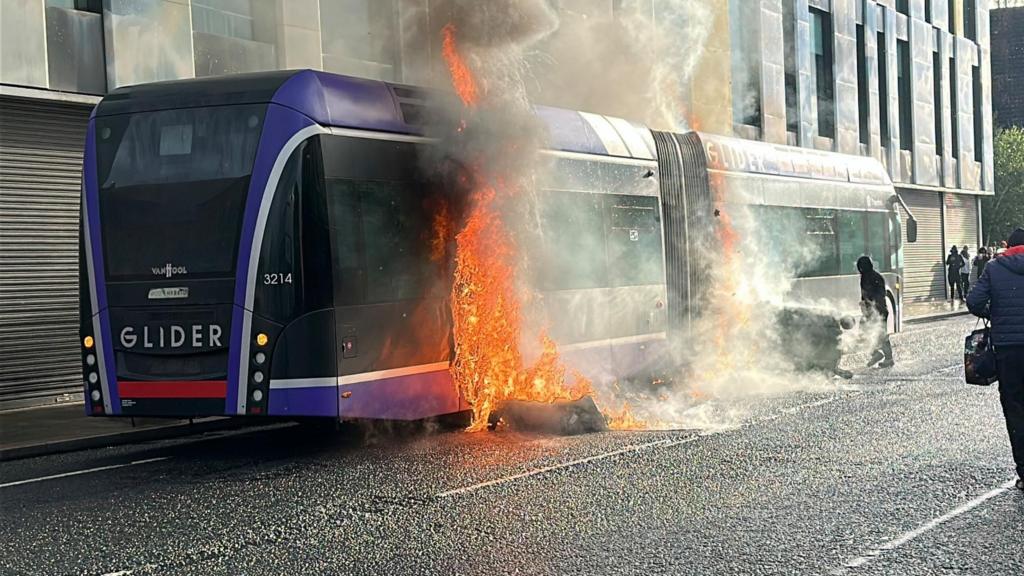
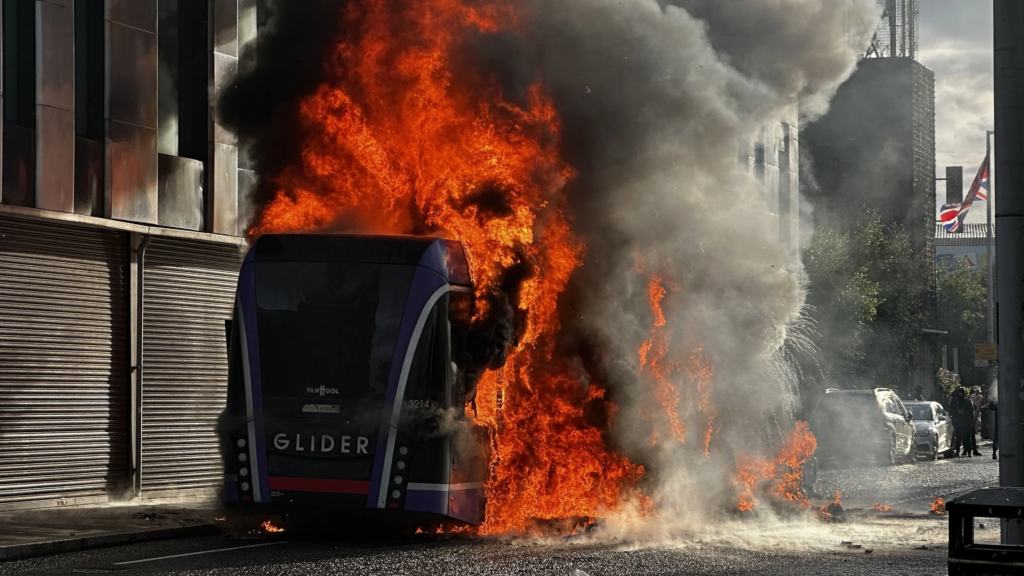
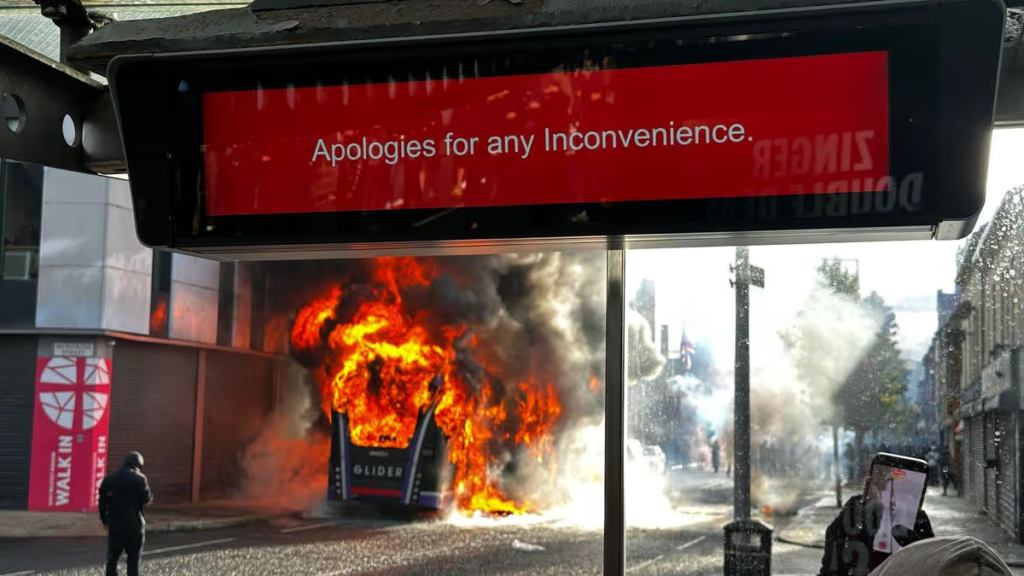
Protests broke out across Belfast and wider Northern Ireland on Tuesday evening. On the Newtownards Road in east Belfast, a large crowd gathered for a scheduled anti-immigration rally. Masked individuals set commercial bins alight and pushed them into a Translink Glider bus, engulfing the vehicle in flames. Cameras captured thick plumes of smoke rising over the east of the city. Anti-Islamic graffiti was daubed on nearby bus shelters. Children were reported to be among those at the scene. Translink suspended all services in and out of Belfast and issued a statement condemning what it called a deplorable attack on public transport.
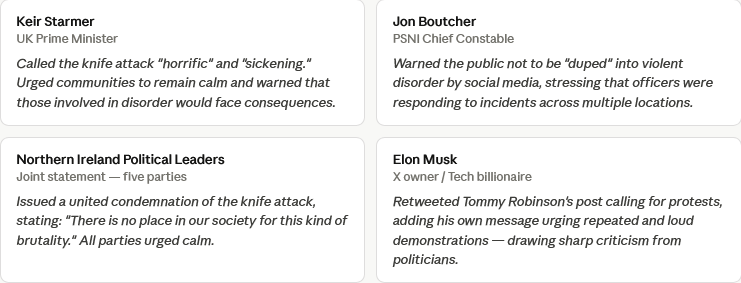
The events in Belfast echo the disorder that swept England in the summer of 2024 following the Southport stabbings, when far-right networks used social media — and Musk’s amplification — to organise riots across British towns. On that occasion, Musk posted that “civil war is inevitable.” On Tuesday, PSNI detectives were in contact with their counterparts in the Garda Síochána, monitoring far-right agitators potentially travelling from the Republic of Ireland to join the demonstrations in the North.