

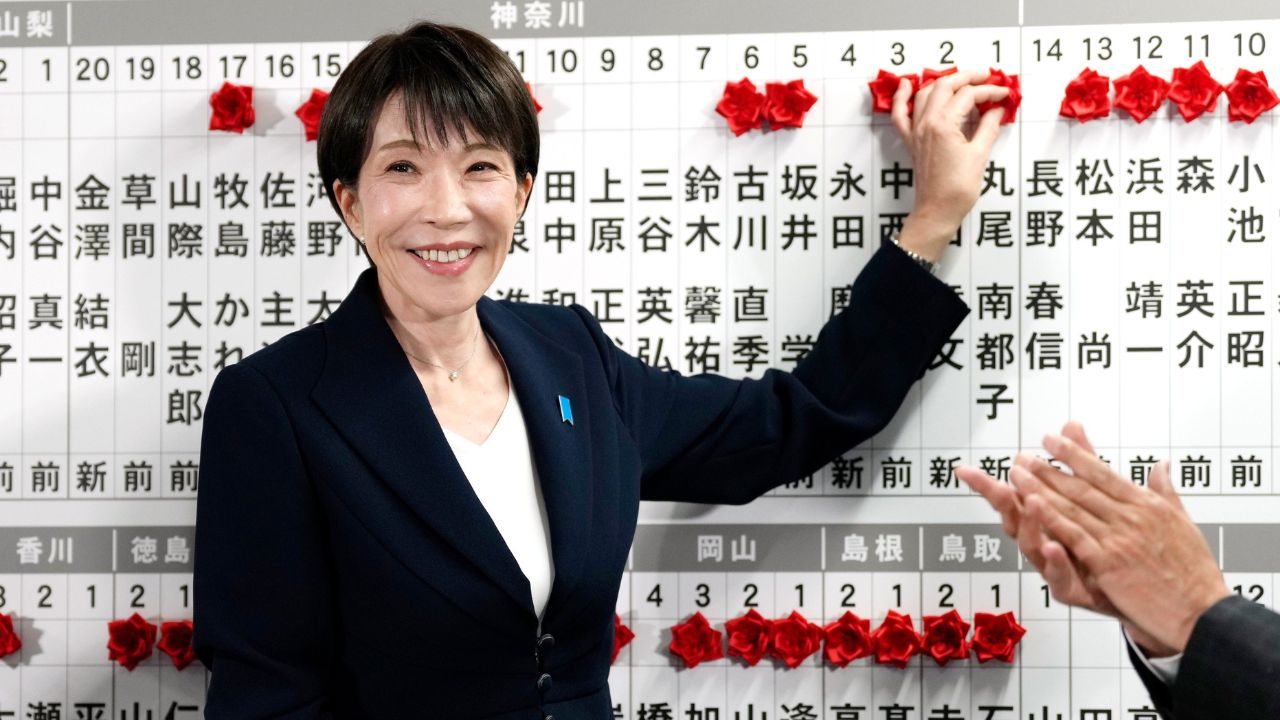
Japan’s Prime Minister Sanae Takaichi is leveraging her popularity to help her party win Sunday’s snap election as she pushes her right-wing agenda to boost her country’s economy and military capabilities in the face of growing tensions with China and an unpredictable Washington.
The ultraconservative Takaichi, who took office as Japan’s first female leader in October, has since enjoyed high ratings and support as her style and “work, work, work” mantra resonates with younger fans.
Latest polls indicate a landslide win in the lower house for Takaichi’s Liberal Democratic Party. The opposition, despite the formation of a new centrist alliance and the rising far-right, remains too splintered to be a real challenger.

Her party eyes a house majority
Takaichi’s relatively safe bet is that her LDP party would, together with its new partner, the Japan Innovation Party, or JIP, secure a majority in the 465-seat lower house, the more powerful of Japan’s two-chamber parliament.
Still, the latest surveys by major Japanese newspapers show there is a possibility Takaichi’s party could win a simple majority on its own while her coalition could win as many as 300 seats — a big jump from a thin majority it held since a 2024 election loss.
The coalition lacks a majority in the other chamber, the upper house, which leaves it dependent on cooperation from the opposition to pass legislation, a risk to stability.
Takaichi said Sunday’s election is about deciding if she should stay on as Japanese leader and tackle her “nation-splitting policies.”
If the LDP fails to win a majority, “I will step down,” she said.
Rise of the right, weakening left
A big win by Takaichi’s coalition with its right-wing new partner JIP could mean a significant shift in Japan’s security, immigration and other policies further to the right as far-right populists gain ground, such as the anti-globalist, surging nationalist party Sanseito.
The Buddhist-backed dovish Komeito party, which had split from the LDP over Takaichi’s political views and lax anti-corruption measures, has formed a centrist alliance with the liberal-leaning main opposition — the Constitutional Democratic Party of Japan — promising policies that include a “realistic” security, a nuclear weapons-free world and diversity.
Komeito’s ability to turn out multimillion votes from the Soka Gakkai sect could present a minor setback to the LDP, but surveys for the centrist alliance are not promising.
Left-leaning parties are increasingly losing ground as younger voters see their war-renouncing and anti-nuclear policies as unrealistic, and their further decline is inevitable, said Izuru Makihara, a University of Tokyo professor and expert in Japanese politics.
Stronger military, anti-espionage and foreigners
Takaichi has pledged to revise security and defense policies by December to bolster Japan’s offensive military capabilities, lifting the ban on lethal weapons exports and moving further away from the country’s postwar pacifist principles.
She has been pushing for tougher policies on foreigners, anti-espionage and other measures that resonates with a far-right audience but ones that experts say could undermine civil rights.