The R-360 Neptune, developed by the Luch Design Bureau in Kyiv, has rapidly evolved from a Ukrainian defense project into a global symbol of modern coastal warfare. Its notoriety soared after the missile’s pivotal role in the sinking of the Russian cruiser Moskva in April 2022—a moment that underscored the Neptune’s impact on the battlefield and reshaped perceptions of naval conflict.
Design and Capabilities
The Neptune is based on the Soviet Kh-35 design but features extensive upgrades in range, electronics, and targeting systems. With an effective range of approximately 280–300 km (175–190 miles) and delivering a 150 kg (330 lbs) high-explosive fragmentation warhead, the subsonic missile travels at about 900 km/h. During its flight, it maintains an altitude of 10–15 meters, dropping to as low as 3–10 meters (sea-skimming mode) in the terminal phase to evade enemy radar. Navigation relies on inertial guidance with GPS correction, and an active radar homing head ensures precision in the final attack phase.
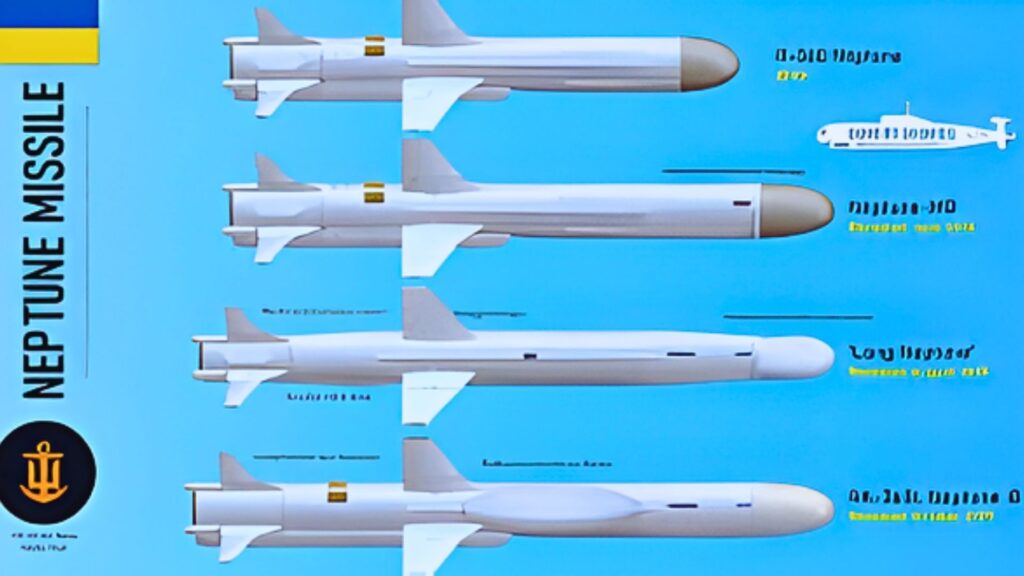
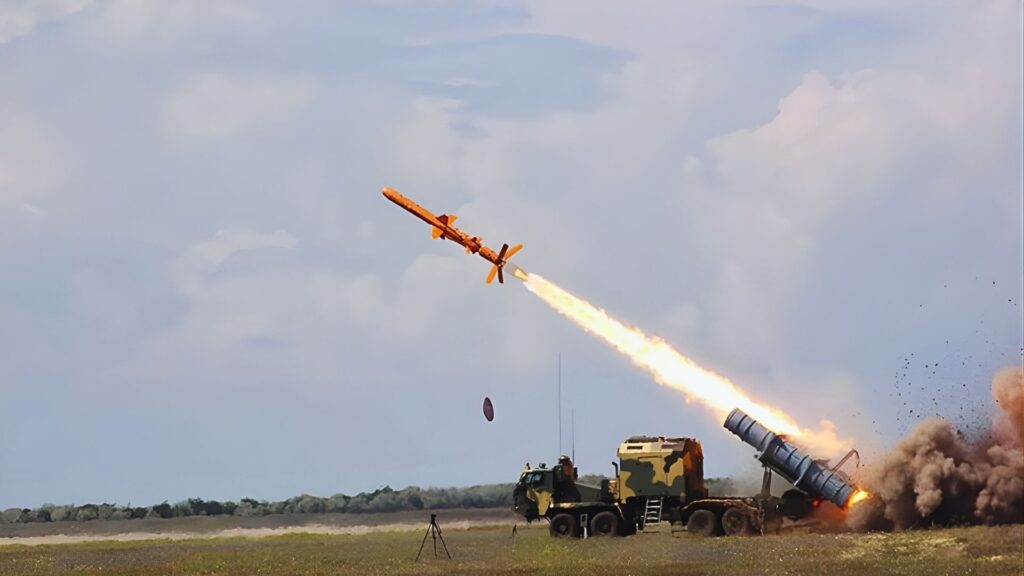
The Neptune System (RK-360MC)
A standard Neptune battery is designed for high mobility and “shoot-and-scoot” tactics, making it difficult to target with counter-battery fire. Each battery typically features a truck-mounted launcher carrying four missiles, vehicles for spare munitions, and a mobile command unit that coordinates targeting using data from drones or radar.
The Long-Range Evolution (2024–2026)
By late 2024, Ukraine had successfully adapted the Neptune for land-attack missions. Reports from the Ministry of Strategic Industries of Ukraine indicate that these new variants can reach up to 400 km, enabling strikes deep into occupied Crimea and Russian border regions. Unlike the original anti-ship version, the land-attack Neptune uses advanced GPS and terrain-matching sensors to accurately hit static targets such as air defense batteries and ammunition depots.
The Neptune has demonstrated that cost-effective, domestically produced subsonic missiles are capable of neutralizing sophisticated, high-value naval assets. Its success has drawn keen international interest, with the State Service of Export Control of Ukraine now fielding inquiries from countries seeking advanced coastal defense solutions.