
IDEA Television || Sports News
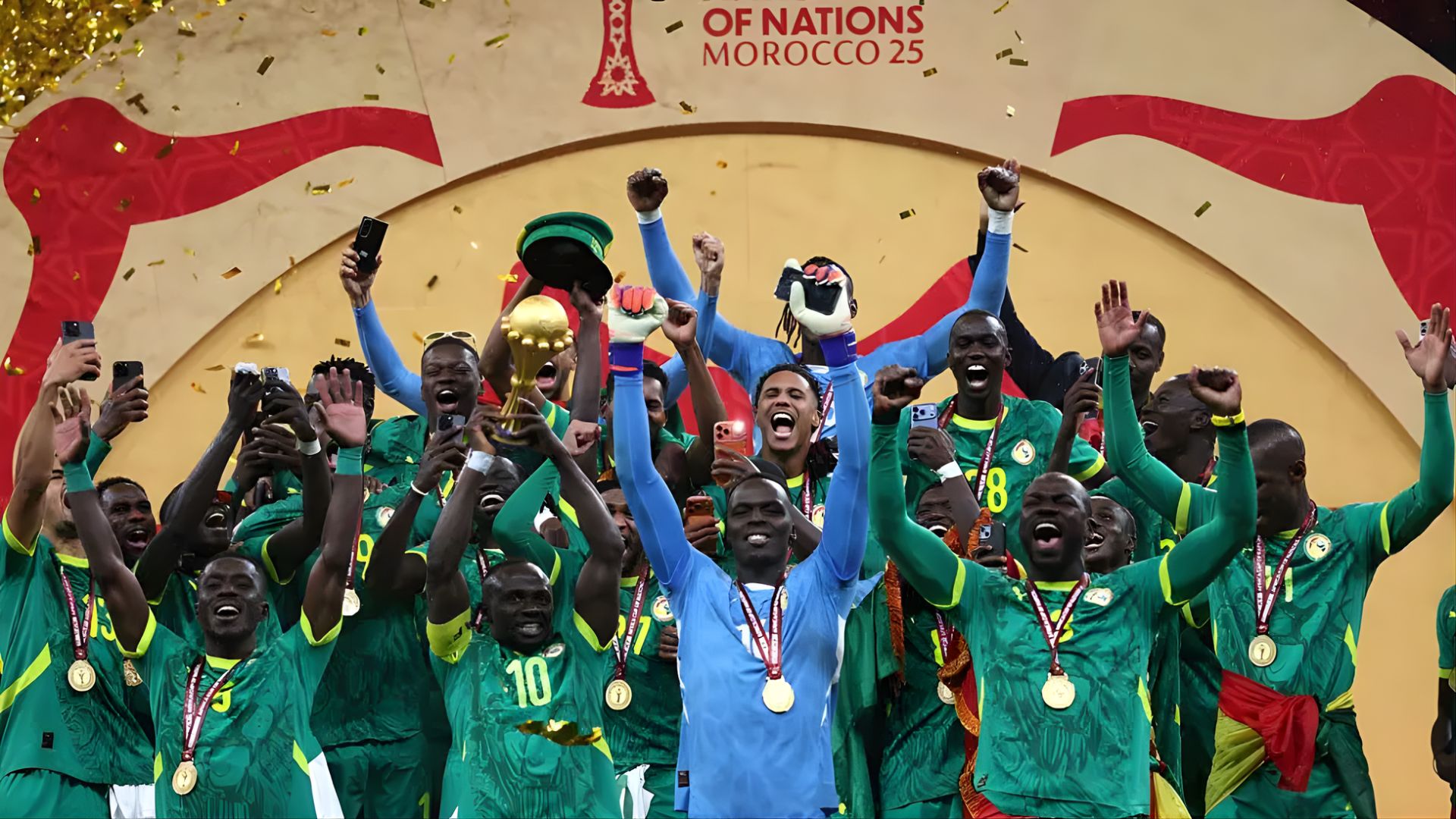
Morocco has been declared the winner of the 2025 Africa Cup of Nations (AFCON) after the Confederation of African Football (CAF) overturned the result of the final match against Senegal. This ruling comes after Senegal’s players controversially walked off the pitch during stoppage time, leading to a match abandonment and a subsequent disciplinary review.
What Happened in the Final?
The AFCON final, held on January 18, 2025, was tightly contested between Senegal and Morocco. The match remained goalless deep into stoppage time when referee Jean Jacques Ndala awarded a penalty to Morocco following a VAR review of a challenge on Brahim Diaz. The decision sparked outrage from the Senegalese side, especially after a Senegal goal by Ismaila Sarr was disallowed earlier in the game.
In protest, Senegal’s head coach Pape Thiaw led his players off the field, refusing to continue the match. Despite a 17-minute delay, the players eventually returned to the pitch. Diaz took the penalty but saw his tame ‘Panenka’ effort saved by Senegal’s goalkeeper Edouard Mendy. Shortly after, Senegal’s Pape Gueye scored in extra time, seemingly securing a 1-0 victory and the AFCON title for Senegal.
CAF’s Controversial Decision
However, CAF’s appeal board later ruled that Senegal had forfeited the final by refusing to play during the stoppage time incident. According to CAF’s statement, Senegal violated Article 82 of the AFCON regulations, which states that any team refusing to play or leaving the field without the referee’s permission will be considered the loser and eliminated from the competition. Article 84 further stipulates that such a team will lose the match 3-0 and be permanently eliminated.
As a result, CAF officially recorded the match as a 3-0 victory for Morocco, stripping Senegal of the title and awarding Morocco the championship.
Reactions and Next Steps
The Senegalese Football Federation has condemned CAF’s ruling as “unfair, unprecedented and unacceptable” and announced plans to appeal the decision at the Court of Arbitration for Sport (CAS).
Morocco’s Football Federation (FRMF) clarified that their appeal was not meant to challenge the sporting performance of either team but to ensure the proper application of competition regulations. They reaffirmed their commitment to upholding the rules and maintaining stability in African football competitions.
The decision has sparked widespread debate. Football journalist Maher Mezahi noted that while the ruling changes the official outcome, it cannot erase the emotional impact of the final moments witnessed by fans, including Senegal’s initial celebration and trophy parade.
Fallout and Consequences
The ruling has significant implications for African football governance and tournament integrity. Senegal faces potential disciplinary sanctions, including fines and suspensions, while Morocco’s title win, though official, may feel bittersweet to some given the circumstances.
In the aftermath, Morocco parted ways with their head coach Walid Regragui in early March, just months before the World Cup finals, adding another layer of complexity to the story.