

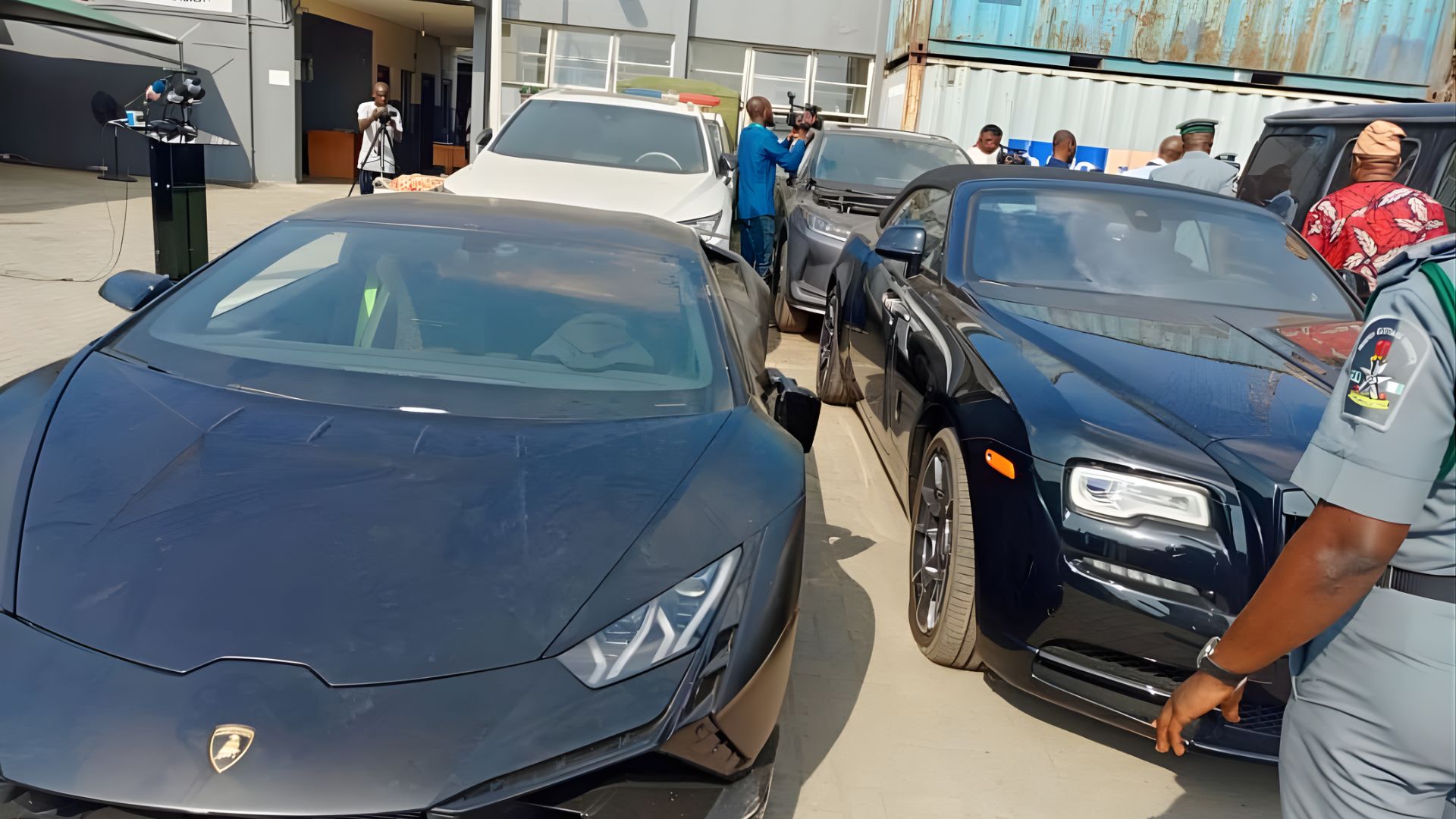
In a landmark operation spanning two continents, Nigeria’s Customs Service intercepted seven stolen luxury vehicles — worth millions of naira — smuggled through the Tin Can Island Port.
Idea Television News Desk

Nigerian authorities have pulled off one of the most significant anti-smuggling operations in recent memory — intercepting a cache of seven stolen luxury automobiles, including two Lamborghinis and a Rolls-Royce, before formally returning them to Canadian officials in a ceremony at the Tin Can Island Port on Monday, May 4, 2026.
The handover marked the culmination of months of covert intelligence-sharing between the Nigeria Customs Service and the Royal Canadian Mounted Police, after Canadian authorities traced a number of high-end vehicles believed to have vanished into international shipping networks — only to resurface inside containers at Nigeria’s busiest vehicle import terminal.
Canada’s Deputy High Commissioner to Nigeria, Nasser Salihou, personally received the seized vehicles from the Customs Area Controller of the Tin Can Island Command, Comptroller Frank Onyeka — a face-to-face handover that customs officials said was non-negotiable.
“We had people who wanted to step in on behalf of others, but this was too sensitive. We insisted the handover must be directly to the Canadian government.”
— Comptroller Frank Onyeka, Tin Can Island Command
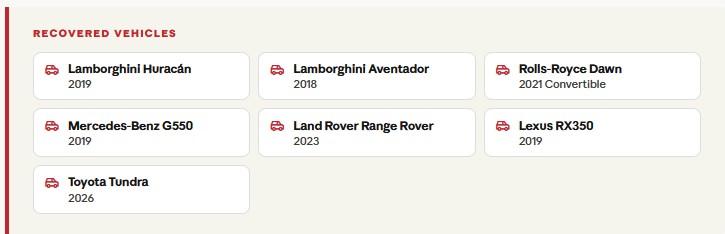
Among the recovered vehicles were a 2019 Lamborghini Huracán, a 2018 Lamborghini Aventador, a 2021 Rolls-Royce Dawn Convertible, a 2019 Mercedes-Benz G550, a 2023 Land Rover Range Rover, a 2019 Lexus RX350, and a 2026 Toyota Tundra. All had been confirmed stolen and illegally exported from Canada before being loaded onto commercial shipping vessels bound for Nigeria.
In a detail that underscores the sophistication of the smuggling operation, Onyeka revealed that one of the vehicles — a Toyota Tacoma — had been secretly concealed inside a container carrying other automobiles, apparently in an attempt to evade detection. The ruse failed. Nigerian customs officers, acting on intelligence received from their Canadian counterparts through official diplomatic channels, moved swiftly to place the consignment under enforcement watch before anyone could claim the vehicles.
“What looked like a routine cargo movement quickly became an international criminal investigation,” Onyeka said. “Once intelligence reached us, we placed the consignment under enforcement watch and secured the vehicle pending confirmation from Canadian authorities.”
The National Public Relations Officer of the Nigeria Customs Service, Abdullahi Maiwada, confirmed in an official statement that the operation was a product of deliberate collaboration — not chance. Authorities made a conscious decision to delay the release of all intercepted vehicles until Canadian officials physically arrived in Nigeria to verify them.
Security analysts say the bust is part of a troubling global trend. Criminal syndicates have increasingly turned to international shipping networks as cover for moving stolen luxury vehicles across continents, disguising them as legitimate cargo. African ports have become attractive targets due to strong demand for premium automobiles and, in some jurisdictions, gaps in cargo verification systems.
Nigerian authorities, however, are pushing back. Officials say improvements to cargo intelligence systems and deepening cross-border partnerships are dramatically tightening surveillance at the country’s seaports. The Tin Can Island Port — one of Nigeria’s busiest entry points for imported vehicles and containerised goods — now sits at the centre of that effort.
The recovery, officials say, sends a clear message: Nigeria is no longer a safe destination for stolen assets — and those who think otherwise should expect to find Nigerian customs officers waiting at the other end.