

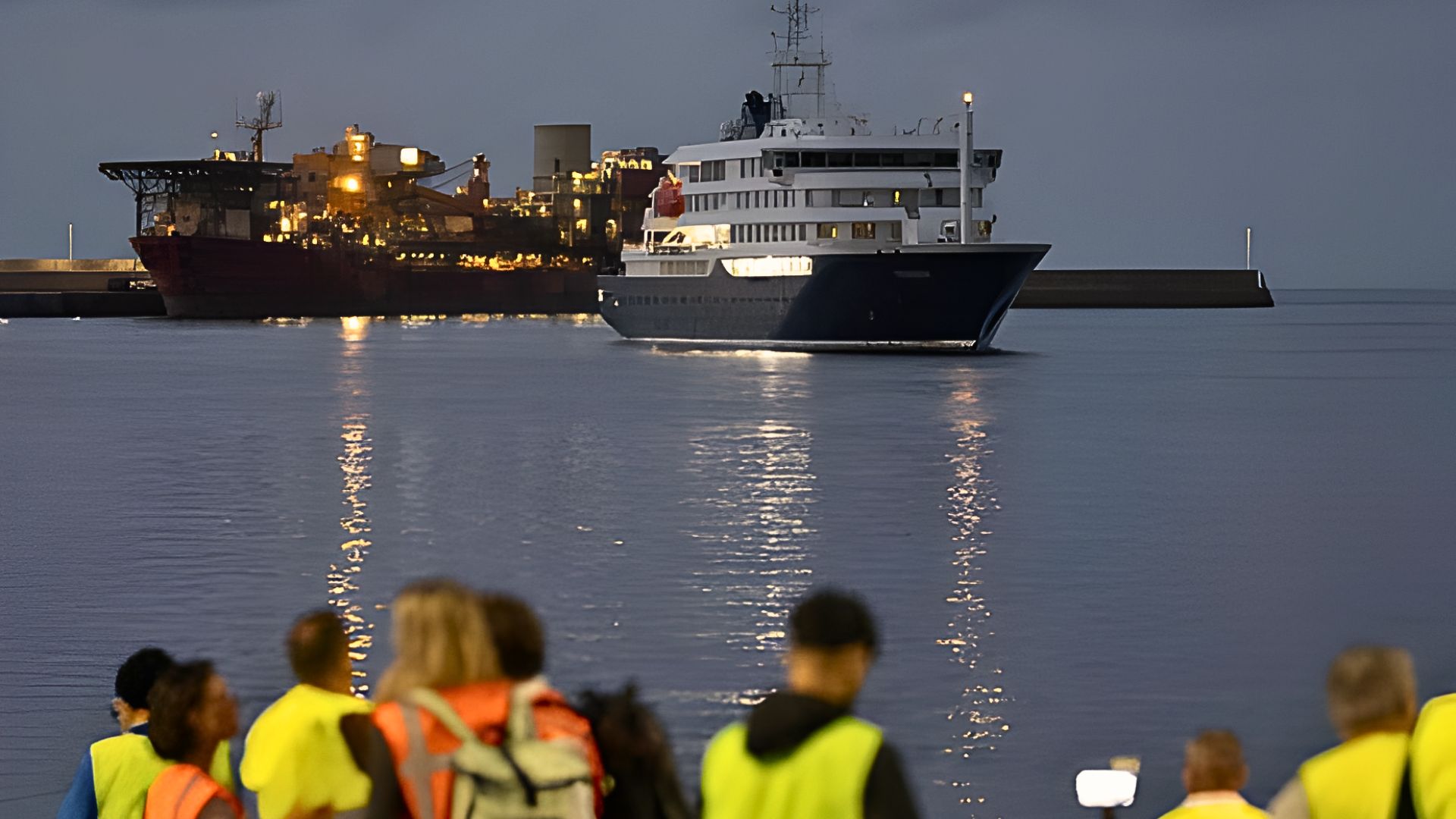
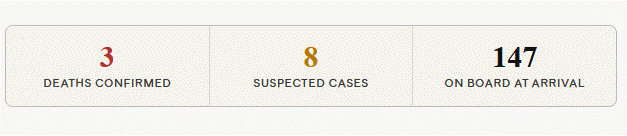
Three dead, eight infected, and nearly 150 people from 23 nations stranded at sea for weeks — the cruise ship MV Hondius has finally docked at Tenerife, where a meticulously coordinated global evacuation is now underway.
TENERIFE, Spain — The Dutch-flagged expedition cruise ship MV Hondius arrived Sunday morning at the industrial port of Granadilla de Abona in Tenerife, Canary Islands, bringing to an end a weeks-long ordeal that has gripped global health authorities across four continents. Passengers — representing 23 nationalities — began disembarking in small boats, one nationality at a time, before boarding sealed, guarded buses bound for the airport and waiting repatriation flights home.
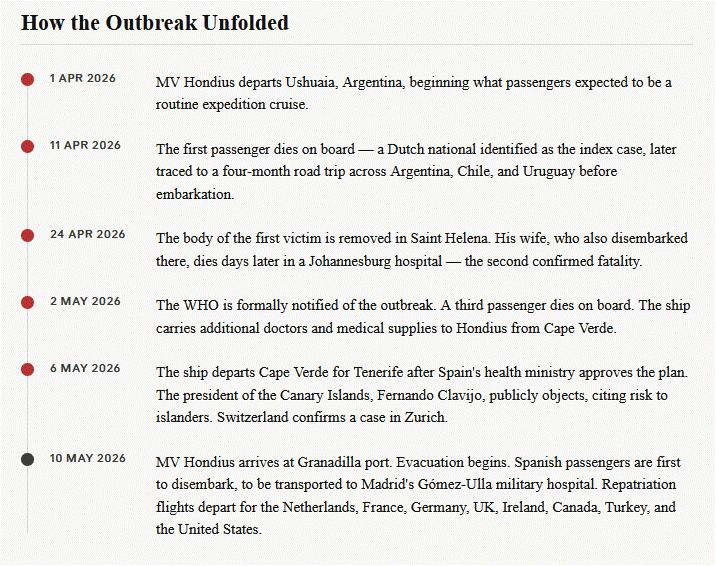
World Health Organization Director-General Tedros Adhanom Ghebreyesus travelled personally to Tenerife to oversee the operation — a rare and pointed signal of how seriously the international community has taken the crisis. He visited the port on Saturday, assessed the preparations, and addressed mounting anxiety among islanders who still bear the psychological scars of the COVID-19 pandemic.
“I know you are worried. I know that when you hear the word ‘outbreak’ and watch a ship sail toward your shores, memories surface that none of us have fully put to rest. But I need you to hear me clearly: this is not another COVID-19.”
— Dr. Tedros Adhanom Ghebreyesus, WHO Director-General, letter to residents of Tenerife
A Meticulously Managed Evacuation
Spain’s Secretary General for Civil Protection and Emergencies, Virginia Barcones, described the disembarkation plan as one built on maximum separation between passengers and the local population. The ship anchored at a carefully chosen distance from the dock, with passengers ferried ashore in small inflatable boats holding no more than ten people at a time, grouped by nationality.
Once ashore, passengers were transported in sealed, guarded vehicles directly to the airport — never passing through residential areas. Health minister Mónica García confirmed that medical teams boarded the vessel before dawn Sunday to run tests on all remaining passengers and crew. Spanish nationals will quarantine at a military hospital in Madrid, where they will receive two PCR tests during isolation. Luggage will remain aboard and be returned separately to prevent any potential surface contamination.
Ten repatriation flights were scheduled — six within the European Union and four for non-EU nations. The Netherlands dispatched two aircraft, the second described as a “sweeper plane” to collect any passengers not picked up by their own country’s flight. The United States arranged a charter flight with a biocontainment unit — similar to those deployed during COVID-19 evacuations — to transport its 17 nationals to the University of Nebraska Medical Center, home to the federally funded National Quarantine Unit.
“The entire operation is proceeding normally. The first to disembark will be the Spanish citizens, and then the flight to the Netherlands will depart.”
— Mónica García, Spain’s Health Minister
Local Anxiety and Political Friction
The ship’s arrival was not without controversy. Canary Islands president Fernando Clavijo was vocal in his opposition throughout the week, stating he “cannot allow Hondius to enter the Canaries.” Port workers in Santa Cruz de Tenerife staged protests, demanding better communication about the risks they might face. The Spanish anti-establishment group Iustitia Europa also called for the vessel to be barred from Spanish shores.
WHO pushed back firmly. A spokesperson told reporters that Spain had “a moral and legal obligation” to assist those on board — several of whom are Spanish citizens — under the International Health Regulations, the legally binding framework governing how countries respond to public health events of international concern. Spain’s health agency said its decision was made “in accordance with international law and humanitarian principles.” Prime Minister Pedro Sánchez personally received a call of thanks from Tedros for what the WHO chief described as “an act of solidarity and moral duty.”
The Virus: What Experts Say
International Response
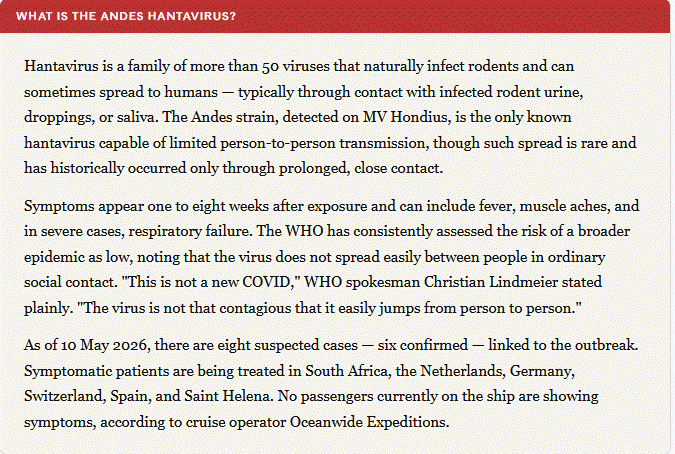
The ripple effects of the outbreak have spread well beyond the Canary Islands. Health authorities in at least six US states — Arizona, California, Georgia, New Jersey, Texas, and Virginia — are monitoring passengers who had already disembarked before the outbreak was detected. None are currently symptomatic. The US State Department confirmed it was in direct contact with Americans on board and coordinating their repatriation with the CDC and the Department of Health and Human Services.
President Donald Trump confirmed he had been briefed on the situation, telling reporters the outbreak is “very much, we hope, under control.” Argentina’s health ministry published a detailed epidemiological report tracing the movements of the index case — who had undertaken a four-month road trip across South America — and is now capturing and testing rodents along his route to pinpoint the source of infection.
After passengers disembark, the MV Hondius — with its remaining crew — will sail to Rotterdam, Netherlands, where the crew will be released and the vessel thoroughly disinfected. The Canary Islands regional government asked that both the evacuation and the ship’s departure be completed by the end of Sunday.