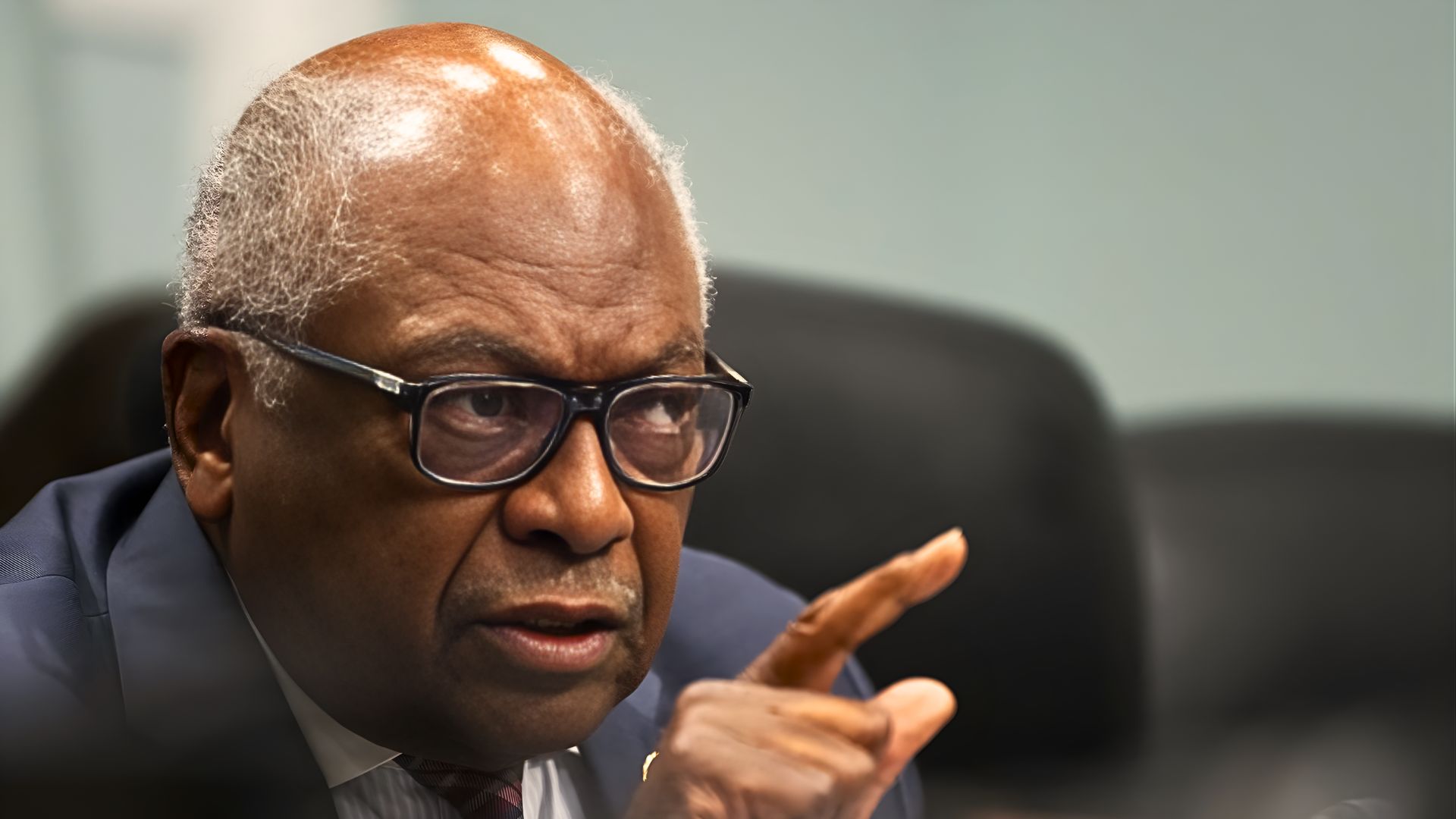
In a rare rebuff of the President, Republican state senators broke ranks and killed a Trump-backed redistricting push that would have eliminated the state’s only Black-majority congressional district.
IDEA Television News Desk
The South Carolina Senate has voted to reject a proposed new congressional map that would have targeted the seat of veteran Democratic Congressman Jim Clyburn — delivering a significant and unexpected defeat to President Donald Trump, who had personally lobbied state lawmakers to redraw voting lines ahead of the November midterm elections.
The Republican-controlled state House had already passed the redistricting plan, which would have reconfigured Clyburn’s Black-majority district, voided the results of ongoing congressional primary elections, and replaced them with new U.S. House primaries scheduled for August. Trump pushed hard for the measure, reportedly making at least two direct phone calls to state Senate Majority Leader Shane Massey and even phoning into a private Republican senators’ caucus meeting earlier this month. He also kept up the pressure through his social media platforms.
“I am embarrassed that so many people in our legislature will allow strangers in Washington to tell them what to do, when to do it, and how to do it.”
— Rep. Jim Clyburn (D-SC)
Despite the White House pressure campaign, debate in the Senate ultimately collapsed. Democrats were unanimously opposed to the plan, while a number of Republican senators privately expressed concern that an overly aggressive redraw could backfire — potentially making currently safe Republican seats more competitive by drawing in Democratic voters from Clyburn’s district.
The rejection marks a notable setback for Trump’s broader, unprecedented mid-decade redistricting effort, which has already yielded approximately nine additional Republican-leaning congressional seats across other states. Republicans currently hold a slim majority in the U.S. House, and a full sweep of South Carolina’s seven congressional seats would have helped shore up that lead heading into a midterm cycle that historically punishes the party in the White House.
Background
Jim Clyburn has represented South Carolina’s 6th Congressional District — a majority-Black district — for more than three decades. After the 2020 census, South Carolina’s legislature redrew maps through a months-long public process, resulting in a 6-1 Republican-to-Democrat seat ratio that the U.S. Supreme Court later upheld as constitutional. The current redistricting push sought to complete a 7-0 sweep ahead of the 2026 midterms.
Clyburn, who cast his ballot early in Orangeburg on Tuesday — the first day of early voting in South Carolina ahead of the June 9 primary — told reporters he was prepared to run in whatever district lawmakers ultimately draw him into. Addressing the legislature’s handling of the White House’s demands, Clyburn did not hold back.
Clyburn also characterised the mid-cycle redistricting effort more broadly as an assault on democratic norms, calling it “a comprehensive approach to creating Jim Crow 2.0.” He pointed out that during the last redistricting after the 2020 census, lawmakers spent months holding public meetings across the state — a process he described as orderly and fair, regardless of its outcome.
The push against the new map appeared to mobilise South Carolina voters. By noon on Tuesday, the first day of early voting, more than 26,000 ballots had already been cast in the state — a remarkable figure compared to the roughly 125,000 total early votes cast across the entire two-week period in the 2022 primary cycle. Democrats had called on citizens who opposed the proposed new map to show up at the polls.
On Capitol Hill, the Congressional Black Caucus escalated its response to Republican redistricting efforts nationally, calling on major U.S. corporations — including those that previously pledged support for voting rights and racial justice — to publicly oppose any state-level maps that seek to eliminate majority-Black congressional districts. The Caucus had also called the previous week for Black athletes to boycott public universities in states involved in what it described as racially motivated gerrymandering.
For Trump and House Republicans, the South Carolina result is a setback but not a fatal one. The party has already strengthened its House position through redistricting in several other states, and the fight over the national congressional map is far from over. But the Senate’s decision in Columbia signals that even within the President’s own party, there are limits to how far some elected officials will go when their own political fortunes are at risk — particularly those state senators who, notably, are not on the ballot in 2026.
Written By Tom Solomon Iboro