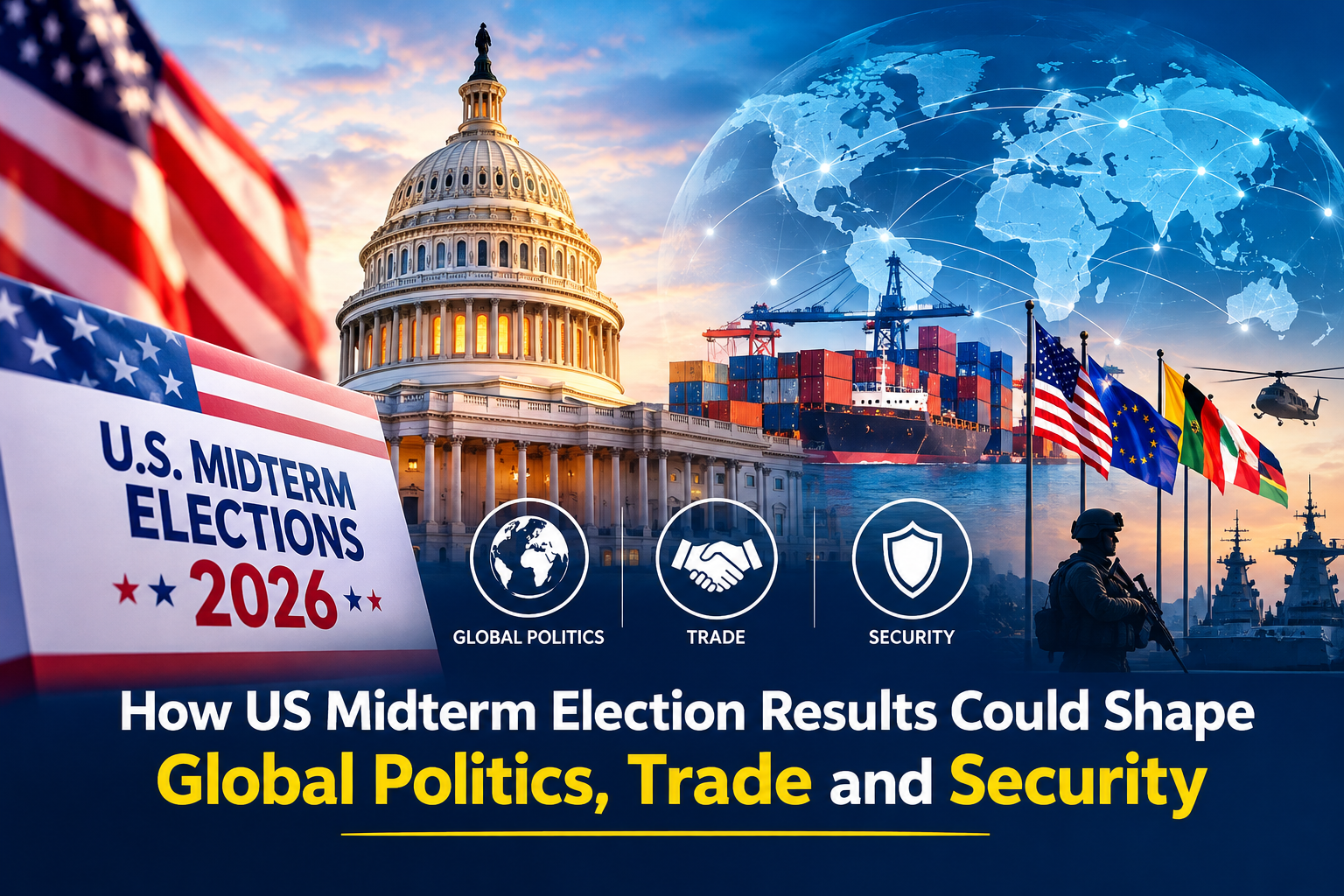
The Democratic Party’s sweeping victories in the US midterm elections are already generating international reactions, with America’s allies, trade partners and geopolitical rivals assessing the potential consequences of the results.
The Democrats’ gains could influence President Donald Trump’s approach to the war involving Iran, US support for Ukraine, global energy prices and Washington’s trade relations with countries across the world.
Iran-Israel War
It remains uncertain how Trump’s loss of control over Congress will affect the course of the eight-month-old conflict involving the United States and Iran.
However, the war has become a major concern for American voters, many of whom blame it for rising fuel prices and increasing economic pressure.
Some Gulf governments now believe the election setback could push Trump to pursue a diplomatic settlement with Iran rather than launch another major military offensive.
Two sources familiar with Gulf governments’ thinking told Reuters that the midterm results could strengthen the president’s incentive to seek a peace deal.
Ebtesam al-Ketbi of the Emirates Policy Centre said the political situation could create an opportunity to end the conflict if Tehran recognises that Trump is under pressure to secure a meaningful agreement.
However, she warned that interpreting the election results as a sign of American weakness could instead trigger further military escalation.
For Israel, Democratic control of both chambers of Congress could mean increased scrutiny of its military operations in Iran, Gaza and Lebanon. It could also generate fresh debates over longstanding American military assistance and weapons sales to the country.
Political opponents of Israeli Prime Minister Benjamin Netanyahu have already used the Democratic victories to criticise his handling of relations with Washington, arguing that Israel has lost bipartisan support under his leadership.
The criticism comes as Israeli political parties seek to form a coalition following last week’s inconclusive election.
Fuel Prices and Global Energy Markets
The war involving Iran has disrupted crude oil and liquefied natural gas supplies from the Gulf, pushing up global energy costs and fuel prices.
Following the midterm results, oil markets showed signs of optimism that the political pressure on Trump could encourage progress in US-Iran peace negotiations.
Oil prices fell for a third consecutive day on Wednesday, although concerns over tight inventories limited the scale of the decline.
Saxo Bank analyst Ole Hansen said the market increasingly appeared to believe that Trump wanted to bring the Middle East conflict to an end.
Ukraine
Trump has largely halted direct US financial and military assistance to Ukraine despite broad support for Kyiv among lawmakers from both major American political parties.
His decision to ease some sanctions on Russian energy has also attracted criticism from members of Congress, including Republicans.
With Democrats now controlling both chambers, they could introduce fresh legislation to provide assistance to Ukraine.
If such a proposal secures sufficient Republican support to reach a two-thirds majority in both chambers, Congress could override a presidential veto.
However, any increase in American assistance is unlikely to materialise immediately. It would also not resolve Ukraine’s urgent shortage of US-made Patriot air defence interceptors, which are needed to protect its cities and energy infrastructure during the winter.
Global Trade Relations
The Democratic victories could also affect Washington’s trade relationships, particularly with countries in Asia that have made investment commitments to avoid higher US tariffs.
Analysts said some governments may now feel encouraged to delay or reconsider those pledges, while China could perceive an opportunity to strengthen its position in ongoing trade negotiations with Washington.
However, Chim Lee, an industrial policy analyst at the Economist Intelligence Unit in Beijing, said broader US-China economic relations were likely to remain in a state of fragile stability.
India could also benefit from the changing political balance in Washington as it continues negotiations for a trade agreement with the United States.
The talks have faced delays partly because New Delhi is seeking to protect its agricultural sector.
Anup Wadhawan, a former trade secretary in India’s federal government, said Trump’s ability to impose tariffs could face greater constraints following the election.
He noted that Congress has constitutional authority over trade regulation and import duties, although successive administrations have used existing laws to impose tariffs on grounds including national security and unfair trade practices.
Efforts by Democrats to restrict the president’s tariff powers could, however, face a veto from Trump.
Another major question is whether the president will proceed with his threat to impose 100 per cent tariffs on European countries that introduce digital services taxes targeting American technology companies.
There are also concerns over whether a proposed €3 billion ($3.37 billion) European Investment Bank loan to Airbus could strain transatlantic trade relations, which have largely remained stable since 2025.
The developments suggest that the Democratic gains could have consequences beyond Washington, influencing diplomatic negotiations, military support, energy markets and international trade in the months ahead.
(Reuters)