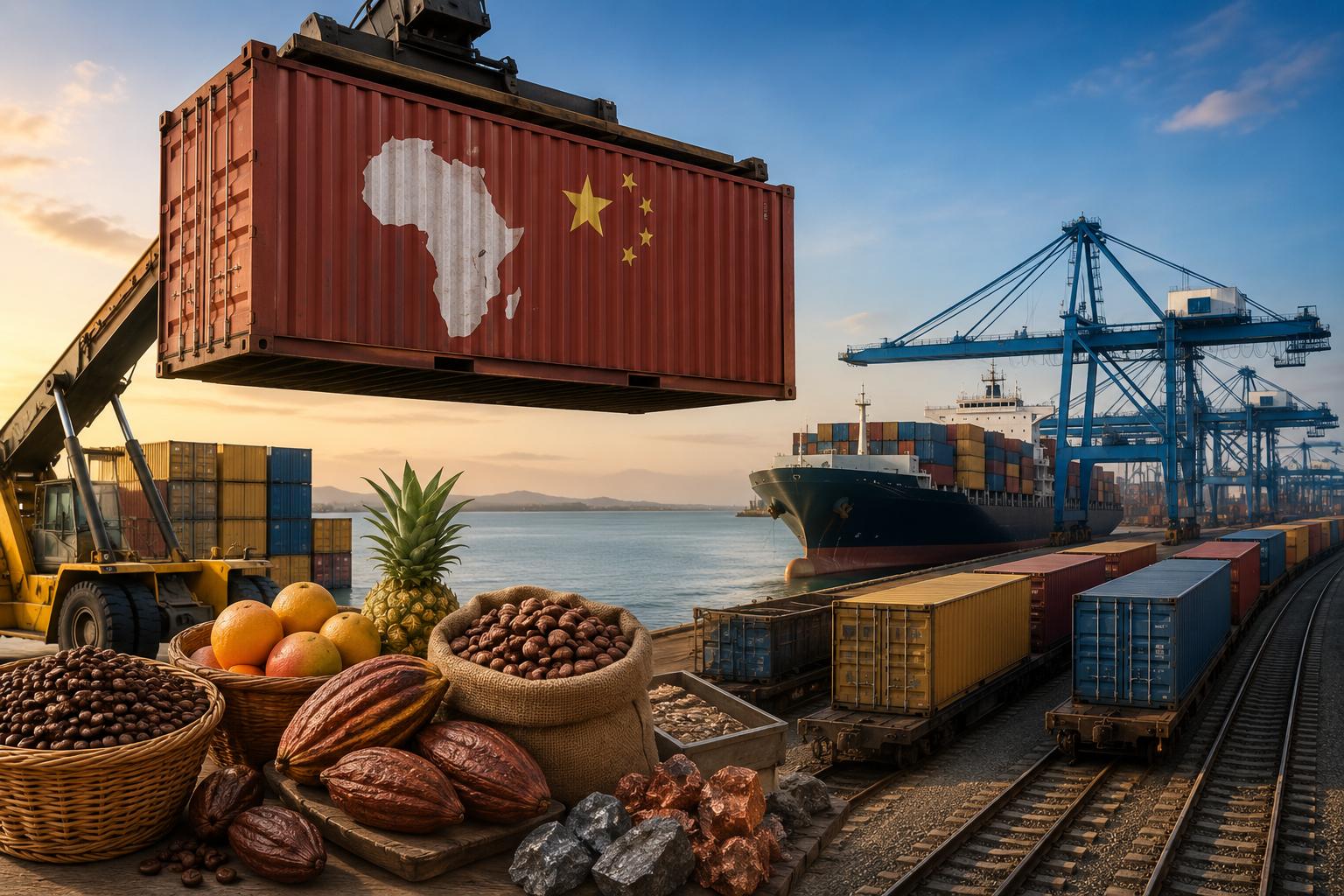
The big story: China’s decision to grant zero-tariff access to imports from 53 African countries presents a significant opportunity for African exporters. However, the bigger question is whether African countries have the production capacity, infrastructure and industrial strength to take advantage of the opportunity.
From agricultural products and processed foods to minerals, energy resources and manufactured goods, Africa has products China needs. But turning market access into substantial export earnings will require more than removing import duties.
1. What can Africa actually sell to China?
Some of the strongest export opportunities include:
Cocoa and processed cocoa products
Ghana, Côte d’Ivoire and Nigeria can supply cocoa beans, cocoa butter, cocoa powder and finished chocolate products.
Agricultural commodities
Sesame seeds, cashew nuts, ginger, coffee, tea, shea products, hibiscus and groundnuts are potential export earners.
Fresh and processed food
Avocados, citrus fruits, mangoes, frozen fruits, fruit juices, seafood and other food products offer opportunities where exporters meet Chinese safety and quarantine requirements.
Minerals and industrial raw materials
Copper, cobalt, manganese, bauxite, chromium, lithium and other minerals are important inputs for China’s manufacturing and energy industries.
Leather and manufactured products
Finished leather, footwear, textiles, processed agricultural inputs and other manufactured goods could help African countries move beyond exporting raw materials.
2. Nigeria’s opportunity
Nigeria is particularly well positioned to benefit from the expanded access.
Potential exports include:
- Sesame seeds.
- Cocoa and cocoa derivatives.
- Cashew nuts.
- Ginger.
- Hibiscus flowers.
- Shea butter and other shea derivatives.
- Natural rubber.
- Leather and processed hides.
- Petroleum and gas products.
According to Nairametrics, Nigeria’s exports to China rose by 80% to approximately $2.3 billion in the first half of 2026. However, imports from China continue to substantially exceed Nigerian exports, highlighting the trade imbalance.
3. The numbers behind the opportunity
$312.11bn
China–Africa trade, first nine months of 2026
22%
Year-on-year trade growth
53
African countries covered by the expanded zero-tariff policy
$93bn
Approximate African trade deficit with China, first nine months of 2026
The figures reveal a major contradiction: trade between Africa and China is expanding, but Africa continues to buy significantly more from China than it sells.
4. What is stopping Africa from benefiting?
Despite the opportunities, several obstacles remain:
- Limited processing capacity: African countries frequently export raw commodities instead of finished products, losing much of the potential economic value.
- Poor infrastructure: Inadequate roads, ports, electricity, storage and transportation systems increase export costs.
- Quality standards: African exporters must meet China’s food safety, product certification, packaging and traceability requirements.
- Access to finance: Small and medium-sized businesses often lack the capital needed to produce goods consistently at export scale.
- Weak industrial capacity: Africa needs more factories and processing facilities to compete in international supply chains.
The African Export-Import Bank has emphasised the importance of developing regional value chains, improving logistics and expanding local processing to maximise the benefits of China’s trade policy.
5. What this means for Africa’s economic future
China’s zero-tariff initiative could become an important opportunity for African industrialisation, but only if governments and businesses approach it strategically.
Rather than simply increasing exports of crude oil, minerals and agricultural commodities, African countries need to invest in processing, manufacturing, packaging and export-oriented industries.
For Nigeria, this means moving beyond crude oil dependence and creating stronger export industries around agriculture, solid minerals, leather and manufactured products.
The central question is no longer whether China is willing to buy African products. It is whether Africa is prepared to produce, process and supply them competitively.