

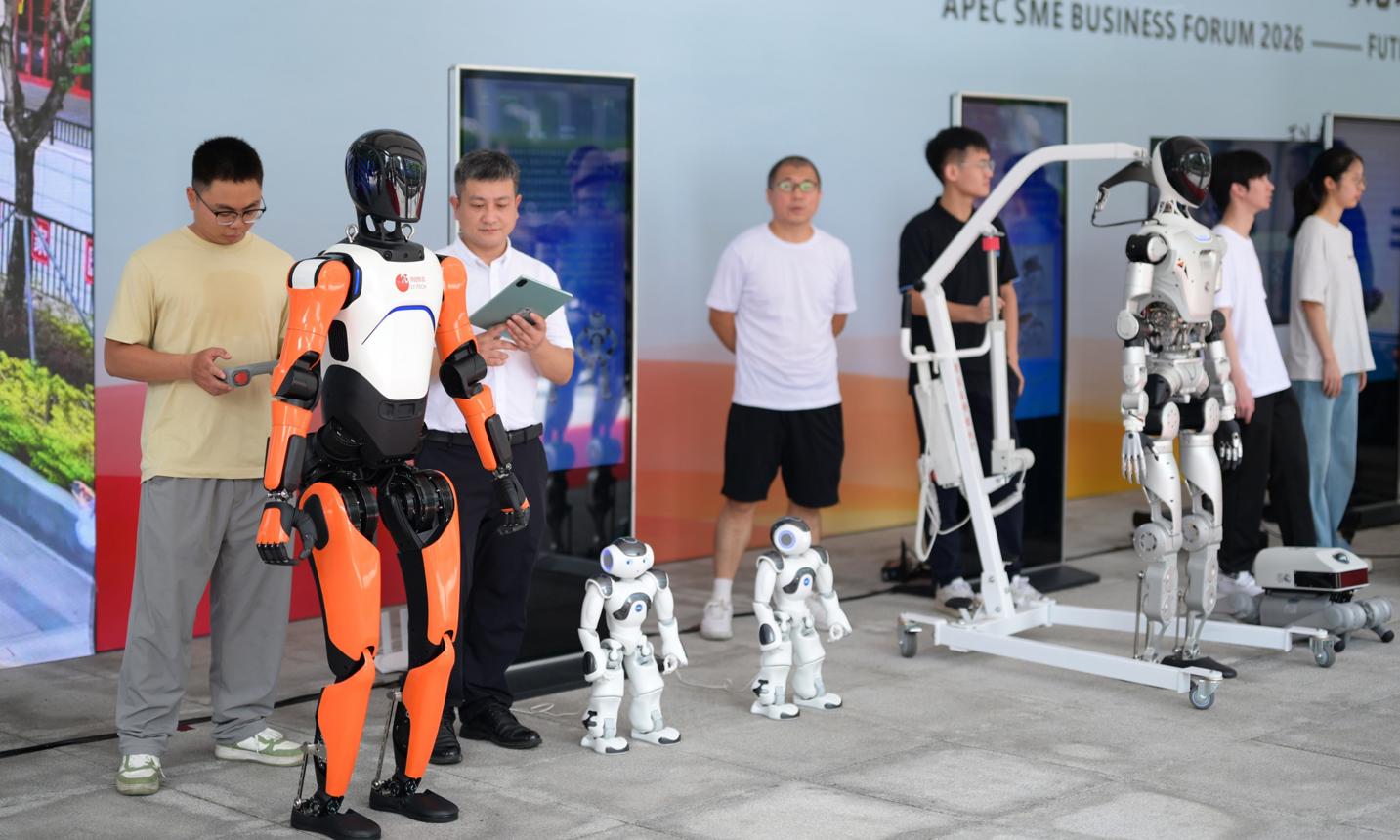
Members of the Asia-Pacific Economic Cooperation forum are placing greater emphasis on the safe and responsible use of artificial intelligence, as competition between the United States and China over advanced technology continues to intensify.
Chen Xu, chair of this year’s APEC Senior Officials’ Meeting and China’s former ambassador to the United Nations, said member economies had held extensive discussions on artificial intelligence and reached what he described as an important consensus on related issues.
Speaking at a press conference in Shenzhen on Tuesday, Chen said the discussions covered the safe deployment and responsible application of AI, including the role of data in supporting the technology’s growth.
The discussions are significant because AI is increasingly being integrated into manufacturing, healthcare, education, financial services, transportation and national security.
However, the technology is also raising concerns about data protection, misinformation, employment disruption, cybersecurity and the concentration of technological power in a small number of countries and companies.
The diplomatic discussions are taking place against the backdrop of growing competition between Washington and Beijing.
The United States tightened restrictions on Monday aimed at preventing Chinese companies from accessing advanced American AI chips through overseas data centres. Washington says such arrangements could allow companies to bypass existing export controls.
The restrictions highlight how access to advanced semiconductor technology has become a major issue in the global race for artificial intelligence leadership.
While APEC discussions focus on responsible AI deployment, the wider technology rivalry could influence international trade, investment, research partnerships and access to computing infrastructure.
The global AI debate has direct implications for Africa, where governments and businesses are increasingly exploring artificial intelligence for agriculture, healthcare, education, banking, public administration and industrial development.
However, African countries risk becoming consumers of foreign AI products without developing enough local expertise, infrastructure and intellectual property.
The continent needs greater investment in data centres, reliable electricity, high-speed internet, semiconductor education, computer science research and local AI development.
There is also a need for African datasets that reflect local languages, cultures and economic realities. Without this, AI systems may perform poorly when used in African communities.
Nigeria, Kenya, South Africa, Egypt and Rwanda are among the countries with opportunities to strengthen their technology ecosystems through research partnerships, responsible regulation and support for local innovators.
The APEC discussions offer an important lesson: Africa must participate in shaping global AI standards rather than waiting for rules and technologies to be developed elsewhere.