

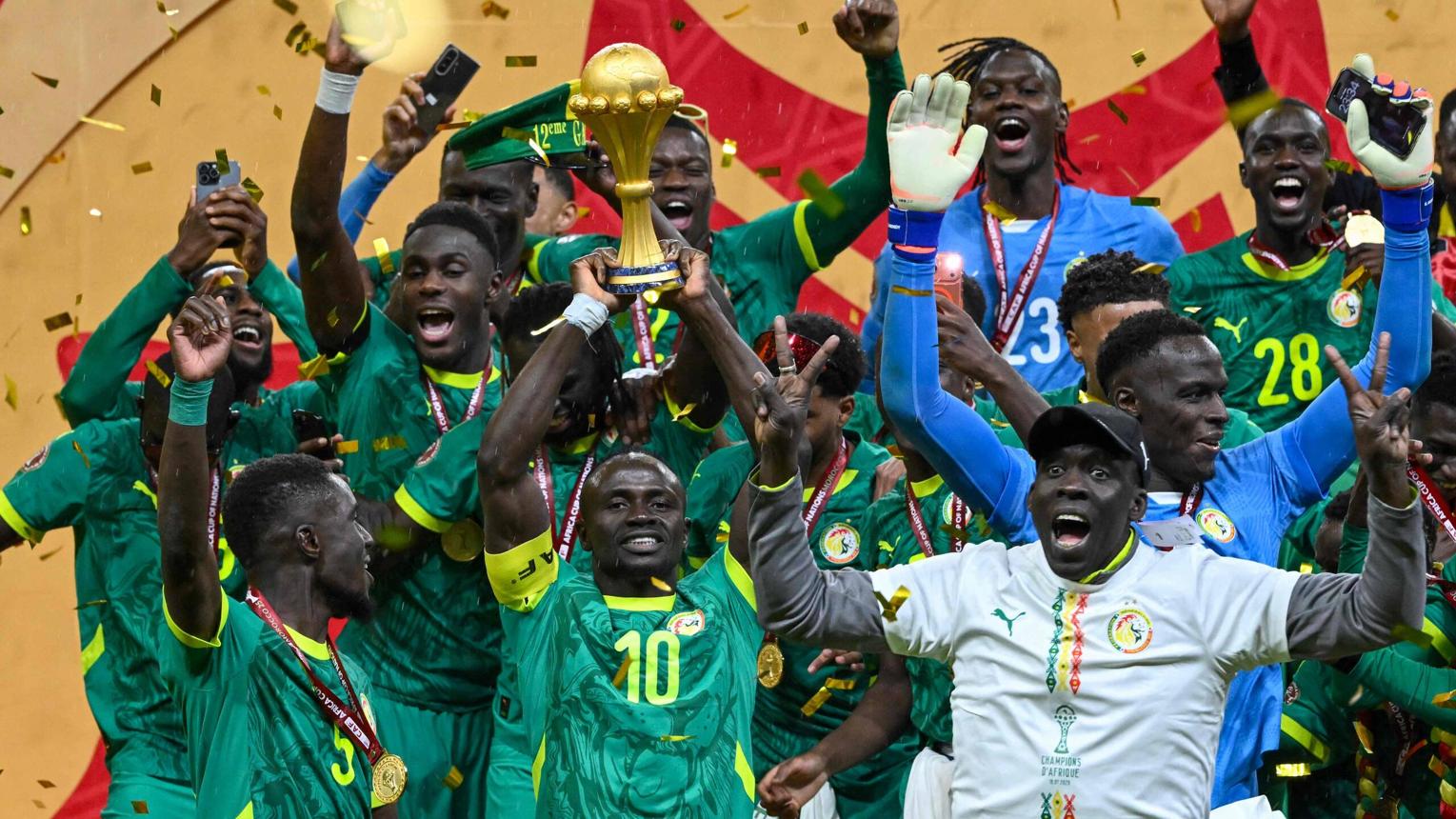
Senegal has been reinstated as the winner of the 2025 Africa Cup of Nations after the Court of Arbitration for Sport overturned a previous decision by the Confederation of African Football that awarded the title to Morocco.
The ruling, announced on November 24, restores Senegal’s 1–0 extra-time victory over Morocco in the final, played in January 2026.
The controversy followed a late penalty decision during the match, after which Senegal’s players temporarily left the pitch in protest. Play later resumed, Morocco failed to convert the penalty and Senegal scored the winning goal through Pape Gueye in extra time.
CAF subsequently ruled that Senegal had forfeited the match and awarded Morocco a 3–0 victory.
However, the Court of Arbitration for Sport unanimously overturned that decision, ruling that the referee had acted within his authority when he resumed the match and that the game had not been abandoned.
Senegal welcomed the ruling, while Morocco’s football federation indicated that it would challenge the decision.
The dispute has become one of the most significant legal controversies in recent African football history, raising questions about tournament regulations, disciplinary procedures and the authority of football governing bodies.
The controversy also highlights the growing importance of technology and evidence management in modern African sports. Video assistant refereeing, digital match records, secure communications and transparent disciplinary processes can improve accountability in football administration. African football authorities must continue strengthening technical infrastructure and governance systems to maintain confidence in competitions and protect the integrity of the sport.