


As of February 20, 2026, the Nigerian Naira has depreciated to ₦1,341.35 per dollar at the official Nigerian Autonomous Foreign Exchange Market (NAFEM), down from ₦1,338.10 recorded the previous day. Despite this slight decline in the official window, the Naira showed strength in the parallel market, gaining ₦25 to trade at approximately ₦1,340/$1.
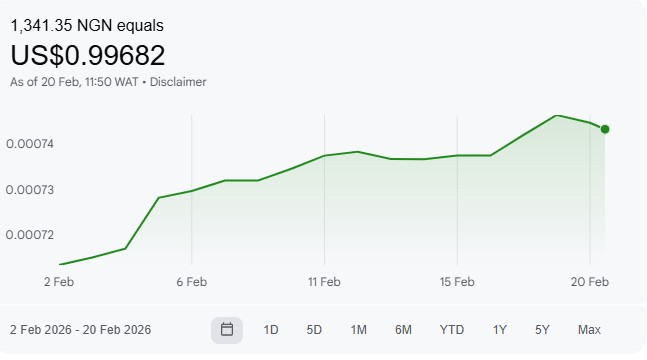
Analysts and market data point to several key drivers for the current fluctuations:
Heightened Dollar Demand: The official window has seen increased pressure from corporate buyers and financial institutions seeking to meet mid-week liquidity needs and settle foreign payments.
“Risk-Off” Sentiment: A prevailing “risk-off” sentiment among Foreign Portfolio Investors (FPIs) has led to increased dollar demand, tilting the market toward the bid side and exerting downward pressure on the local currency.
Persistent FX Liquidity Challenges: While foreign reserves have climbed to an eight-year high of $48.50 billion as of February 17, 2026, the immediate supply of dollars in the spot market remains tight compared to the volume of demand from importers and manufacturers.
Economic Reform Adjustments: Ongoing reforms by the Central Bank of Nigeria (CBN), including the liberalization of the exchange rate, have resulted in a market-driven environment where the currency is more susceptible to short-term shifts in supply and demand dynamics.
Key Economic Indicators (February 2026)
The Naira’s performance is set against a backdrop of improving macroeconomic stability:
Inflation: Nigeria’s annual inflation rate eased for the tenth consecutive month to 15.1% in January 2026, the lowest level since November 2020.
Foreign Reserves: External buffers have strengthened significantly, gaining over $2.47 billion in just one month to reach $48.37 billion.
Market Convergence: The gap between the official and parallel market rates has narrowed to as low as 0.29%, a sign of successful efforts to reduce speculative pressure and unify exchange rates.