

By IDEA TELEVISION – Africa’s First Innovation Television
Sugar often gets a bad reputation in nutrition discussions, but when understood in the right context, it plays an important role in children’s growth and development. The key lies in distinguishing between natural sugars found in whole foods and added (free) sugars in processed items.
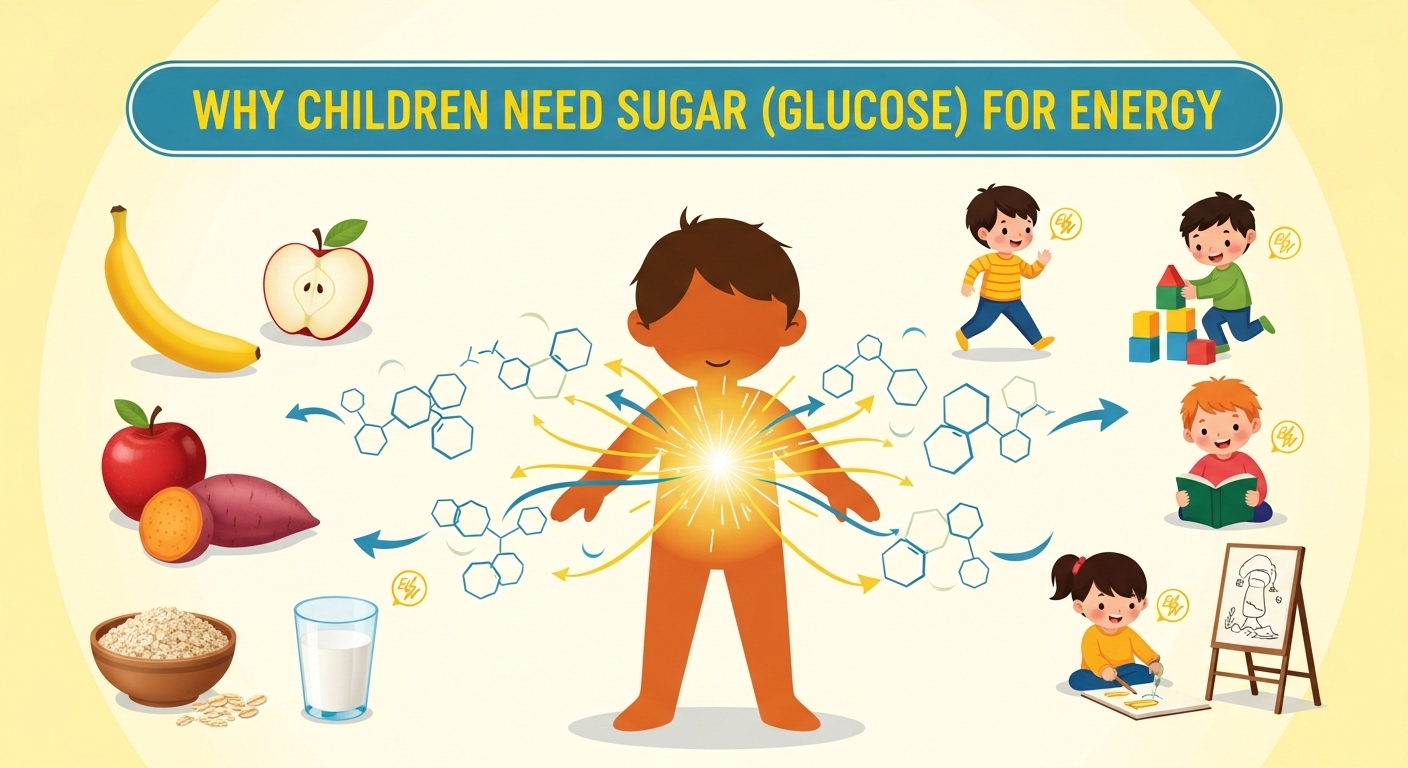
Why Children Need Sugar (Glucose) for Energy
Glucose, the simplest form of sugar, serves as the primary fuel for the brain and body. A child’s rapidly developing brain is highly energy-demanding and relies on a steady supply of glucose to support thinking, learning, memory, and overall cognitive functions. Without adequate carbohydrates (which break down into glucose), children may experience low energy, poor concentration, and fatigue during school or play.
Natural sugars in fruits (fructose), milk (lactose), and some vegetables provide not only quick energy but also essential nutrients such as vitamins, minerals, fiber, and antioxidants. For example:
- Fruits deliver natural sugars alongside fiber, which helps regulate blood sugar levels and supports digestion.
- Dairy products offer lactose with calcium and protein for strong bones and teeth.
Moderate intake of these natural sources can contribute to better energy balance, improved mood, and sustained physical activity — all vital for growing children.
Important Balance: Moderation is Key
While the body needs glucose, excessive added sugars (from sugary drinks, candies, pastries, and processed snacks) offer “empty calories” with little nutritional value. Scientific guidelines from the World Health Organization (WHO) and the American Heart Association recommend:
- Children under 2 years: Avoid added sugars entirely.
- Children aged 2–18 years: Limit added sugars to less than 25 grams (about 6 teaspoons) per day.
Staying within these limits helps prevent risks such as unhealthy weight gain, dental caries, and long-term metabolic issues, while still allowing sugar’s benefits for energy and enjoyment.
Practical Tips for Parents
- Prioritize whole fruits over fruit juices or sweetened drinks.
- Use small amounts of natural sweeteners (like honey for children over 1 year) sparingly.
- Combine carbohydrates with proteins and healthy fats (e.g., banana with peanut butter) for steadier energy release.
- Encourage water and unsweetened milk as daily drinks.
At IDEA TELEVISION, we believe innovation in nutrition starts with informed choices. Sugar is not the enemy — imbalance is. By focusing on natural sources and mindful portions, parents can support their children’s energy needs, brain development, and long-term health without unnecessary restrictions or overindulgence.
Understanding the science behind children’s dieting empowers African families to raise healthier, more vibrant generations.