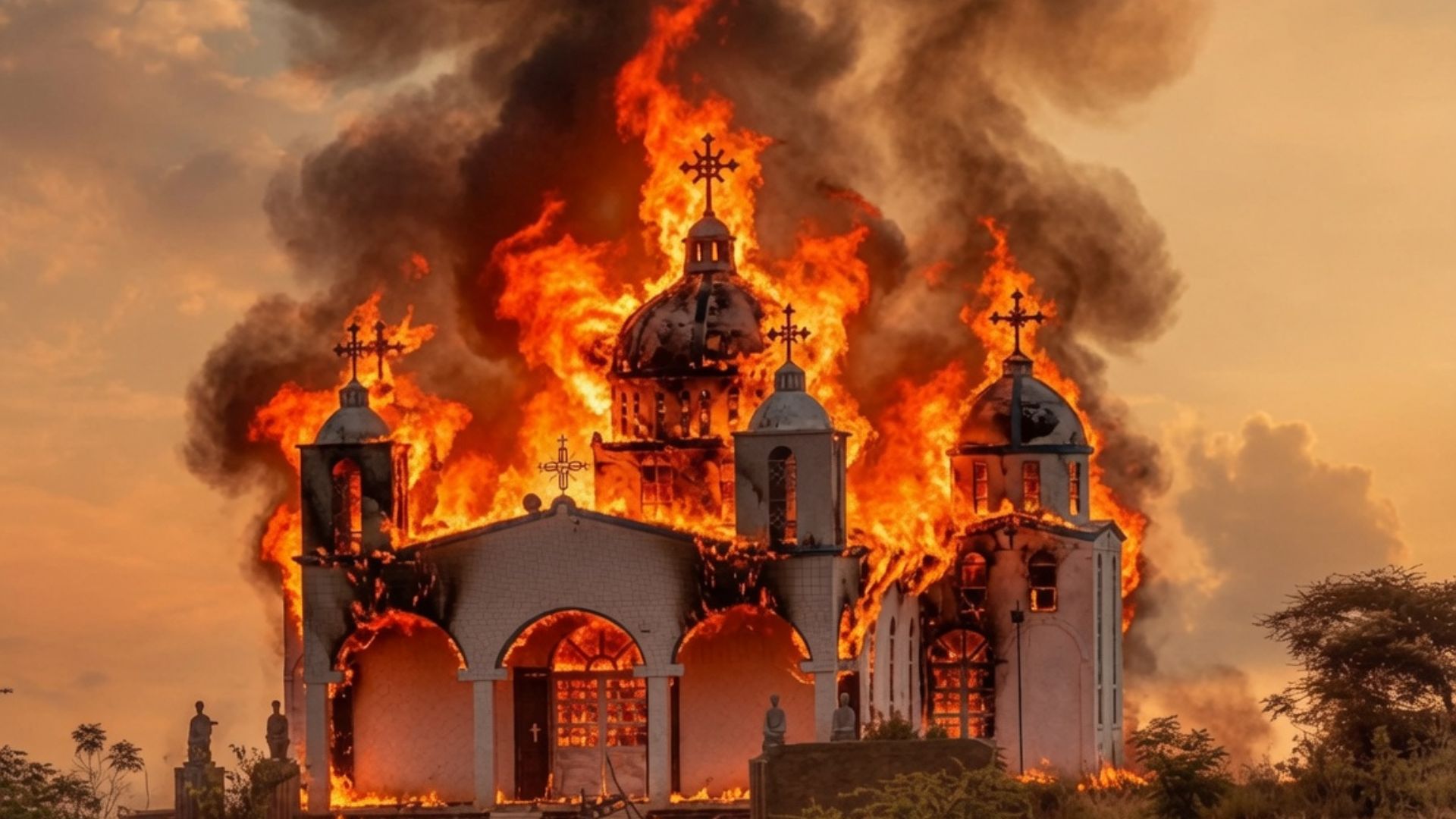
Hundreds of civilians killed, a century-old church reduced to ashes, and over 280 households displaced — as religious leaders and human rights bodies demand urgent government action in Ethiopia’s East Arsi Zone.

IDEA Television News Desk

A devastating and recurring wave of violence has engulfed Orthodox Christian communities in Ethiopia’s East Arsi Zone, Oromia Region, leaving scores dead, hundreds displaced, and a historic church in ashes — with church leaders and international human rights organisations demanding urgent accountability from the Ethiopian government.
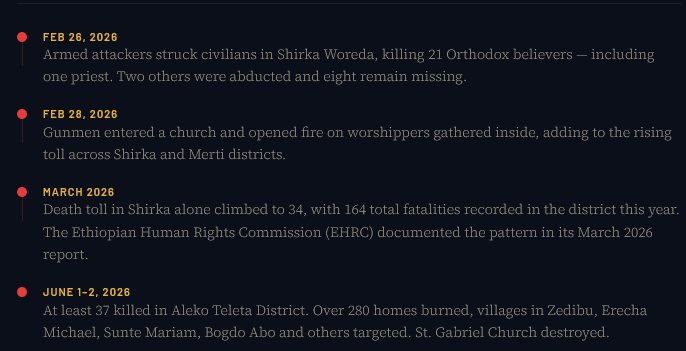
The latest assault, reported on June 1, 2026 — the eve and day of Ethiopia’s general election — struck the Tefa Kebele area of Aleko Teleta District. According to the East Arsi Diocese of the Ethiopian Orthodox Tewahedo Church (EOTC), at least 37 Orthodox Christian civilians were killed, several others remain missing, and more than 280 households were destroyed or forcibly evacuated. Church sources say security forces were not deployed to the affected areas despite appeals for protection.
Among the most devastating losses was the complete destruction of St. Gabriel Church in the Telata Chefa area — a 101-year-old Orthodox church that was burned to the ground during the attack. The historic Kara Kuftena Medhanealem Church was also targeted, according to diocesan reports.
A Pattern of Violence Since February 2026
Religious Leaders and Human Rights Bodies Respond
The Standing Holy Synod of the EOTC, the Ethiopian Inter-Religious Council, and the Ethiopian Islamic Affairs Supreme Council have each issued statements condemning the killings and calling for swift, transparent investigations. The World Council of Churches (WCC) expressed solidarity with the EOTC, underlining the urgent need to protect communities and prevent further recurring violence.
The Ethiopian Human Rights Commission (EHRC) documented dozens of deaths — including multiple killings across Shirka and Merti districts — alongside cases of injury, abduction, and missing persons, as part of its March 2026 findings. The EHRC noted that broader patterns of insecurity across parts of Oromia since 2025 have contributed to a widening humanitarian and human rights crisis, with more than 1,244 civilian deaths recorded in Arsi and West Arsi zones since that period.
Government Response and Disputed Responsibility
The Ethiopian federal and Oromia regional governments have not publicly commented on the most recent June attacks. Authorities had previously stated that security operations significantly weakened armed groups in Oromia, and rejected characterisations of the violence as religiously or ethnically motivated. The Oromo Liberation Army (OLA) denied responsibility for attacks against civilians and alleged that unidentified armed actors were deliberately targeting Orthodox Christians to inflame inter-religious and inter-ethnic tensions. The government attributes the violence to a group it refers to as “Oneg Shene.”
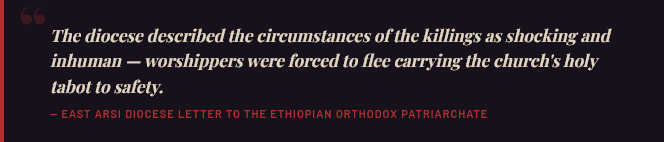
Archbishop Abune Elsae of the Arsi and Somali Jigjiga dioceses confirmed the latest attacks and submitted a formal report to the Patriarchate documenting victims and the scale of destruction. He and other church officials have repeatedly urged the government to deploy security forces and provide lasting protection to communities living in fear.