US President Donald Trump is weighing whether to resume military strikes against Iran as his administration considers a fresh proposal from Tehran aimed at securing a deal over its nuclear programme and ending the conflict.
Trump reportedly convened his national security team at the White House on Wednesday and Thursday to discuss the possibility of restarting military operations, according to multiple media reports.
The meetings came as senior officials remained divided over whether Washington should pursue a diplomatic settlement or maintain military pressure on Tehran.
According to sources cited by Fox News, officials briefed Trump on the possibility of renewed air operations, noting that Monday’s new moon would provide limited moonlight over the Middle East, potentially offering favourable conditions for military action.
Hours before the meetings, Trump told reporters in the Oval Office that his administration would soon decide whether to resume the war. He also questioned whether further action was necessary to ensure Iran’s nuclear programme was permanently dismantled.
The president said he would prefer to avoid further destruction in Iran but suggested that additional military action remained an option.
“You’ll know soon enough,” he told reporters.
Iran Offers New Proposal Through Qatar
While Washington considers its next move, Tehran has reportedly submitted a revised proposal concerning its nuclear programme through Qatari mediators.
The offer presents Trump with a choice between pursuing negotiations and authorising further attacks against Iran.
Iran has also reportedly begun distributing iodine tablets to families living within two miles of its nuclear facilities and providing guidance on how to respond to a possible nuclear emergency, according to The Times.
The preparations come amid fears that a future US strike could target the underground nuclear complex at Pickaxe Mountain, near Natanz, which is reportedly buried deep beneath granite.
Meanwhile, US Central Command has prepared potential strike plans, with reports suggesting that military operations could have begun shortly after the midterm elections.
Thousands of American troops and naval assets also remain deployed in the waters around Iran as part of the US blockade.
Tehran Sets Conditions for Reopening Strait of Hormuz
Iran has maintained that it will not reopen the Strait of Hormuz or return to negotiations until Washington meets a set of conditions.
The country’s senior security official, Mohsen Rezaei, outlined the demands on Thursday during a visit to Russia.
The conditions reportedly include the lifting of US sanctions, the release of frozen Iranian assets and compensation for damages caused by the war.
Trump previously rejected a seven-point version of Iran’s proposal in September and responded by posting a map that renamed the strategic waterway “Trump Strait”.
Tehran now says the proposed sequence of steps has been shortened and could be implemented within two days.
Trump’s Advisers Divided Over Next Move
Trump’s advisers are reportedly split over how the administration should respond to Iran’s latest proposal.
Vice President JD Vance is among those advocating a negotiated settlement, while CIA Director John Ratcliffe and Treasury Secretary Scott Bessent are said to favour maintaining the naval blockade as leverage against Tehran.
The diplomatic tensions have also raised concerns among neighbouring countries.
Iraqi Prime Minister Ali Faleh al-Zaidi reportedly used a telephone conversation with Trump on Thursday to warn that Iraq must not be used as a launching point for military action against neighbouring states.
His office said the Iraqi leader stressed that his country could not become “a launchpad for aggression against neighbouring countries”.
Iran War Becomes Political Liability for Trump
The debate over renewed military action comes after Democrats secured control of both chambers of Congress in Tuesday’s midterm elections, dealing a major political setback to Trump and the Republican Party.
Democrats made gains in several traditionally Republican areas, including Texas and Kansas, as voters expressed concerns over rising living costs and the war with Iran.
Vance attributed the Republican defeat partly to the conflict, writing on X that “the reason we lost is the war”.
Trump acknowledged that the Iran conflict had contributed to the party’s poor performance but pointed primarily to rising petrol prices.
He maintained that preventing Iran from acquiring nuclear weapons remained essential.
On Election Day, American motorists paid an average of $4.15 per gallon of petrol, reportedly the highest election-day price for a midterm or presidential election since at least 2000.
Rising energy costs have also placed additional pressure on household finances, with estimates suggesting that higher prices have cost the average American household nearly $1,230.
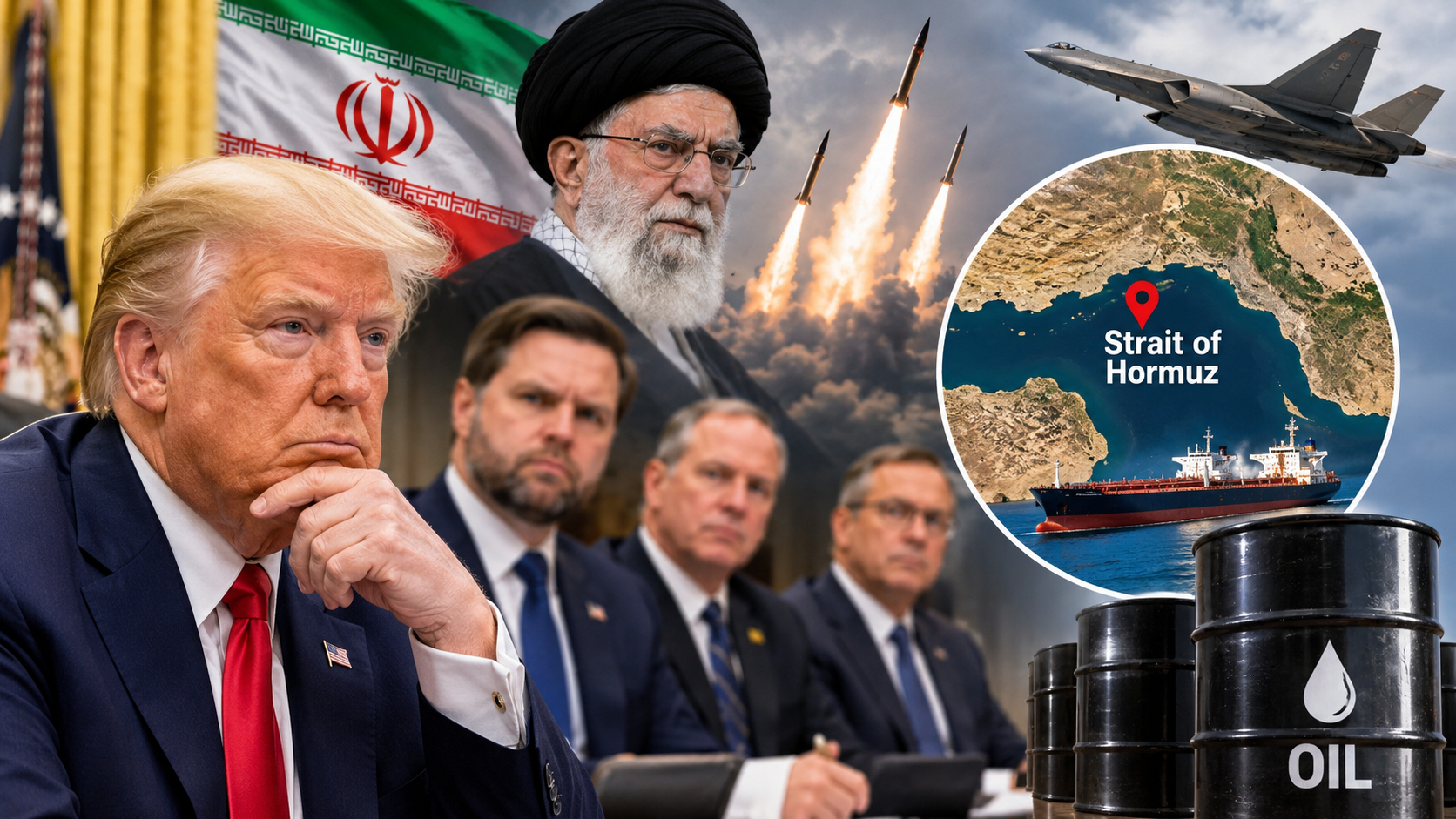
The Strait of Hormuz remains central to the crisis. The strategic shipping route normally handles about a quarter of the world’s traded oil and around a fifth of its liquefied natural gas, making its continued disruption a major concern for global energy markets.
With military options still under consideration and diplomatic efforts continuing through Qatar, Trump’s next decision could determine whether the conflict moves towards a negotiated settlement or another round of attacks.