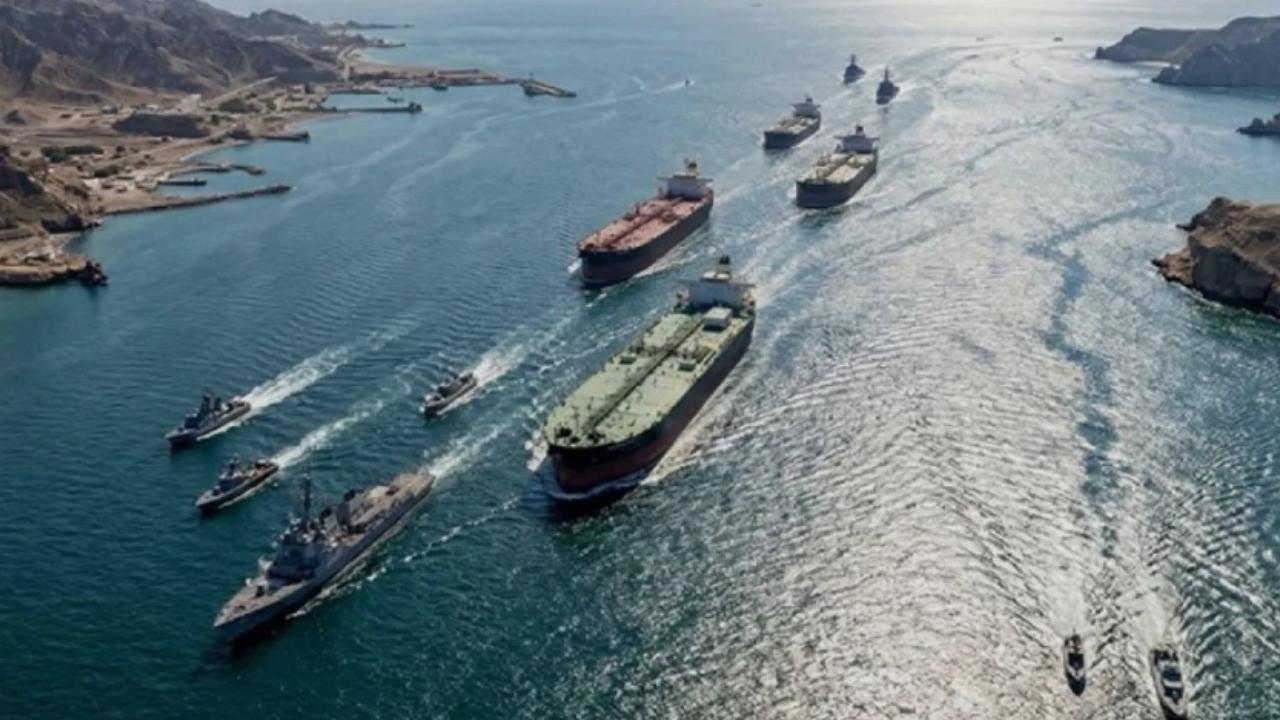
Fresh attacks on commercial oil tankers in the Strait of Hormuz have raised concerns over the safety of one of the world’s most important energy shipping routes, as tensions between the United States and Iran continue.
Iran’s Islamic Revolutionary Guard Corps Navy said several tankers caught fire after striking naval mines while attempting to pass through waters it considers restricted. The claims have not been independently verified, and Iranian authorities have not identified all the vessels involved.
Separately, the United Kingdom Maritime Trade Operations agency reported attacks on two tankers in the strait on Monday. One vessel was reportedly disabled after an incident north of Khasab, Oman, with a fire in its engine room. Another tanker was struck by an unidentified projectile while travelling out of the waterway. No casualties were reported in the incidents described by the agency.
The developments come as the United States increases its military presence in the region. The USS Theodore Roosevelt has arrived in the Middle East, joining two other American aircraft carriers as Washington weighs its options in the conflict with Iran.
The Strait of Hormuz is a critical route for global oil and gas shipments. Any prolonged disruption could affect energy prices, shipping costs and international supply chains.
For countries that depend heavily on imported fuel, a sustained rise in global oil prices could place additional pressure on transport, electricity generation, manufacturing and household budgets.
The crisis demonstrates the vulnerability of African economies to disruptions in global energy routes, even when conflicts occur far from the continent.
For Nigeria and other African oil-producing countries, higher crude prices may increase export earnings, but they can also raise domestic fuel, transport and production costs. Countries that import refined petroleum products could face additional pressure.
The situation strengthens the case for investment in renewable energy, domestic refining, energy storage, electric mobility and more efficient transport systems. African countries also need better maritime monitoring, satellite-based vessel tracking and regional cooperation to protect shipping routes and offshore infrastructure.
Reducing dependence on imported energy and improving local energy security will be essential to protecting African economies from external shocks.