In an era dominated by digital transfers and cryptocurrencies, physical cash remains the bedrock of global trust. But have you ever wondered how a plain piece of material transforms into a high-value banknote? The production of money is one of the most sophisticated industrial processes in the world, combining fine art, advanced chemistry, and heavy-duty engineering.
Here is an inside look at how money is made today.
The most common misconception about “paper” money is that it is made from wood pulp. If it were, a single trip through a washing machine would destroy it.
Modern banknotes are made from a specialized substrate:
Cotton and Linen: Most currencies use a blend of 75% cotton and 25% linen. This gives the notes their distinct “crisp” feel and extreme durability.
Polymer: Countries like the UK, Canada, and Australia use thin, flexible plastic film. Polymer notes stay cleaner, last 2.5 times longer than paper, and allow for “clear windows” that are nearly impossible to counterfeit.
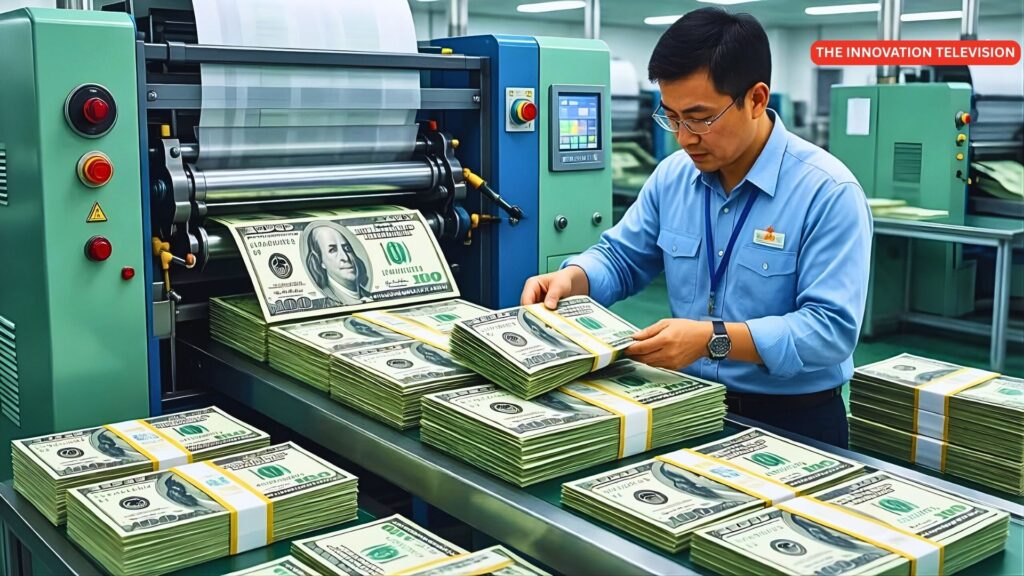
The Birth of Security
Before a single drop of ink is applied, security features are embedded directly into the wet pulp or plastic:
Watermarks: Created by varying the thickness of the paper fibers.
Security Threads: A thin ribbon (sometimes containing microtext or color-shifting properties) is woven into the heart of the note.
Holograms: Applied using high-heat foils to create 3D images that move when the note is tilted.
The Art of the Press
The printing process happens in three distinct, high-pressure stages:
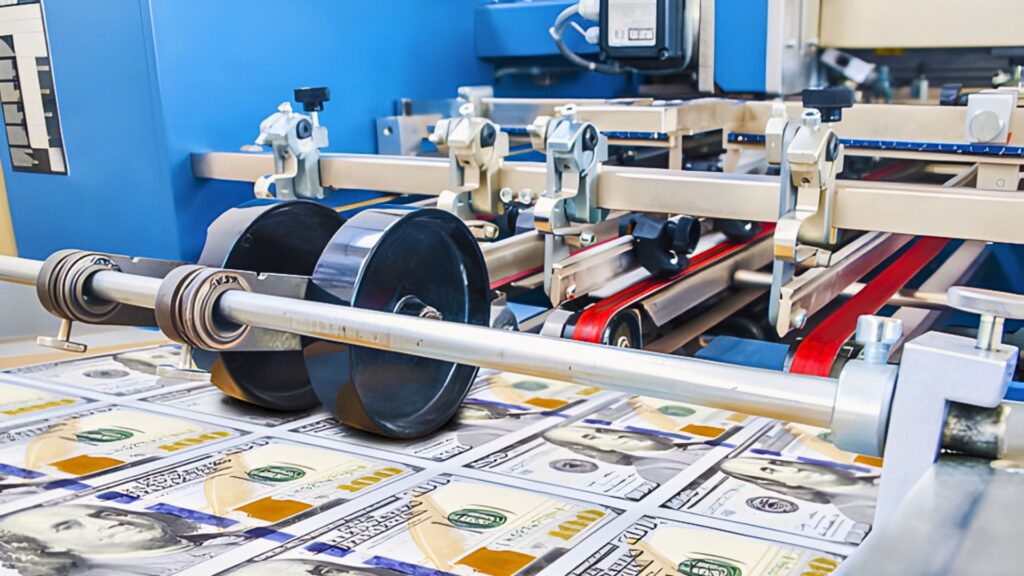
Offset Printing: This creates the intricate background colors. In 2026, many countries use “rainbow printing,” where colors subtly merge into one another to frustrate digital scanners.
Intaglio (Raised) Printing: This is the “soul” of the banknote. Using engraved steel plates and massive pressure, ink is forced into the paper. This creates a tactile, 3D texture that you can feel with your fingernail—a key way to tell if a note is genuine.
Letterpress: This is the final stage where Serial Numbers are added. Once a note receives its unique number, it officially becomes “legal tender.”
The Minting of Coins
While banknotes are printed, coins are “struck.”
Blanking: Machines punch out circular metal discs (blanks) from long coils of metal.
Annealing: The blanks are heated to soften them, making them ready to receive an image.
Upsetting: A machine rolls the edges to create a raised rim, which protects the coin’s design from wearing down.
The Strike: In a coining press, two steel dies (heads and tails) hit the blank simultaneously with up to 100 tons of force, imprinting the design instantly.
Quality Control: The Final Barrier
In modern facilities like the Nigerian Security Printing and Minting (NSPM) Plc or the US Bureau of Engraving, human eyes have been largely replaced by high-speed cameras. These sensors scan every millimeter of every note for ink smears, misalignments, or structural flaws.
Any note that isn’t perfect is instantly shredded. The “survivors” are shrink-wrapped into “bricks” of 1,000 notes and transported via armored convoys to Central Bank vaults.
The Digital Frontier
It is worth noting that in 2026, the majority of the world’s money is no longer physical. Central Banks now “produce” money through Digital Ledger Technology and Central Bank Digital Currencies (CBDCs), like Nigeria’s eNaira. This money is “minted” through secure computer code and exists only as entries in a highly encrypted database.
Conclusion
Whether it is the strike of a steel die or the flash of a laser on a polymer sheet, the production of money is a testament to human ingenuity. It is a process designed to stay one step ahead of counterfeiters while ensuring that the “value” in your pocket remains durable, secure, and trusted.