
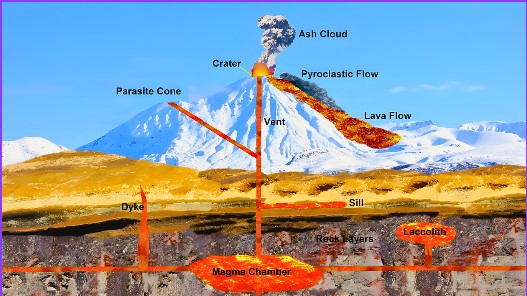
Volcano eruptions are among nature’s most dramatic events, but what exactly triggers them? The answer lies deep beneath our feet—in the movement of tectonic plates, the buoyancy of molten rock, and the pressure of trapped gases. Imagine a bottle of soda: when pressure builds or the “cap” (the Earth’s crust) is disturbed, the contents escape with force. Here’s a closer look at the main causes of volcanic eruptions in 2026:
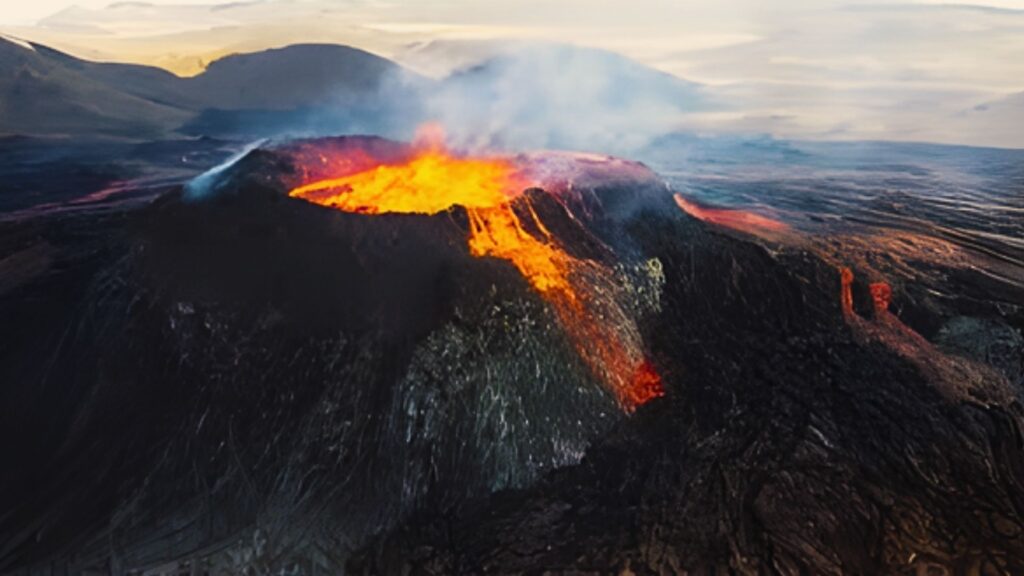
1. Tectonic Plate Movement Most volcanoes are found along the boundaries of Earth’s tectonic plates. There are three main settings:
- Subduction Zones (Convergent Boundaries): One plate slides beneath another, melts, and forms magma that rises to the surface. The Pacific Ring of Fire is a classic example.
- Rift Zones (Divergent Boundaries): Plates pull apart, creating gaps filled by rising magma, as seen at the Mid-Atlantic Ridge.
- Hotspots: These occur when magma pushes up through a weak spot in a plate, far from any boundary—Hawaii’s volcanoes are a prime example.
2. Buoyancy and Density Magma, or molten rock, is formed deep underground. Because it’s hotter and less dense than the surrounding solid rock, magma naturally rises towards the surface. When it finds cracks or conduits in the Earth’s crust, it can move upward—sometimes accumulating in a magma chamber, sometimes erupting explosively.
3. Gas Pressure: The Soda Bottle Effect Magma contains dissolved gases such as water vapor, carbon dioxide, and sulfur dioxide. As magma ascends, the pressure lessens and gases form bubbles that expand rapidly. If the magma is thick and viscous, these bubbles can’t escape easily, causing internal pressure to build until the volcano erupts—sometimes with explosive force.

Other External Triggers Occasionally, outside factors can tip the balance and trigger an eruption:
- Magma Recharge: The influx of new magma into an existing chamber can force the older magma out.
- Surface Unloading: Events like landslides or the melting of glaciers can reduce pressure on a volcano, making it easier for magma to erupt.
Why Are Some Eruptions Explosive and Others Gentle?
The violence of a volcanic eruption depends on factors like magma composition, gas content, and the structure of the volcano. Would you like to learn more about what determines whether a volcano erupts in a violent explosion or a slow-moving lava flow? Stay tuned for our in-depth feature