For generations, humanity has gazed at the stars and wondered: Are we alone in the universe? The prospect of extraterrestrial life—a question rooted in philosophy, science, and even politics—has gained renewed momentum in recent years, blending statistical probability with a growing trove of unexplained phenomena.
The Science: Probability Favors Life Beyond Earth
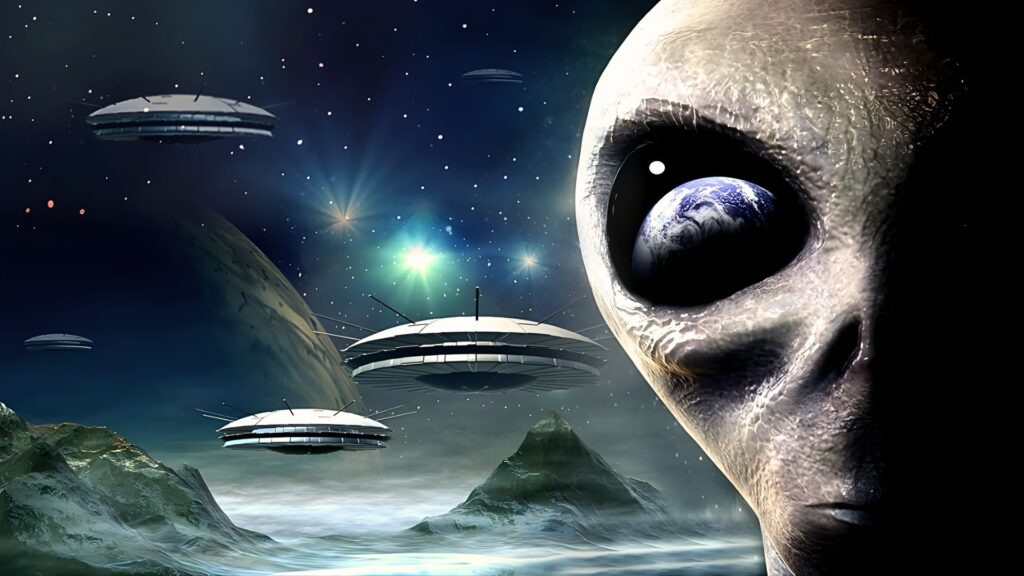
The universe is vast beyond comprehension, with more than 100 billion galaxies, each containing billions of stars and likely even more planets. The famous Drake Equation, developed to estimate the number of active, communicative civilizations in our galaxy, suggests that the odds of life existing elsewhere are high. While the equation’s variables remain debated, most astronomers agree that it’s statistically probable that life—at least in microbial form—exists somewhere beyond Earth.
Recent discoveries fuel this optimism. Thousands of exoplanets have been identified, some in the “habitable zone” where conditions might support life. Organic molecules, water vapor, and other life-friendly elements have been detected on distant worlds and even within our solar system on Mars, Europa, and Enceladus.
Evidence and UAPs: Still No Concrete Proof
Despite these odds, no verified evidence of intelligent aliens has emerged. The search for extraterrestrial intelligence (SETI) has scanned the skies for radio signals and other signs, but with no confirmed contact yet. The “Wow!” signal from 1977 remains intriguing but unconfirmed.
The conversation has recently shifted to Unidentified Anomalous Phenomena (UAPs), with hundreds of military-reported sightings declassified by the U.S. government. While some incidents defy easy explanation, most scientists urge caution, suggesting unknown technologies, atmospheric phenomena, or experimental aircraft rather than alien visitors.
Astrobiology: Life as We Know (and Don’t Know) It
Astrobiology, the science of life in the universe, is revealing that life can thrive in extreme environments—from deep ocean vents to acidic lakes—suggesting resilience on other worlds. Robotic Mars missions and probes to icy moons like Europa continue to search for biosignatures, but so far, no direct evidence of extraterrestrial life has been found.
The Social and Political Debate
Public fascination is fueled by pop culture and the occasional high-profile statement from world leaders. U.S. Congress has held hearings on UAPs. NASA and other agencies now use AI to analyze unexplained aerial phenomena. Former presidents have weighed in, sometimes adding to the speculation.
Conclusion: Waiting for Extraordinary Evidence
So, are aliens real? The scientific consensus points to a universe teeming with potential for life, but as of 2026, no confirmed evidence of intelligent extraterrestrials exists. The search—through telescopes, robotic explorers, and scientific inquiry—continues with open minds and the hope that one day, definitive proof will emerge.
Until then, the question remains open—but our place in the cosmos feels a little less lonely with every discovery.