

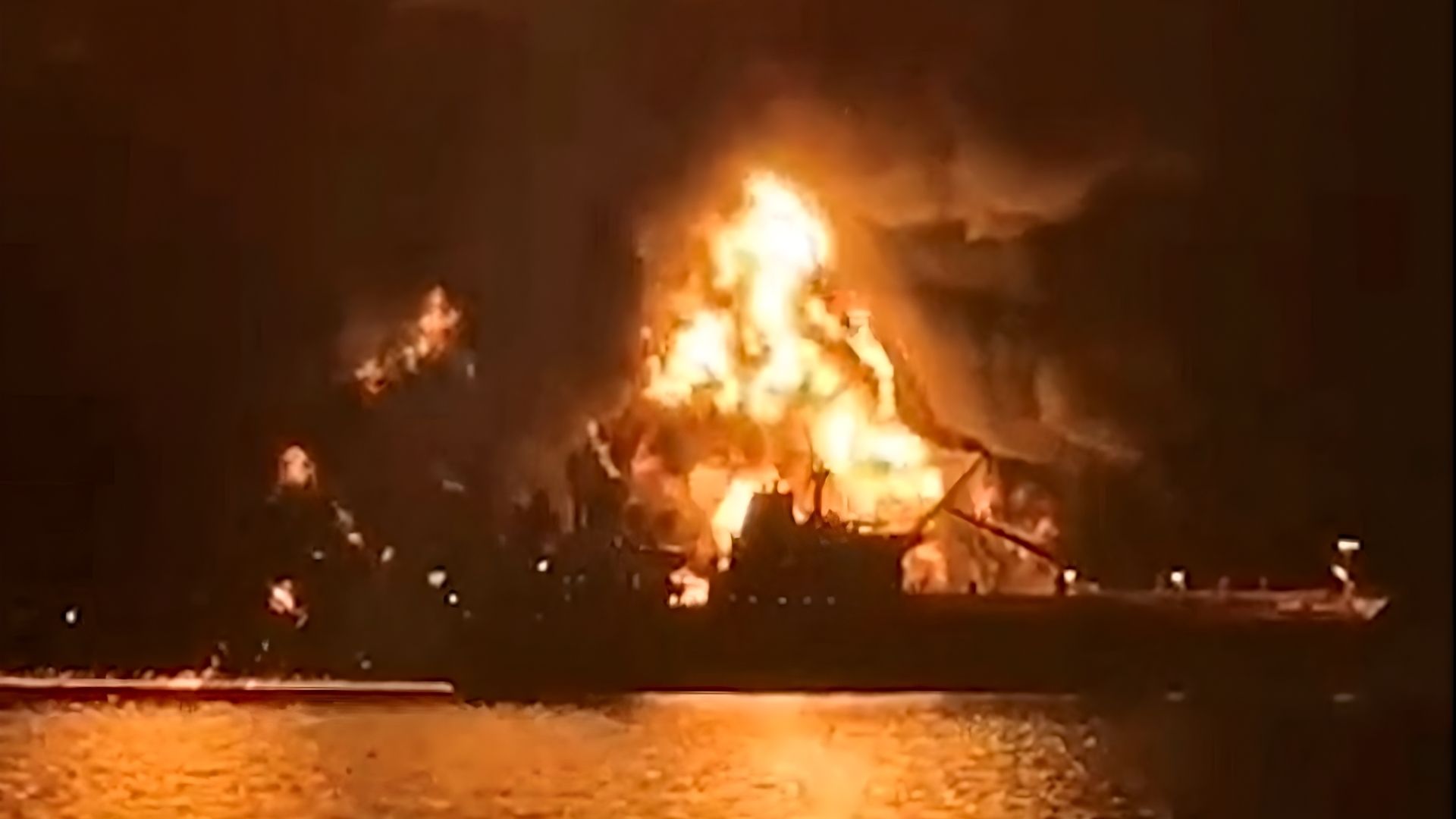
Early on Thursday, March 12, 2026, a violent attack targeted two oil tankers in the ship-to-ship transfer area of Iraq’s Basra port, resulting in the death of at least one crew member and forcing Iraqi authorities to suspend operations at all of the country’s oil terminals. The attack has raised serious concerns about maritime security in the strategically vital Persian Gulf region.
One crew member was confirmed dead, with 38 others rescued from the scene. Preliminary reports suggest the deceased may be an Indian national, though official confirmation is pending. The attack struck two tankers — the Malta-flagged Zefyros and the Marshall Islands-flagged Safesea Vishnu. The Zefyros was reportedly preparing to load liquid naphtha when the incident occurred.
According to Farhan al-Fartousi, Director-General of the General Company for Ports of Iraq, it remains unclear whether the strike was executed by a flying drone, a seaborne drone (an explosive-laden boat), or a missile. Investigations are ongoing to determine the exact nature of the assault.
Operational Impact
Oil Terminals: As a precautionary measure, all operations at Iraq’s oil ports have been suspended to ensure safety and security while authorities assess the situation.
Commercial Ports: General commercial ports, including Umm Qasr North and South, remain operational and continue to handle non-oil cargo loading and unloading activities, ensuring some level of commercial continuity despite the disruption in oil exports.
Regional Context and Global Implications
This attack comes amid heightened tensions in the Middle East, particularly involving Iran, Israel, and the United States. The Persian Gulf remains a critical artery for global energy supplies, and any disruption here has far-reaching consequences.
Following the news of the attack, international oil markets reacted swiftly. Brent crude prices surged past $100 per barrel, reflecting investor concerns over the stability of oil supply routes from the region. The incident underscores the vulnerability of maritime infrastructure to asymmetric threats such as drone or missile attacks, which can severely impact global energy security.
Iraqi authorities, alongside international partners, are expected to intensify security measures around key maritime infrastructure to prevent further incidents. The investigation into the attack’s perpetrators and methods is ongoing, with updates anticipated in the coming days.
Meanwhile, global markets will closely monitor developments, as any prolonged disruption in Iraq’s oil exports could exacerbate supply shortages and price volatility.
Conclusion
The attack on the Zefyros and Safesea Vishnu tankers at Basra port marks a significant escalation in threats to maritime energy infrastructure in the Persian Gulf. With at least one fatality confirmed and oil terminal operations halted, the incident highlights the fragile security environment in one of the world’s most important oil-producing regions. The global community watches closely as Iraq navigates this crisis amid broader regional tensions.