
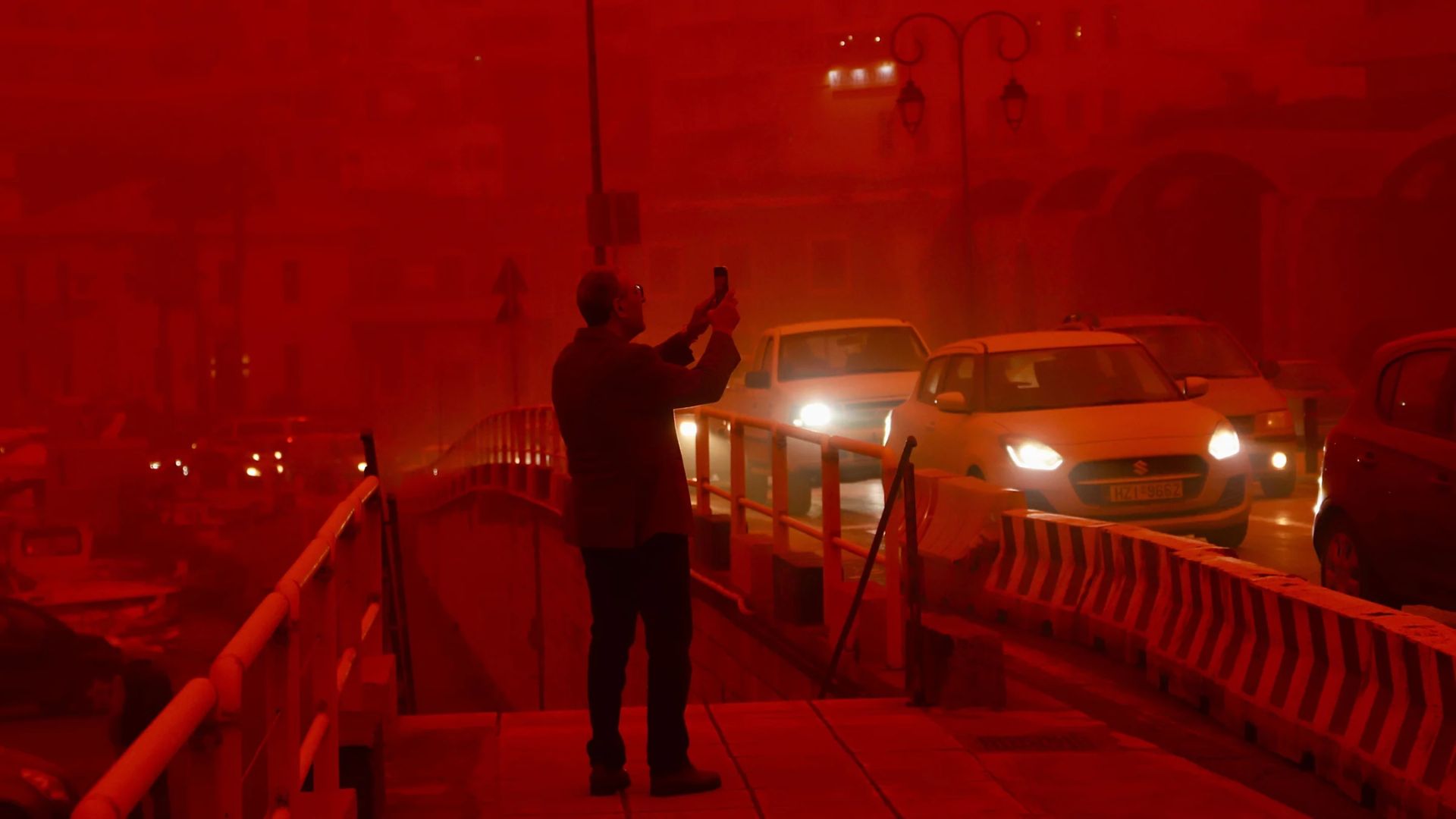
A severe Saharan dust storm that engulfed the Greek island of Crete has resulted in the tragic death of a man, highlighting the dangerous impact of this natural phenomenon. The storm, caused by strong winds carrying dust particles from North Africa across the Mediterranean, transformed the skies over Crete into an eerie red hue reminiscent of the Martian landscape.
The dust storm not only created a visually striking but also hazardous environment, reducing visibility and worsening air quality. Local authorities issued warnings about the health risks associated with inhaling the fine dust particles, especially for vulnerable groups such as the elderly, children, and those with respiratory conditions.

The man’s death underscores the severity of the storm’s impact on the island, which experienced disruptions in daily life and heightened emergency responses. Saharan dust storms are known to occasionally affect Mediterranean regions, but the intensity of this event was notable for its dramatic coloration and the scale of dust transported.
Experts explain that such dust storms occur when strong winds lift vast amounts of desert sand and dust into the atmosphere, carrying them over long distances. While these storms can have ecological benefits by depositing nutrients in soils, they also pose significant health and safety challenges.
As Crete recovers from this event, officials continue to monitor air quality and advise residents to take precautions. The incident serves as a reminder of the far-reaching effects of natural weather phenomena and the importance of preparedness in affected regions.