
In his first major theological document, the American-born pontiff delivers a sweeping moral reckoning with artificial intelligence — from autonomous weapons to worker displacement — and urges the world not to leave humanity’s future in the hands of a powerful few.
IDEA Television News Desk
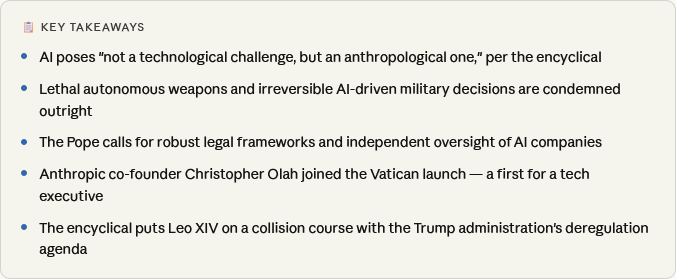
Pope Leo XIV has issued the most comprehensive Catholic statement on artificial intelligence in the Church’s history, releasing a 235-page encyclical that calls for binding legal frameworks, independent oversight, and a firm refusal to allow life-and-death decisions to be handed over to machines. Titled Magnifica Humanitas — “Magnificent Humanity” — the document challenges the tech industry, governments, and citizens alike to confront the profound moral consequences of the AI revolution.
Pope Leo XIV has issued the most comprehensive Catholic statement on artificial intelligence in the Church’s history, releasing a 235-page encyclical that calls for binding legal frameworks, independent oversight, and a firm refusal to allow life-and-death decisions to be handed over to machines. Titled Magnifica Humanitas — “Magnificent Humanity” — the document challenges the tech industry, governments, and citizens alike to confront the profound moral consequences of the AI revolution.
“It is not enough to invoke ethics in the abstract; robust legal frameworks, independent oversight, informed users and a political system that does not abdicate its responsibility are required. A more moral AI is not enough if that morality is determined by a few.”
— Pope Leo XIV, Magnifica Humanitas
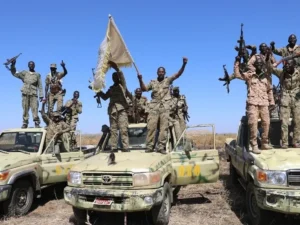
Among the document’s most striking positions is its categorical rejection of autonomous weapons systems. Leo declared it morally impermissible for irreversible, lethal decisions to be delegated to AI, calling instead for military applications of the technology to be subjected to the most rigorous ethical constraints possible. He went further, arguing that the traditional Christian doctrine of “just war” is now outdated in the age of AI-driven conflict, and that military force can only be legitimately used for self-defence in its strictest definition. The Pope warned that spiralling investments in AI-powered weaponry are pushing the world toward what he described as a path of annihilation.
The encyclical’s economic arguments are equally forceful. Leo expressed deep concern about AI displacing workers across industries, calling on governments and businesses to ensure that the technology’s benefits are distributed broadly rather than concentrating further wealth among an already powerful elite. He warned that the unchecked accumulation of data and decision-making power in the hands of a tiny number of private companies represents a systemic danger — especially to children, the vulnerable, and those in developing nations. The risk of “dehumanisation,” the document argues, is real and growing as societies increasingly delegate moral choices to algorithms and automated systems.