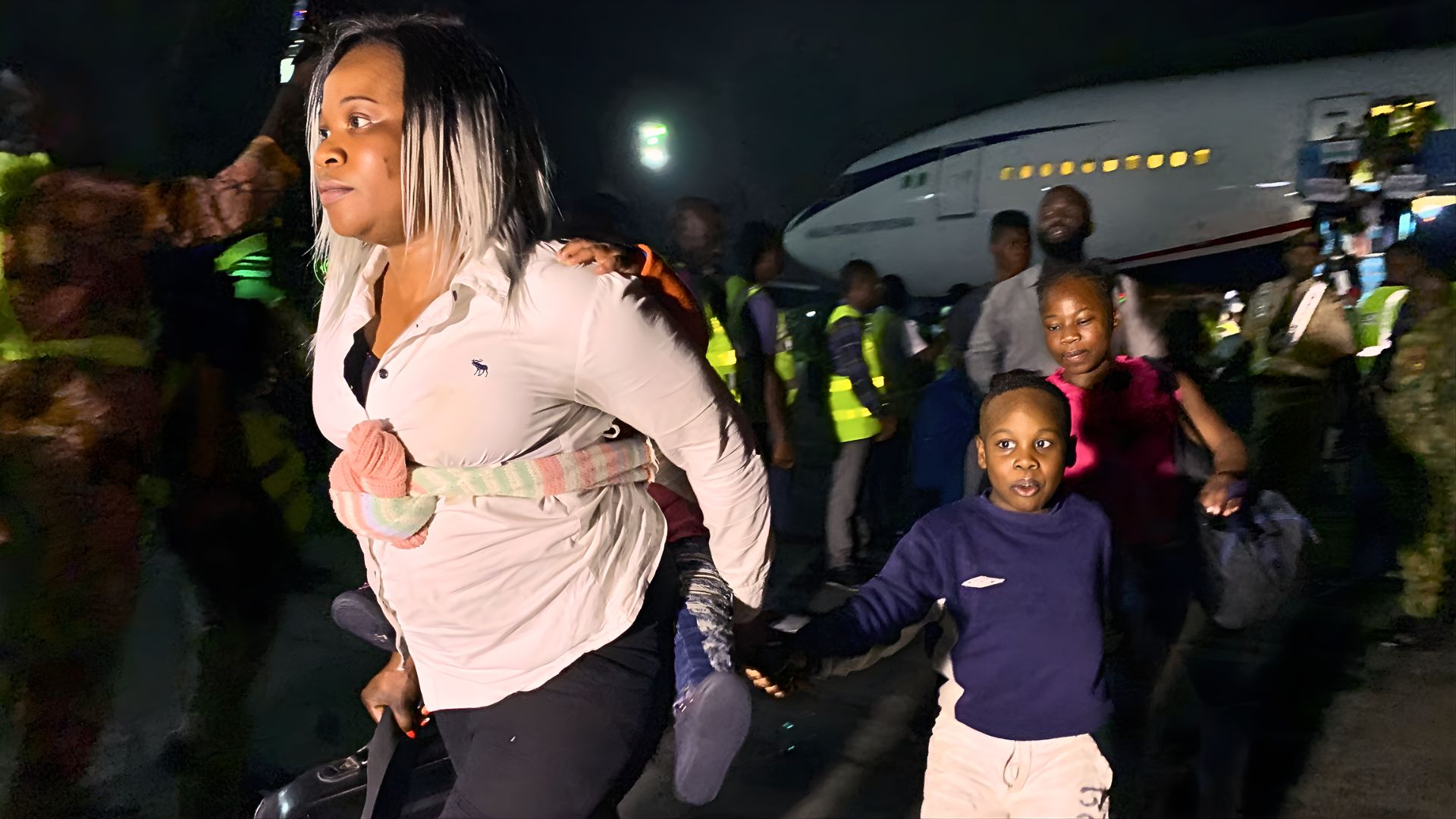
Five Air Peace flights approved by President Tinubu are now set to begin Wednesday — as over 500 Nigerians have already been screened and cleared for evacuation from a country where anti-foreigner violence has claimed dozens of African lives since April.
IDEA Television News Desk
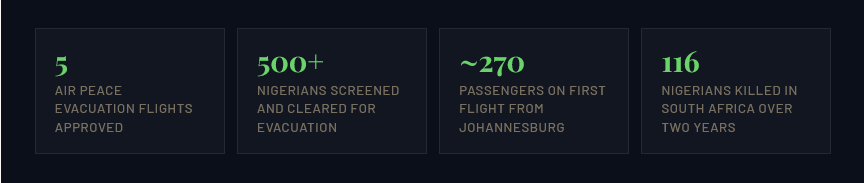
Nigeria’s federal government has rescheduled the first batch of evacuation flights for its citizens in South Africa, moving the departure date from Monday to Wednesday, June 10 — citing unforeseen logistical considerations. The development comes amid an escalating xenophobic crisis that has driven hundreds of Nigerians and other African nationals to seek emergency repatriation.
Foreign Affairs Ministry spokesman Kimiebi Ebienfa confirmed the delay in a statement on Monday, adding that screening of Nigerians willing to leave South Africa has also been extended to Wednesday. He said over 500 persons had already been screened and cleared at the Nigerian mission in Pretoria.
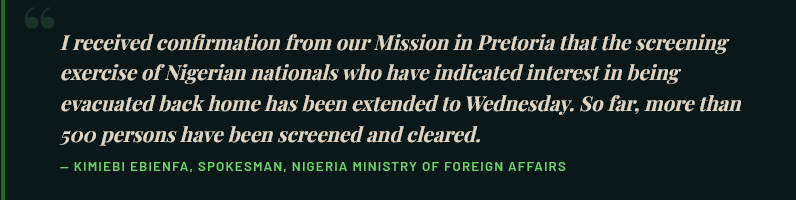
The Evacuation Plan
The Crisis Behind the Evacuation
The evacuation follows a fresh wave of anti-foreigner violence that swept through South Africa in April and May 2026, driven largely by the citizen-led “March and March” movement, which advocates stricter immigration enforcement. Vigilantes carried out violent attacks targeting African and Asian foreign nationals in major cities including Pretoria, Johannesburg, and Durban, with little apparent response from police and other authorities, according to Human Rights Watch.
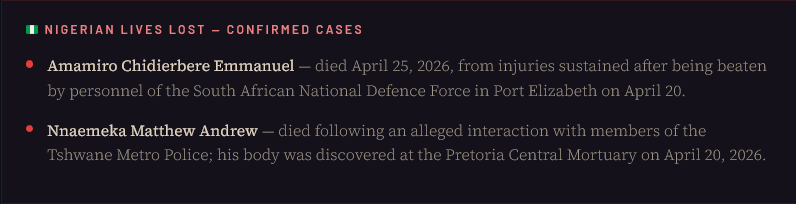
Beyond Nigerians, the attacks also affected Ghanaians, Congolese, Cameroonians, and other African nationals whose businesses were located in areas targeted during the violence. Nigeria’s Foreign Affairs Minister Bianca Odumegwu-Ojukwe formally called her South African counterpart Ronald Lamola to demand justice for the two confirmed Nigerian deaths.

Nigeria’s Legislative Response
The Senate resolved to send a high-level delegation led by Senate President Godswill Akpabio to South Africa to address renewed anti-foreigner sentiment — with a joint ad hoc committee of the Senate and House of Representatives tasked with finding lasting solutions to the crisis.
Nigeria has warned against reprisal attacks on South African businesses in Nigeria, with authorities in Abuja focused on preventing a repetition of past commercial disruptions that followed previous waves of xenophobic violence. Ghana, for its part, had already evacuated hundreds of its own nationals, with the Ghana High Commission in Pretoria processing over 800 citizens who requested immediate evacuation.
The Nigerian government has stressed that the evacuation is voluntary, and that diplomatic efforts remain ongoing to ensure the safety and rights of the estimated hundreds of thousands of Nigerians who continue to live and work in South Africa.