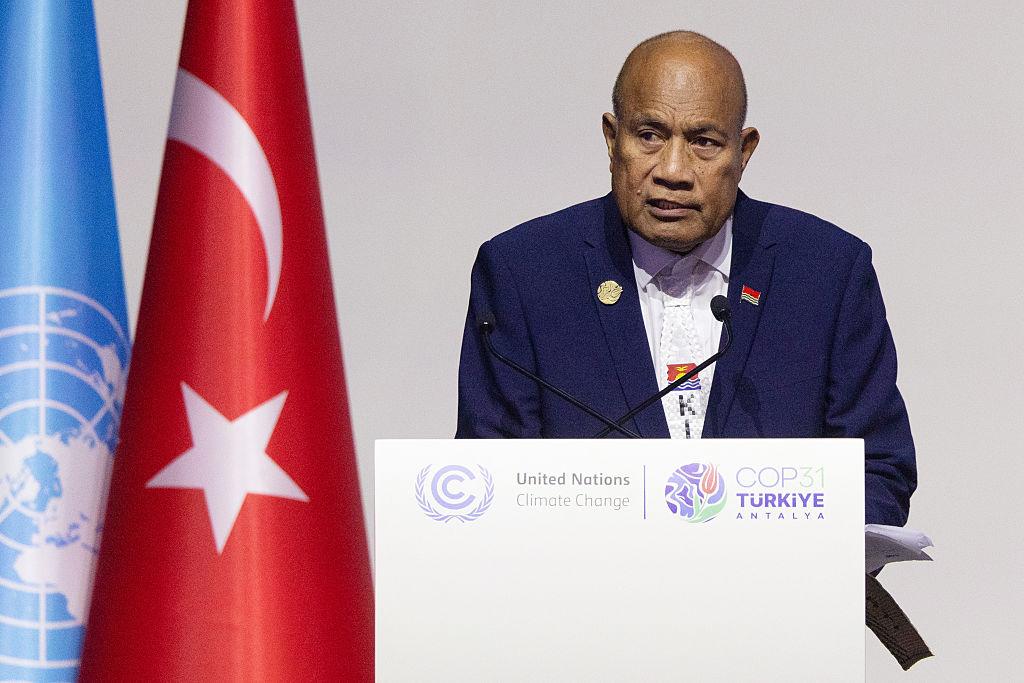
Small island nations are intensifying pressure on major industrialised countries to deliver stronger climate commitments and financial support as negotiations continue at the 31st United Nations Climate Change Conference in Antalya, Türkiye.
The Alliance of Small Island States, which represents 39 countries, says the consequences of rising temperatures, sea-level rise and increasingly severe weather are threatening the survival of vulnerable communities.
At the conference, representatives are demanding more practical action rather than additional promises and lengthy negotiations.
The group is seeking 500 million dollars for resilience programmes and another 200 million dollars to strengthen disaster early-warning systems.
Tonga’s Prime Minister has warned that vulnerable island communities cannot continue waiting for international negotiations while their coastlines, infrastructure and livelihoods face growing climate risks.
The demands come amid wider disagreements at COP31 over fossil fuels, climate finance and the pace of the global energy transition.
Negotiators are also divided over the level of support developing countries should receive to adapt to climate change and recover from disasters.
The conference is taking place against the backdrop of rising ocean temperatures, intensifying climate patterns and growing concerns that the world is not on track to limit global warming to 1.5 degrees Celsius.
African coastal nations face many of the same climate threats confronting small island states.
Countries including Nigeria, Ghana, Senegal, Mozambique and Madagascar are exposed to coastal erosion, flooding, saltwater intrusion and extreme weather.
Technology can help reduce these risks through satellite-based coastal monitoring, flood-prediction models, climate information services and affordable early-warning systems.
African universities and research institutions can also contribute by developing climate-resilient crops, improved drainage systems and nature-based coastal protection solutions.
The demand for climate finance is therefore directly relevant to Africa. Funding must support not only emergency recovery but also scientific research, infrastructure and technologies that help vulnerable communities prepare for future disasters.