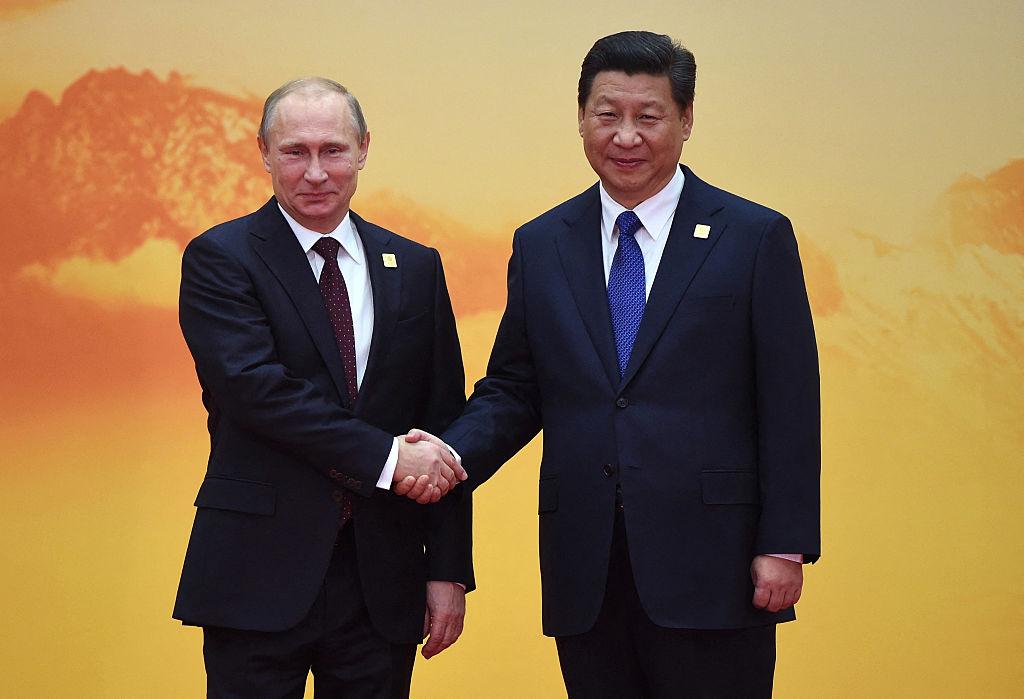
Chinese President Xi Jinping and Russian President Vladimir Putin have criticised Western trade and foreign policies as leaders gather in Shenzhen for the Asia-Pacific Economic Cooperation summit.
Xi defended open trade, multilateral cooperation and investment, while promising to expand China’s industrial and technological capabilities.
Putin, meanwhile, criticised Western sanctions against Russia, arguing that they had not weakened the country as intended.
The statements come ahead of a planned meeting on Thursday involving Xi, Putin and United States President Donald Trump, who is travelling to China following engagements in the Philippines.
The proposed meeting is expected to address major international issues, including Russia’s war in Ukraine, the conflict involving the United States and Iran, trade disputes, artificial intelligence and nuclear security.
The gathering has attracted international attention because decisions or understandings reached by the three major powers could influence global security and economic relations.
There are also concerns that smaller countries could find their interests sidelined if major powers reach agreements without broader international consultation.
The meeting comes at a time of fragile trade relations between Washington and Beijing, particularly over advanced semiconductor technology and restrictions affecting China’s access to artificial intelligence chips.
The rivalry between major powers has important consequences for Africa’s access to technology, industrial investment and international markets.
China, Russia and the United States all have significant economic and strategic interests across the continent, including in energy, mining, infrastructure, telecommunications and defence.
Competition over artificial intelligence and semiconductor technology could influence the availability and cost of computing equipment used by African universities, technology companies and data centres.
African governments must therefore develop strategies that protect national interests while encouraging technology transfer, local manufacturing and research partnerships.
The continent’s long-term objective should be to negotiate from a position of stronger technological capability rather than remain dependent on decisions made by larger economies.