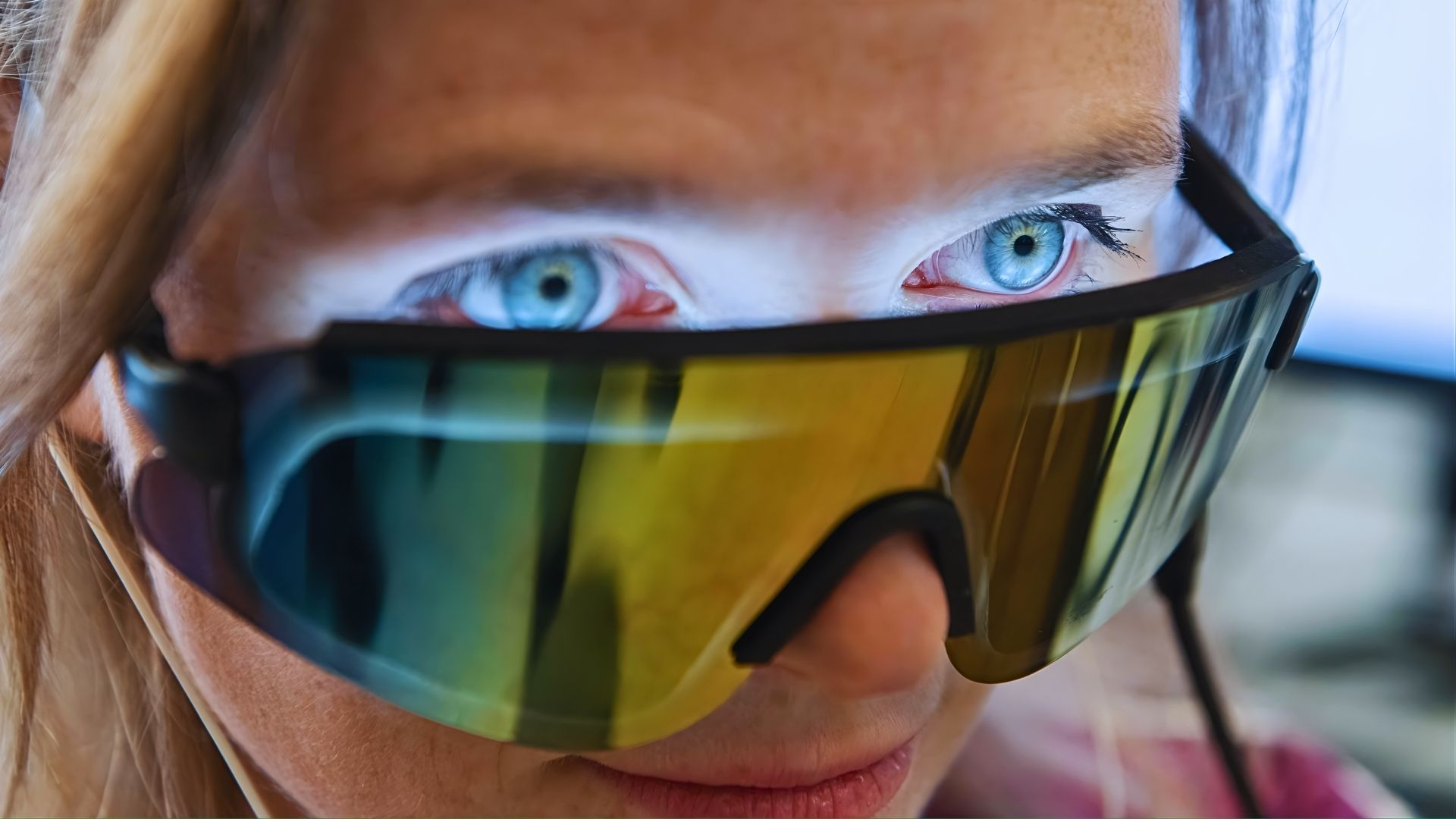
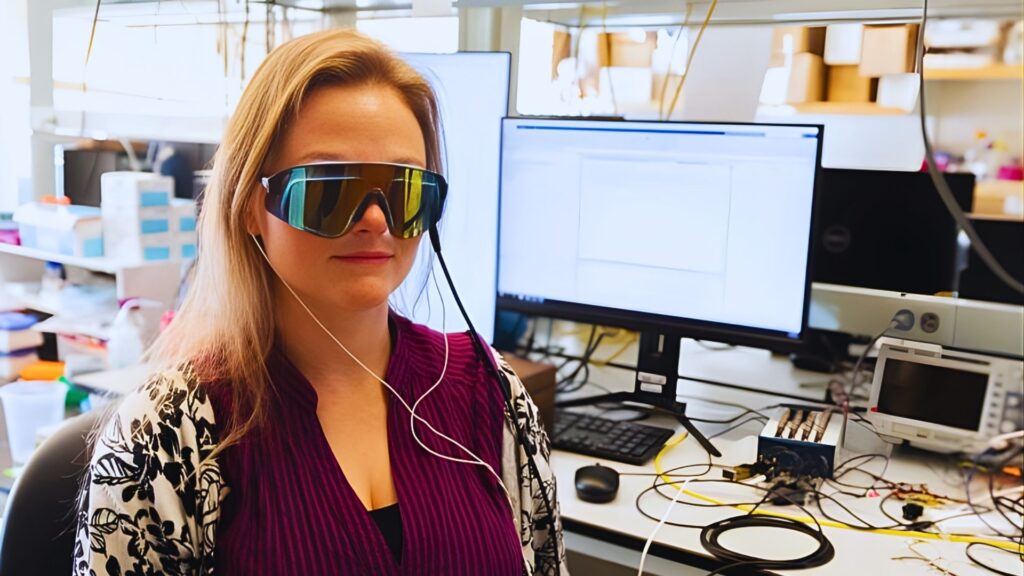
For years, the battle against Alzheimer’s disease has been fought primarily with pharmaceuticals. However, a revolutionary non-invasive approach is gaining momentum at the intersection of engineering and neuroscience. Annabelle Singer, an associate professor and biomedical engineer at Georgia Institute of Technology and Emory University, is pioneering research into whether simple sensory stimuli—specifically flickering lights and sound—can protect the brain from cognitive decay.
The Science of the “Flicker”
At the heart of Singer’s work is a frequency of 40 Hertz. This specific rate corresponds with “gamma” brain waves, which are essential for high-level cognitive functions like memory and attention. In patients with Alzheimer’s, these rhythms are often disrupted or diminished.
Singer’s research utilizes a technique called GENUS (Gamma ENtrainment Using Sensory stimuli). By exposing patients to light and sound pulsing 40 times per second, researchers can effectively “jumpstart” the brain, synchronizing neural activity back to a healthy state.
Recruiting the Brain’s “Trash Collectors”
The therapy does more than just align brain waves; it appears to trigger a biological cleanup. The 40 Hz stimulation recruits microglia—the brain’s immune cells—which act as “trash collectors.” These cells are prompted to clear out toxic amyloid-beta and tau proteins, the hallmark plaques and tangles that physically destroy brain tissue in Alzheimer’s patients.
Promising Results from Clinical Trials
As of February 2026, clinical data from Singer’s collaborative trials have shown remarkable outcomes:
Slowing Cognitive Decline: Patients using the 40 Hz stimulation for just one hour a day showed significantly slower cognitive decline compared to control groups.
Preserving Brain Volume: Brain imaging revealed that the therapy helped reduce the loss of brain volume in areas critical for memory, such as the hippocampus.
Long-Term Efficacy: New data suggests that long-term use (up to two years) continues to maintain higher cognitive scores and lower levels of brain protein buildup.
Beyond Alzheimer’s
The potential for this technology is expanding. Recent clinical breakthroughs in 2024 and 2025 indicate that flickering stimulation may also benefit patients with epilepsy by reducing abnormal electrical discharges, as well as those suffering from multiple sclerosis.
The Road Ahead
While the results are a “promising” beacon of hope, Annabelle Singer and her team emphasize that larger, pivotal clinical trials are still necessary to achieve full FDA approval. For now, the “flicker” represents a potentially transformative, low-cost, and side-effect-free tool in the fight against neurodegeneration.
By: Tom Solomon Iboro