
The Strait of Hormuz, a vital maritime passageway for global oil and goods shipments, has become a flashpoint in escalating geopolitical tensions as nearly three dozen countries convene to exert diplomatic and political pressure to reopen this crucial shipping route. The strait has been effectively choked off amid the ongoing U.S.-Israeli conflict with Iran, threatening the stability of international trade and energy markets.
Strategic Importance of the Strait of Hormuz
Connecting the Persian Gulf to the Arabian Sea, the Strait of Hormuz is one of the world’s most important chokepoints, with roughly 20% of global petroleum passing through it daily. Any disruption here sends shockwaves through global energy prices and supply chains, making its accessibility a matter of international concern.
Impact of the U.S.-Israeli War Against Iran
The ongoing military and political conflict involving the U.S. and Israel against Iran has heightened security risks in the region, leading to restricted navigation and increased military activity around the strait. This has caused significant disruptions in maritime traffic, raising fears of prolonged instability and economic fallout.
Diplomatic Efforts to Restore Access
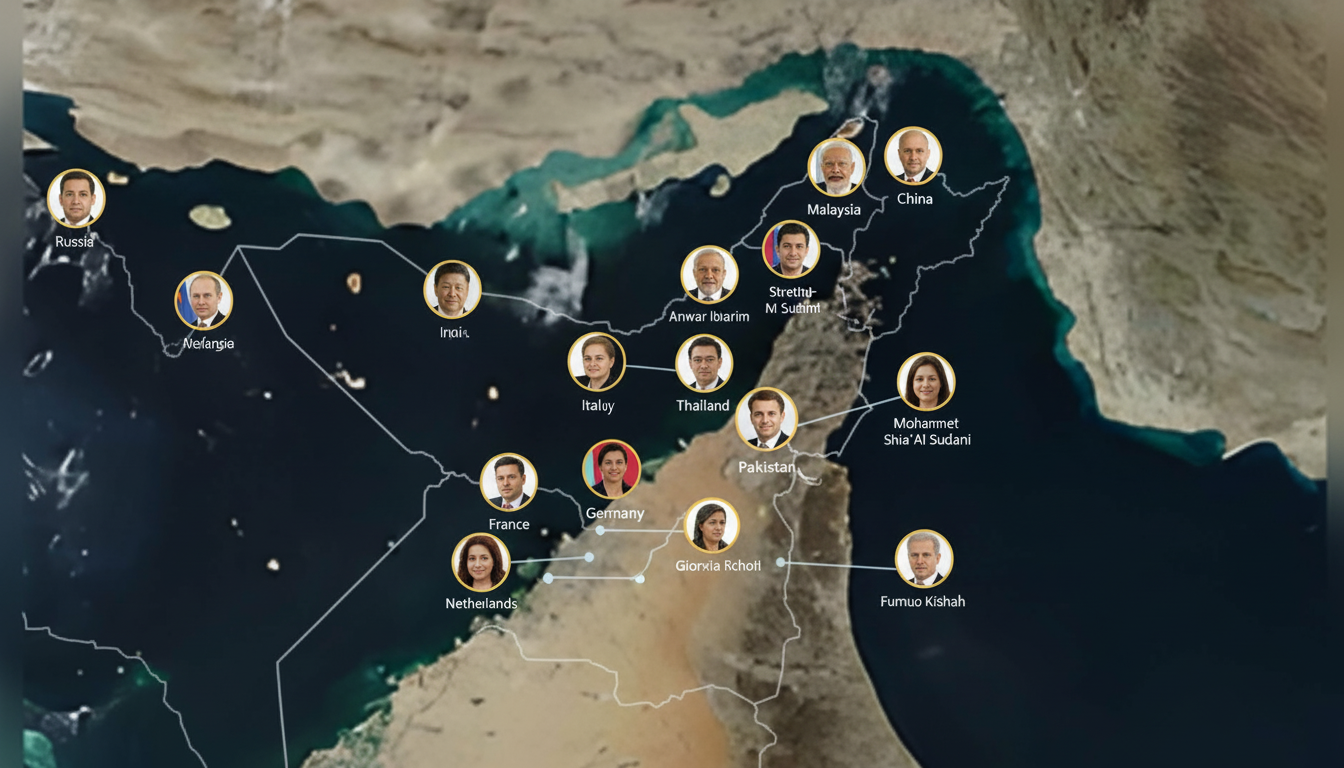
In response, a coalition of nearly 36 countries from across the globe has come together to apply diplomatic pressure aimed at reopening the Strait of Hormuz. These nations are working to foster dialogue, reduce tensions, and ensure the safe passage of commercial vessels through the strait.
The United Kingdom has offered to host a global summit focused on this issue, signaling a strong international commitment to resolving the crisis through peaceful means. The coalition emphasizes the importance of freedom of navigation and adherence to international maritime laws.
Challenges Ahead
Despite Iran’s claims that the strait remains open for international shipping, the reality on the ground is complex and volatile. The coalition faces the challenge of balancing geopolitical interests, addressing security concerns, and achieving consensus among diverse stakeholders.
The international diplomatic push to reopen the Strait of Hormuz underscores the global community’s recognition of the strait’s critical role in economic stability and maritime security. As negotiations continue, the world watches closely, hopeful that peaceful solutions will restore this vital artery of global trade and prevent further disruption.