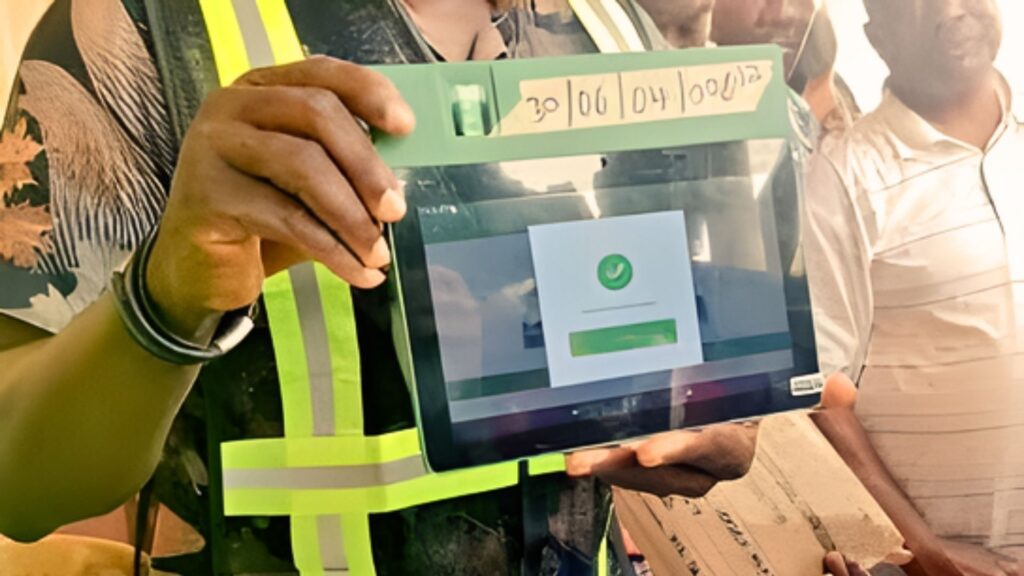
The Bimodal Voter Accreditation System (BVAS) is a portable tablet used by INEC to ensure that only registered voters can cast their ballots and that results from each polling unit are transparently uploaded.
How It Accredits Voters (The “Bimodal” Part)
The machine uses different biometric methods to verify a voter’s identity: Step One (Identification), Step Two (Authentication), Step Three (Facial Backup), Offline Functionality.
Step One (Identification): The official scans the barcode or QR code on your Permanent Voter Card (PVC). Alternatively, they can type in your name or the last six digits of your Voter Identification Number (VIN) to find you in the digital register.
Step Two (Authentication): You are asked to place your thumb on the scanner for fingerprint verification.
Step Three (Facial Backup): If your fingerprints cannot be read (common for elderly voters or manual workers), the machine uses its camera for facial recognition.
Offline Functionality: Crucially, the accreditation process works entirely offline. The machine contains a local database of all voters registered for that specific polling unit, so no internet is needed for you to be verified.
How does this Technology Prevents Fraud.
Once voting ends and the ballots are counted manually: The Presiding Officer uses the BVAS camera to take a clear photo of the final, signed result sheet (Form EC8A). The machine then uploads this image and the total accreditation data to the INEC Result Viewing (IReV) portal. While accreditation is offline, transmission requires internet. If there is no signal at the polling unit, the result is saved securely and will automatically upload once the official moves to an area with a network.