
By IDEA Television News Desk
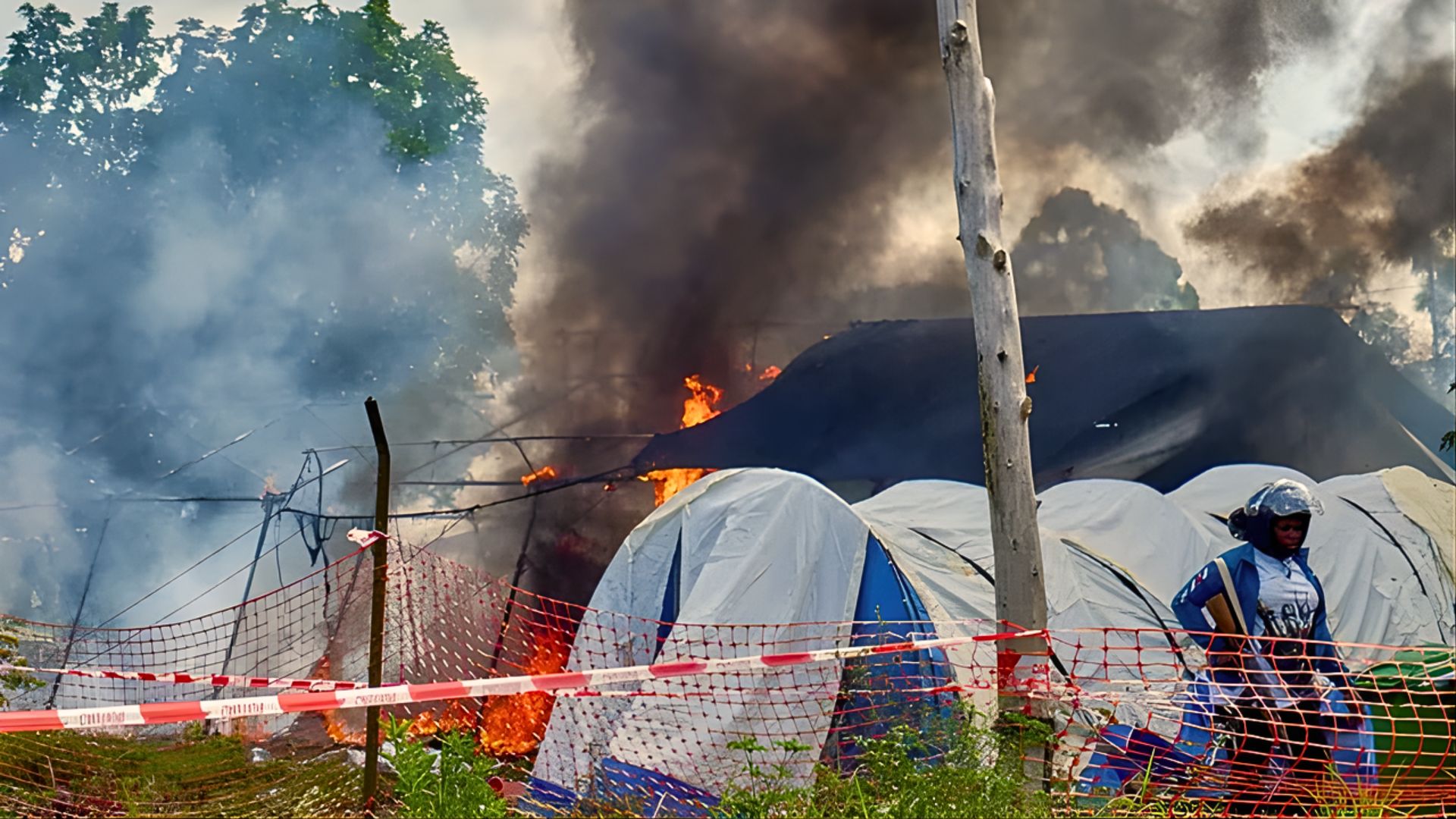
A dangerous and alarming new dimension has emerged in the ongoing Ebola crisis in the Democratic Republic of Congo, as an angry mob stormed and set fire to isolation tents at a hospital in the country’s east — threatening to undo weeks of containment efforts and putting both patients and medical workers in grave danger.
What Happened
The violent unrest broke out at Rwampara General Hospital, located near the city of Bunia in Ituri province — the epicentre of the current Ebola outbreak. The trouble began when family members and friends of a young man believed to have died from the virus were blocked by hospital authorities from taking his body away for a traditional burial.
Grief quickly turned to fury. The crowd began hurling stones and projectiles at the facility before setting fire to isolation tents that were being used as treatment wards for infected patients. Police were forced to fire warning shots into the air to disperse the mob. A healthcare worker sustained injuries from the stone-throwing before law enforcement restored order. Medical staff were subsequently placed under military protection.
The young man at the centre of the tragedy was described by witnesses as a popular local footballer who had played for several community teams. His mother insisted her son had died of typhoid fever, not Ebola — a sentiment that reflected the deep mistrust and disbelief many in the region have towards the outbreak.
Dangerous Misinformation Fuelling the Crisis
Local politician Luc Malembe Malembe, who witnessed the unrest firsthand, described a deeply troubling breakdown in public trust. He told journalists that a significant portion of the population — particularly in more remote communities — simply does not believe Ebola is real, viewing it instead as a fabrication by international organisations and hospitals looking to profit.
“People are not properly informed about what is happening,” he said. “They believe it is the NGOs and hospitals creating this to make money — and this is tragic.”
The consequences of this misinformation are severe. Two isolation tents were completely destroyed in the blaze, along with a body that had been awaiting a safe burial. Six patients who had been receiving treatment inside the tents were reported to have fled during the chaos, though medical charity Alima, which operated the facility, later confirmed that all patients have since been located and are currently receiving care at the hospital.
The safe burial of Ebola victims is critical to stopping the spread of the virus. Bodies of those who have died from Ebola remain highly infectious, and the World Health Organisation (WHO) mandates that specially trained teams handle all burials using full protective equipment.
The Outbreak by the Numbers
The scale of this Ebola outbreak is already alarming and continues to grow. The WHO has recorded approximately 600 suspected cases in DR Congo, with at least 139 confirmed deaths — though Congo’s own Health Minister, Samuel Roger Kamba, placed the death toll higher at 159. The overwhelming majority of cases are concentrated in Ituri province.
The WHO has classified the outbreak as a Public Health Emergency of International Concern — its highest level of alarm — though it has stopped short of declaring it a pandemic.
Making matters significantly more difficult is the species of Ebola responsible for this outbreak. It is caused by the Bundibugyo strain — a rare and particularly dangerous variant for which there is currently no approved vaccine. The WHO has warned that developing one could take up to nine months.
Outbreak Spreads Beyond Ituri
The situation took a further worrying turn this week when the M23 rebel group — which controls significant territory in eastern Congo — confirmed the first Ebola case in South Kivu province, hundreds of kilometres away from the main outbreak zone in Ituri. The patient, a 28-year-old who had travelled from the city of Kisangani, died before the diagnosis could be confirmed.
Kisangani, located in north-central Tshopo province, has not recorded any Ebola infections, raising urgent questions about how far the virus may have already spread undetected. The M23 has no experience managing a public health emergency of this nature, though the group has said it will cooperate with international health partners to contain the spread.
Uganda Responds; Congo Football Team Pulls Out
The outbreak has now crossed an international border. Two Ebola cases have been confirmed in Uganda, prompting Kampala to temporarily suspend all flights, bus services, and public transport crossing from DR Congo. Passenger ferry services on the Semliki River — which forms part of the border between the two countries — have also been halted.
Back in Congo, the national football team has cancelled a pre-World Cup training camp that had been scheduled to take place in the capital, Kinshasa, citing the outbreak as a direct concern.
A Crisis That Demands Urgent Attention
The burning of the hospital tents in Bunia is more than an act of grief-fuelled violence — it is a warning sign. When communities do not trust health authorities, when misinformation is stronger than medicine, and when a lethal virus with no vaccine is on the move through conflict zones and across borders, the conditions for a much wider catastrophe are being set.
The world must pay attention.
Reporting by IDEA Television News Desk with additional sourcing from international wire services.