
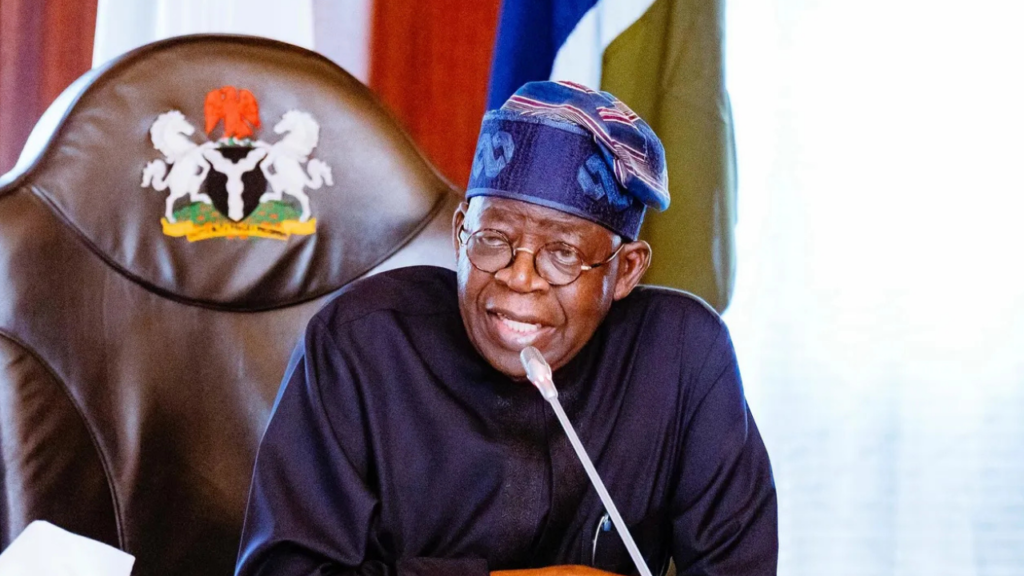
The Presidency has responded to a recent assessment by the United States Department of State which found that Nigeria failed to meet minimum fiscal transparency requirements, describing the report as an external benchmark rather than a comprehensive evaluation of the country’s overall fiscal governance.
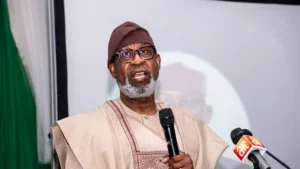
Special Adviser to the President on Media and Publicity, Sunday Dare, said the Federal Government takes the findings seriously and remains committed to improving fiscal transparency, accountability and public financial management.
His comments followed the release of the 2026 Fiscal Transparency Report by the US Department of State, which assessed 140 governments during its 2025 review period. The report classified 67 governments, including Nigeria, as failing to meet the minimum fiscal transparency requirements.
US Report Identifies Fiscal Transparency Gaps
According to the report, Nigeria recorded weaknesses in several areas, including budget disclosure, revenue and expenditure reporting, audit independence and transparency in public procurement.
The US assessment, however, acknowledged some progress by the Nigerian government, particularly in making the enacted budget and end-of-year financial reports publicly available. Information relating to government debt obligations was also found to be accessible to the public.
The report noted that Nigeria did not publish its executive budget proposal within a reasonable timeframe and that its budget documents did not provide a substantially complete picture of government revenues and expenditures.
It also stated that actual government revenues and expenditures did not reasonably correspond with figures contained in the enacted budget.
On auditing, the US Department of State said Nigeria’s Supreme Audit Institution did not meet international standards for independence and did not publish substantive reports, although it had access to the entire executed budget.
The assessment covered the period from January 1 to December 31, 2025.
Presidency: Report Should Be Properly Contextualised
Responding to the report, Dare said the Federal Government recognises the importance of the issues raised but stressed that the US assessment focuses on specific fiscal transparency requirements.
According to him, the report should not be interpreted as a complete assessment of all the fiscal and public financial management reforms currently being implemented by the Nigerian government.
“Fiscal transparency, accountability and effective public financial management remain important priorities of the Federal Government, and Nigeria continues to implement reforms aimed at strengthening the management, reporting and disclosure of public resources,” Dare said.
He explained that the US Fiscal Transparency Report primarily assesses areas such as the public disclosure of national budget information, government contracts and natural-resource licences.
“It should therefore not be interpreted as a comprehensive assessment of all fiscal and public financial management reforms currently underway in Nigeria,” he added.
Dare said the appropriate response was neither to dismiss the findings nor to treat them as a complete representation of Nigeria’s fiscal governance.
Government Highlights Ongoing Reforms
The Presidency pointed to several initiatives introduced to improve transparency and public access to financial information.
These include the Open Treasury initiative, the publication of budget documents, disclosure of debt obligations and reforms within the public procurement system.
The government is also strengthening digital procurement and other financial management systems intended to improve the accessibility, reliability and timeliness of public financial information.
The Presidency maintains that these measures are part of broader efforts to improve accountability in the management of public resources.
IMF Raises Separate Concerns Over Nigeria’s Fiscal Reporting
The US assessment comes amid broader concerns about Nigeria’s fiscal reporting and financing arrangements.
In July, the International Monetary Fund (IMF) raised concerns over discrepancies in Nigeria’s fiscal reporting, saying government spending equivalent to about two per cent of GDP had not been fully reflected in recent official budgets.
According to the IMF, the discrepancy was partly associated with major government projects executed outside the conventional budget framework.
The Fund warned that such off-budget spending could make it more difficult to accurately assess Nigeria’s fiscal deficit, financing requirements and public investment levels.
The IMF also expressed concerns over Nigeria’s plan to raise up to $5 billion through a derivatives-based financing arrangement with First Abu Dhabi Bank, noting that such transactions can be complex and may create transparency challenges if not properly disclosed and managed.
What the Report Means for Nigeria
The latest US assessment places renewed attention on the need for stronger fiscal transparency and public financial management in Nigeria.
While the Presidency has highlighted ongoing reforms and improvements in the publication of financial information, the US report points to areas where further progress is required, particularly in budget disclosure, expenditure reporting, procurement transparency and audit independence.
The Department of State noted that fiscal transparency is important for effective public financial management, market confidence and economic sustainability. It also contributes to greater government accountability and enables citizens to participate more effectively in public debate over the use of government resources.
For Nigeria, the challenge will be to translate ongoing reforms into more consistent, timely and comprehensive disclosure of public finances while strengthening the institutions responsible for auditing and overseeing government spending.