A fragile truce born of five weeks of devastating strikes now faces its greatest test — as Washington demands Iran abandon enrichment, Tehran insists on security guarantees, and Beijing quietly positions itself as kingmaker.
By IDEA Television World Affairs Desk 10 min read
ABUJA / INTERNATIONAL — The Middle East stands at one of its most consequential crossroads in decades. A fragile ceasefire between Iran on one side and the United States and Israel on the other — declared on April 8 after nearly five weeks of devastating strikes — continues to hold, but only just. Diplomatic efforts remain at an impasse as the two sides clash over the fate of Iran’s nuclear programme, the contested Strait of Hormuz, and the terms of any durable peace.
For Africa’s 1.4 billion people, many of whom depend on Gulf energy flows and face the economic ripple effects of a destabilised global oil market, the stakes are enormous. Here is what you need to know.
How the War Began
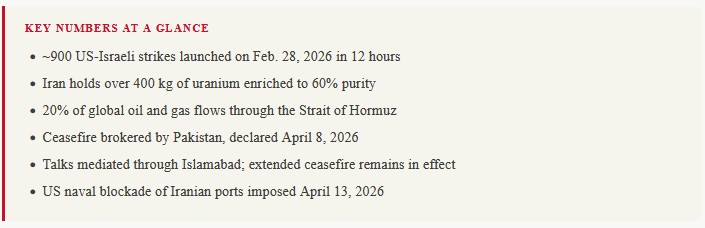
On February 28, 2026, the United States and Israel launched a sweeping joint military campaign against Iran dubbed “Operation Epic Fury,” involving nearly 900 strikes in a single 12-hour period. The strikes targeted Iran’s military infrastructure, air defences, ballistic missile facilities, and top leadership — including Supreme Leader Ali Khamenei, who was killed alongside other senior officials.
The attacks came as US-Iran nuclear talks — conducted through Omani intermediaries since 2025 — were still ongoing. A fourth round had been scheduled for Vienna. In the weeks prior, the US had demanded Iran fully dismantle its nuclear and missile programmes, a demand Tehran firmly rejected. The Trump administration authorised the assault citing intelligence provided largely by Israeli Prime Minister Benjamin Netanyahu, who had lobbied Washington intensively for a joint strike.
In the immediate aftermath, Iran appointed Khamenei’s son, Mojtaba Khamenei, as the new Supreme Leader, and retaliated with hundreds of ballistic missiles and drones targeting Israel, US military bases across the Gulf, and Arab nations including Bahrain, Jordan, Kuwait, Qatar, Saudi Arabia, and the UAE. Iran also shut the Strait of Hormuz — through which roughly 20% of the world’s oil and gas supplies pass — triggering a global energy shock that pushed up fuel prices from Lagos to London.
The Fragile Ceasefire
After weeks of bloody combat, Pakistani Prime Minister Shehbaz Sharif and Field Marshal Asim Munir brokered a conditional two-week ceasefire, which came into effect on April 8. Under the initial terms, Iran agreed to reopen the Strait of Hormuz to commercial shipping, while US and Israeli strikes were suspended.
The truce has been extended multiple times, but it remains deeply fragile. Iran quickly reimposed shipping restrictions, blaming a continued US naval blockade that Washington launched on April 13 — targeting vessels heading to or from Iranian ports. Tehran has called the blockade a breach of the ceasefire and warned of military retaliation. US President Donald Trump has countered that Iran is doing a “very poor job” of honouring the Hormuz agreement.
Vice President JD Vance led a US delegation to Islamabad for high-level talks with Iranian officials in mid-April, but those negotiations ended in deadlock. Trump subsequently cancelled plans for his son-in-law Jared Kushner and envoy Steve Witkoff to resume talks without Vance, further deepening uncertainty.
“Iran’s proposal was aimed at the permanent end of the war.” — Kazem Gharibabadi, Iranian Deputy Foreign Minister
The Nuclear Question: The Core Sticking Point
At the heart of the diplomatic deadlock lies one question: What happens to Iran’s nuclear programme?
The US position is unambiguous — Iran must abandon all uranium enrichment entirely, surrender or destroy its stockpile of over 400 kilograms of uranium enriched to 60% purity (enough, experts say, to potentially be used in a nuclear device), and agree to halt its ballistic missile programme. Trump has stated publicly there must be “zero enrichment.”
Iran’s position is equally firm: it insists it has a sovereign right to enrich uranium for civilian energy purposes and that its nuclear programme is peaceful. Tehran has offered to negotiate limits on enrichment levels and quantities — as it did under the 2015 JCPOA deal — but refuses outright dismantlement. In a significant tactical shift reported in early May, Iran proposed setting aside nuclear negotiations to a later stage, focusing first on ending hostilities. The US rejected this approach, calling it unacceptable.
Iran also submitted a 14-point counter-proposal calling for comprehensive war termination — including an end to strikes in Lebanon, security guarantees, removal of sanctions, unfreezing of Iranian assets, and a “new mechanism” for Hormuz governance. Trump said he had yet to review the exact wording but “can’t imagine it would be acceptable.”
China and Russia: The Shadow Mediators
Perhaps the most consequential subplot in this conflict is the role of China and Russia — both major trading partners of Iran and both deeply invested in the war’s outcome.
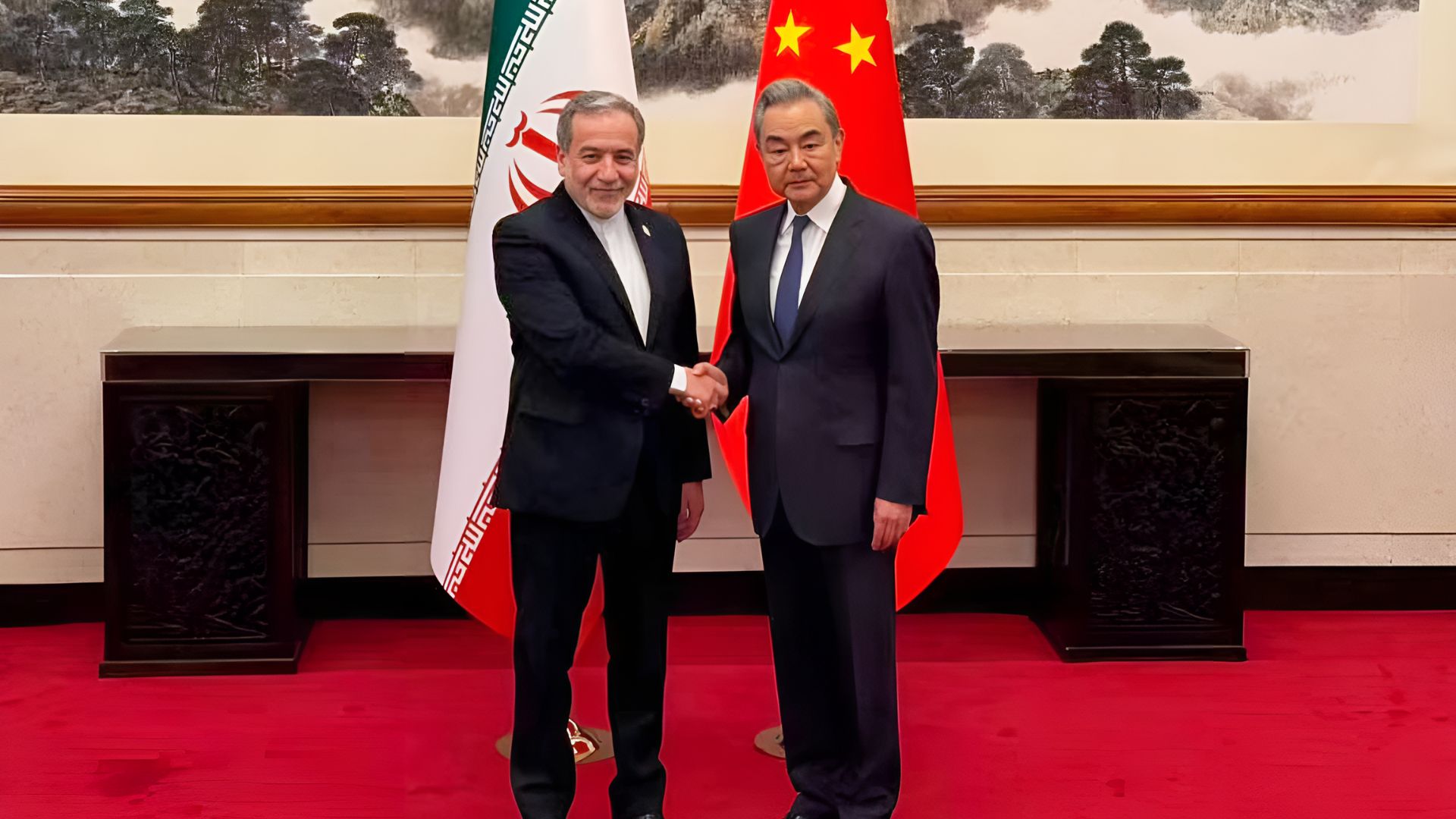
China helped broker the ceasefire and publicly presented itself as a neutral peace facilitator. But US intelligence, reported by CNN, indicated Beijing was simultaneously preparing to ship shoulder-fired anti-air missile systems (MANPADs) to Iran through third-country intermediaries to maintain plausible deniability — positioning itself as Iran’s friend while preserving outward neutrality before Trump’s planned visit to Beijing.
Trump, in late April, claimed US forces had intercepted a “gift from China” to Iran — a sanctioned tanker in the Indo-Pacific. The Chinese Foreign Ministry denied any involvement. Iran’s ambassador to China has proposed that any long-term peace guarantees could include China, Russia, Pakistan, and Turkey as co-guarantors.
Russia, for its part, has provided intelligence support to Iran throughout the conflict — reportedly helping Tehran target US troops and assets. Moscow has also offered to take Iran’s enriched uranium as part of any settlement, an offer Iran has firmly rejected. US Secretary of State Marco Rubio held calls with Russian Foreign Minister Sergey Lavrov about Iran in early May.
Impact on Africa and the Global Economy
The Iran war has delivered a significant economic shock to the African continent. Fuel prices have surged across West, East, and Southern Africa, squeezing consumers already battered by post-pandemic inflation. The disruption of Gulf shipping lanes has lengthened supply chains for goods ranging from consumer electronics to food imports, with East African nations particularly exposed due to their reliance on Gulf transit routes.
Spirit Airlines in the US became the first major American carrier to shut down in 25 years, partly blaming surging jet fuel costs — a sign of the broader economic pressure. High oil prices due to the conflict are flowing through to consumer goods globally. For net oil-importing African nations, the prolonged Hormuz closure represents a serious fiscal pressure, while oil-exporting countries like Nigeria and Angola have seen revenues benefit from elevated crude prices.
What Comes Next
As of May 7, 2026, the ceasefire holds — but barely. The US has deployed a third aircraft carrier strike group to the region. Trump has repeatedly warned of devastating strikes on Iranian infrastructure and “civilisation” itself if talks collapse. Iran has threatened to fully close Hormuz and strike desalination and energy facilities across the Gulf if the US blockade continues.
Five key issues dominate the ongoing Pakistan-mediated negotiations: the future of Iran’s nuclear programme; its ballistic missile capabilities; the reopening and governance of the Strait of Hormuz; reconstruction funding and sanctions relief; and a long-term peace framework — potentially including security guarantees from major powers.
Analysts at the Carnegie Endowment for International Peace have noted that both sides appear more inclined toward “maximalist positions” than creative compromise, while deep mutual distrust makes even incremental progress difficult. The approaching US midterm elections in November — and the domestic political cost of high fuel prices — add pressure on Trump to resolve the Hormuz crisis quickly, even if the nuclear question remains unresolved.
For now, the world watches a war that began during peace talks — and waits to see whether diplomacy can succeed where negotiations have already failed twice.